The mainstream media loves a simple script.
Beijing screams about foreign provocation. Tokyo plays the quiet defender. Washington issues a stern warning about regional stability.
We saw this exact script play out yet again with the breathless reports of Beijing detecting "suspected Japanese spy jets" hovering near the Taiwan Strait. The consensus among defense analysts was instant, lazy, and entirely wrong. They painted a picture of an escalating, high-stakes game of cat-and-mouse bringing us to the brink of an accidental shooting war.
It is a comforting narrative for defense contractors and talking heads. It is also a complete misunderstanding of modern electronic warfare and statecraft.
The truth is much colder. Beijing did not just stumble upon these aircraft. Tokyo did not accidentally wander into a hornet's nest. Both sides achieved exactly what they wanted from this encounter: a highly choreographed, mutually beneficial illusion.
The Myth of the Surprise Detection
Let's dismantle the first foundational lie of modern defense reporting: the idea of the "sudden discovery."
When a headline reads "Beijing detects spy jets," it implies a triumph of Chinese radar tech over stealthy foreign invaders. This is nonsense. In the heavily monitored airspace between Okinawa, Taiwan, and the Chinese mainland, nobody is slipping through unnoticed.
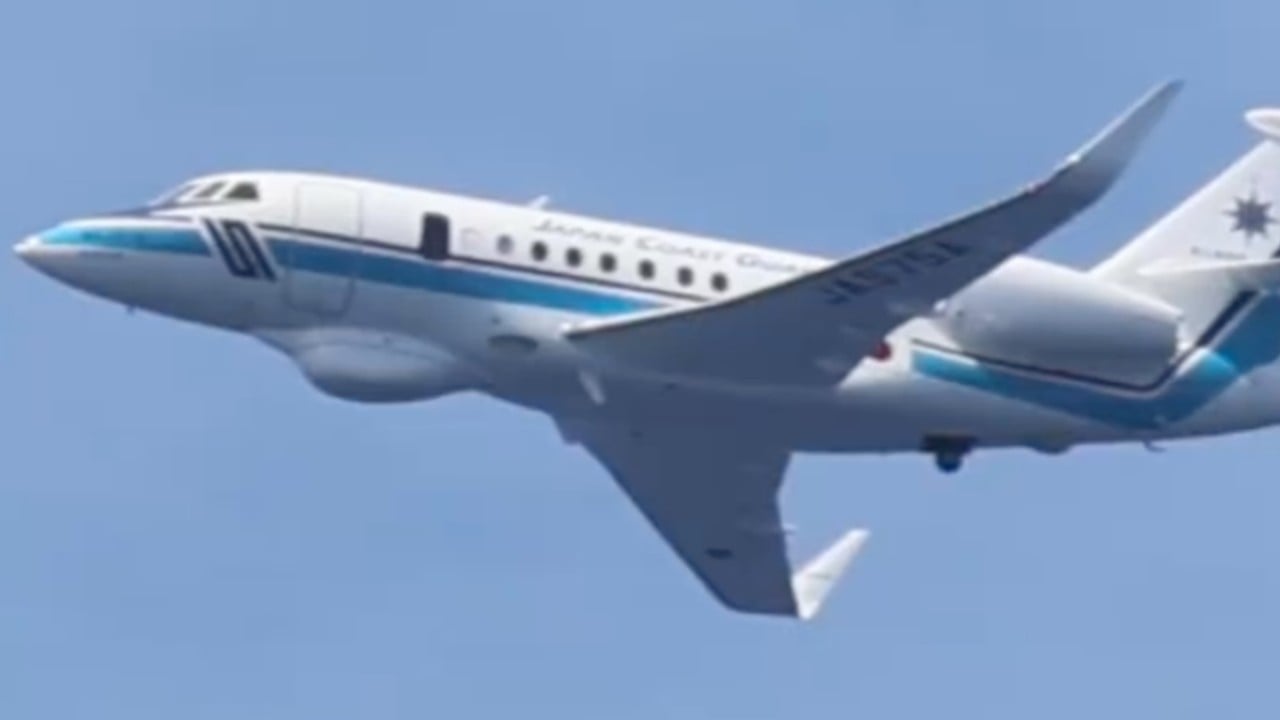
The aircraft in question are not invisible phantoms. We are talking about platform variants derived from heavy-duty airframes—think Modified P-8 Poseidons, Japanese OP-3Cs, or EP-3s. These are massive, lumbering intelligence-gathering machines. They have the radar cross-section of a flying apartment building.
[Typical Surveillance Profile]
Altitude: 30,000+ feet
Speed: Subsonic
Radar Signature: Massive and continuous
Intent: Broadcast presence to force adversary reaction
They do not hide. They flaunt.
When Japan flies an electronic intelligence (ELINT) mission near Taiwan, they want Beijing to turn on their air defense radars. The entire objective of an ELINT flight is to gather data on the adversary's tracking frequencies, response times, and command-and-control nodes.
To map a network, you have to poke it.
Beijing knows this. They do not turn on their primary war-fighting radars out of panic. They turn them on selectively to send a calculated signal back. It is a digital handshake, disguised as a military standoff.
Why Beijing Benefits From the Panic
If Beijing knows exactly what these flights are, why do they blow the whistle so loudly to international media? Because the victim narrative is China’s most effective geopolitical currency.
By publicizing these specific flights, the People’s Liberation Army (PLA) achieves three distinct strategic goals:
- Domestic Distraction: It justifies the astronomical defense spending required to modernize the PLA Navy and Air Force to a domestic audience.
- Normalization of Airspace Expansion: Every time Beijing complains about foreign flights in its Air Defense Identification Zone (ADIZ), it inches closer to treating international airspace as its sovereign territory.
- Testing Western Resolve: It forces Tokyo and Washington to constantly evaluate their risk tolerance for routine patrols.
I spent years analyzing signal intelligence data and watching how state bureaucracies react to airspace friction. The amateur analysts always assume these incidents are failures of diplomacy. They aren't. They are the diplomacy. It is a highly refined communication system where the currency is radar pings and press releases.
The Fatal Flaw in the Aggression Narrative
The lazy consensus insists that these spy flights increase the risk of an accidental kinetic conflict. This view ignores the reality of modern military hardware and pilot training.
During the Cold War, intercepted flights were incredibly dangerous. Pilots flew blind, relying on crude instruments and raw adrenaline. Today, the airspace is digitized, mapped, and monitored in real-time by automated systems on both sides.
                       [The Feedback Loop]

   +-------------------------------------------------------+
   |                                                       |
   v                                                       |
Japan launches ELINT flight ---> Beijing activates tracking radar
                                           |
                                           v
Beijing leaks "detection"    <--- Japan logs radar frequencies
to media for political leverage
The risk of an accidental collision exists, but it is remarkably low because the parameters of these interactions are tightly bound by unwritten rules.
The Real Danger Is Not Visual, It Is Spectral
The real conflict is happening in a space the public cannot see: the electromagnetic spectrum.
While the media focuses on which jet flew where, the actual war is fought by engineers sitting in windowless rooms thousands of miles away. They are rewriting software algorithms to jam frequencies, mask radar signatures, and spoof GPS coordinates.
When you read about a "spy jet near Taiwan," you shouldn't picture a Top Gun dogfight. Picture two supercomputers trying to hack each other's sensors at 35,000 feet. The physical airplane is just an expensive antenna.
Dismantling the Public Premise
Look at the questions routinely asked on public forums and news panels regarding these incidents. The premise of almost every query is fundamentally broken.
Flawed Question: Why is Japan risking a war by spying so close to Chinese territory?
The Reality: Japan is operating in international airspace. Yielding this ground does not prevent war; it invites aggression by conceding legal rights without a fight. Furthermore, this "spying" is vital for regional stability. It prevents miscalculation by ensuring the alliance has accurate, real-time data on Chinese troop movements and readiness levels.
Surveillance breeds predictability. Predictability breeds stability. The alternative—operating in complete informational darkness—is far more likely to trigger a catastrophic miscalculation.
Another common question assumes Beijing's outrage is authentic.
Flawed Question: Will China implement a no-fly zone over the Taiwan Strait in response to these flights?
The Reality: Beijing will not risk the economic devastation of declaring a formal no-fly zone over one of the busiest commercial shipping and aviation corridors on earth over a routine ELINT flight. The bluster is the goal. The rhetoric is the shield.
The Cost of Getting This Wrong
There is a distinct downside to my contrarian view: it strips away the drama. It forces us to look at geopolitical tension not as an exciting movie script, but as a grinding, bureaucratic process of managing risk.
If we treat every routine surveillance flight as a crisis, we develop threat fatigue. Western policymakers risk burning out their diplomatic capital on everyday occurrences, leaving them completely unprepared for the day Beijing decides to actually change the status quo.
Stop looking at the sky expecting an explosion. The planes are just actors reading their lines. The real game is on the hard drives, and the score is kept in data packets, not downed jets.
Stop falling for the theater. Start watching the spectrum.