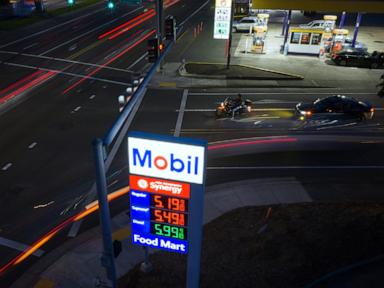
Americans are currently caught in a vice grip of domestic financial anxiety and a profound exhaustion with overseas military entanglements. Recent data reveals a stark reality where the average household feels the economy is failing them, while simultaneously rejecting the idea of a new conflict with Iran. This isn't just a temporary dip in consumer confidence. It is a fundamental shift in how the public views the relationship between national "strength" and their own bank accounts.
The Kitchen Table Crisis
The numbers coming from recent polling reflect a deep-seated pessimism that has outlasted traditional inflationary cycles. While macroeconomic indicators like GDP or the S&P 500 might show growth, the sentiment on the ground remains stubbornly dark. This disconnect exists because the cost of living—specifically housing, insurance, and childcare—has decoupled from wage growth in a way that feels permanent to the working class.
People aren't just annoyed by prices. They are terrified of the lack of a safety net. When a majority of citizens say their financial situation is worsening, they are signaling that the traditional American ladder of upward mobility has missing rungs. This internal pressure creates a domestic lens through which all foreign policy is now viewed. If the government cannot stabilize the price of eggs or rent, the public has zero appetite for funding a multi-billion dollar theater of war in the Persian Gulf.
The Illusion of Recovery
The "recovery" often touted by officials feels like a mathematical trick to those living it. High interest rates, intended to curb inflation, have instead locked a generation out of the housing market. If you cannot move because your current mortgage is 3% and a new one would be 7%, you are effectively immobile. This stagnation breeds resentment.
When you layer the threat of a Middle Eastern war on top of this economic fragility, the reaction is predictably hostile. The American public has spent two decades watching trillions of dollars vanish into the sands of the Middle East with little to show for it. They are now connecting the dots between those expenditures and the crumbling infrastructure or underfunded schools at home.
The Iran Equation and the Ghost of Iraq
The rejection of military action against Iran is not necessarily rooted in pacifism. It is rooted in realism. The American public has developed a sophisticated skepticism toward "intelligence" and "proactive defense" narratives that preceded previous interventions. There is a collective memory of the Iraq War that serves as a powerful deterrent against similar rhetoric today.
A conflict with Iran would not be a localized affair. It would immediately threaten global oil supplies, specifically through the Strait of Hormuz. For a public already reeling from energy costs, the prospect of $6 or $7 per gallon gasoline is a non-starter. This is where the financial bleakness and the foreign policy stance merge into a single, unified grievance. The average voter understands that a war with Iran is a direct tax on their ability to drive to work.
Strategic Fatigue
Washington’s foreign policy establishment—often referred to as "The Blob"—frequently operates on the assumption that American power must be projected to remain credible. However, the domestic audience is no longer buying the brand. There is a sense of strategic fatigue where the "why" of military intervention has been lost.
If the goal of the U.S. military is to protect the American way of life, the public is asking how another war achieves that when their way of life is already being eroded by domestic economic factors. This represents a failure of the "guns and butter" promise. In the current environment, the public perceives that the government is choosing guns while the butter has become unaffordable.
The Psychological Toll of Permanent Uncertainty
We are witnessing the birth of a "permacrisis" mindset. This is the feeling that as soon as one threat recedes—be it a pandemic or a period of high inflation—another takes its place. This constant state of high-alert exhausts the psychological reserves of the population. When people are exhausted, they become risk-averse.
A war with Iran is the ultimate risk. It is an unpredictable variable with the potential for massive escalation. Americans are currently seeking stability above all else. They want to know that their paycheck will cover their bills and that their children will have a better life than they did. Military adventurism is seen as a chaotic distraction from these core goals.
The Credibility Gap
There is also a massive gap between the rhetoric of leadership and the lived experience of the citizenry. When officials speak of "protecting interests abroad," the public asks, "Whose interests?" If the interests being protected are those of defense contractors or energy conglomerates, but the cost is borne by the taxpayer and the soldier, the social contract begins to fray.
This distrust is a corrosive force. It makes it nearly impossible for an administration to build a consensus for any major national undertaking, whether it is a green energy transition or a necessary military response. Once the public believes the system is rigged against their financial well-being, every policy proposal is viewed with suspicion.
Realigning National Priorities
The path forward requires a brutal assessment of how resources are allocated. You cannot have a superpower military supported by a hollowed-out middle class. The financial bleakness reported in polls is a warning light on the dashboard of the American experiment. Ignoring it in favor of geopolitical maneuvering is a recipe for internal collapse.
The public's refusal to support a war with Iran should be seen as a demand for a "New Realism." This isn't isolationism; it is prioritization. It is the realization that the greatest threat to national security isn't a regional power in the Middle East, but the loss of faith in the American dream at home.
The Mechanics of Dissent
This dissent is appearing in non-traditional ways. It isn't just about protest marches; it’s about a quiet, pervasive withdrawal from the national narrative. It manifests as declining recruitment numbers for the military and a growing "prepper" mentality where individuals focus solely on their own immediate survival rather than the collective good.
When a citizen believes that their government is more concerned with the borders of a foreign nation than the affordability of their own neighborhood, the link between the governed and the governors is severed. This is the "Bleakness" the polls are actually measuring. It is a sense of being forgotten by the very institutions that are supposed to provide security.
The Economic Consequences of Geopolitical Ambition
A significant portion of the national debt is a direct result of the "War on Terror" era. The interest on that debt is now a major line item in the federal budget, competing for funds that could otherwise be used for domestic investment. The public understands this intuitively, even if they don't know the exact billions involved. They see the trade-offs every time they hit a pothole or wait six months for a specialist medical appointment.
Investing in a war with Iran would require another massive injection of capital into the military-industrial complex. In a high-inflation environment, this is fiscal madness. It would likely lead to further currency devaluation and a continued spike in the cost of living. The American consumer is essentially acting as a check and balance on a government that has lost its fiscal bearings.
Moving Beyond the Polls
Polling is a snapshot, but the trend line is a map. The map shows a country that is turning inward out of necessity. This isn't a failure of American spirit, but a rational response to a decade of economic mismanagement and over-extension.
If leaders want to change the public's bleak outlook, they must first address the systemic issues that make the average person feel like they are drowning. This means tackling the housing shortage, reforming the healthcare cost structure, and ensuring that work actually pays enough to live on. Until those boxes are checked, any talk of military escalation will be met with a resounding "no."
The American people are tired of being the world's policeman while their own house is in disrepair. They are demanding a return to a domestic-first focus, where the strength of the nation is measured by the solvency of its citizens rather than the reach of its missiles. The data is clear: the era of the blank check for foreign intervention is over.
Stop looking for enemies abroad until you have solved the crisis of confidence at home.


