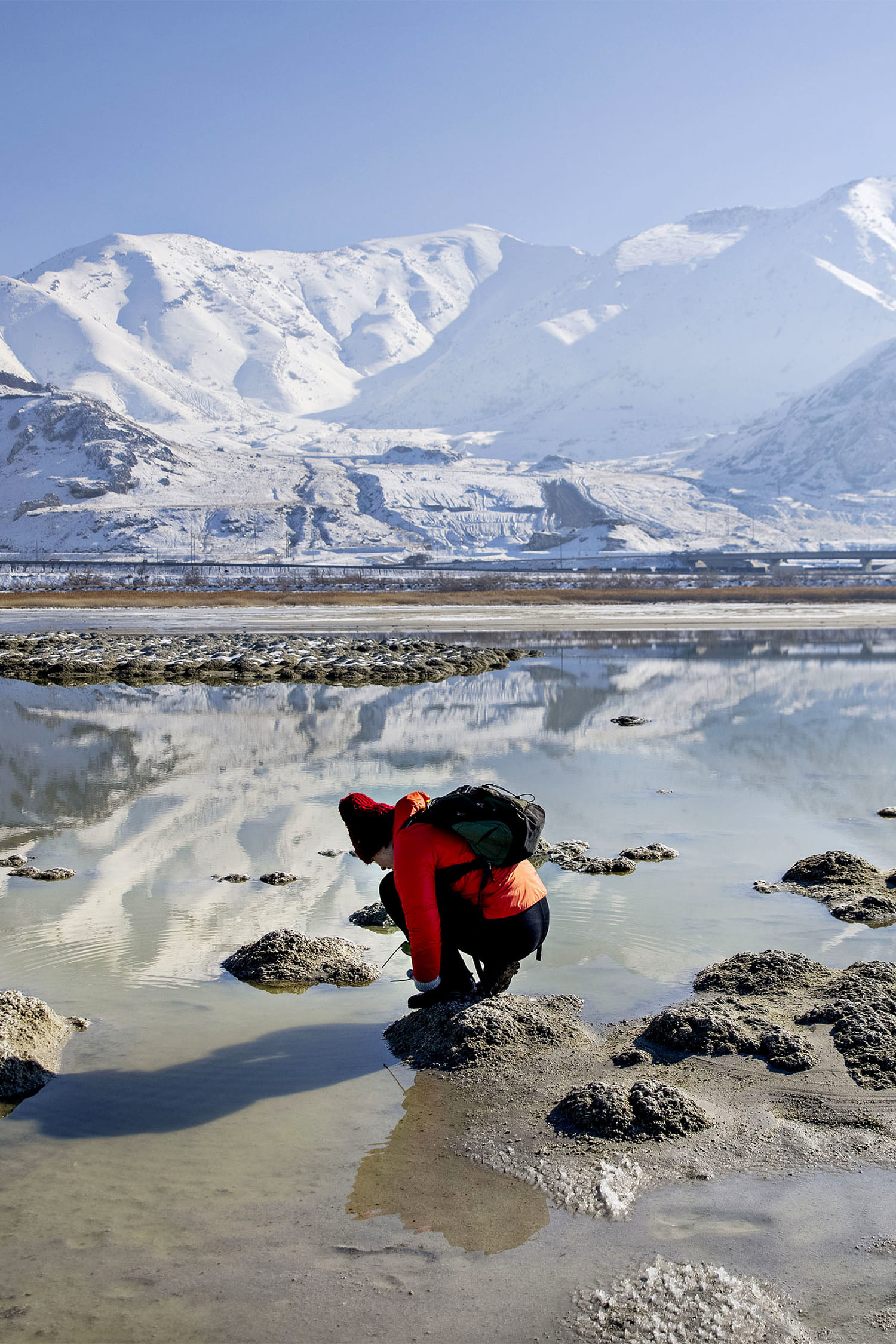
The collapse of the Great Salt Lake is not merely an environmental setback; it is a structural failure of a closed-basin terminal system under the pressure of upstream consumption and shifting hydrologic baselines. To restore the lake to a functional elevation of 4,198 feet—the level generally accepted as the threshold for ecological and industrial stability—requires a net inflow increase of approximately 1.2 million acre-feet per year. This deficit cannot be bridged through incremental conservation alone. Any viable strategy must address the physics of evaporation, the economics of water rights, and the logistical constraints of trans-basin diversion.
The Mass Balance Equation of a Terminal Lake
A terminal lake operates as a giant evaporation pan. Its surface elevation is a direct function of the equilibrium between total inflows (river discharge, groundwater, and direct precipitation) and total outflows (evaporation). Don't miss our recent article on this related article.
The Deficit Variables:
- Upstream Depletion: Agricultural, industrial, and municipal diversions currently extract over 2 million acre-feet annually from the Bear, Weber, and Jordan rivers.
- Surface Area Feedback: As the lake shrinks, its surface area decreases, which technically reduces total evaporation volume. However, this exposes vast "playas" or dry lakebeds.
- Salinity Stratification: The breach in the causeway separating the North and South arms has created a density imbalance. High salinity in the North Arm (Gunnison Bay) limits biological life, while the South Arm (Gilbert Bay) supports the brine shrimp and fly populations critical to the migratory bird corridor.
The Three Pillars of Hydrologic Recovery
To reverse the trend, three distinct levers must be pulled simultaneously. Relying on a single vector, such as "hope for a wet winter," ignores the secular trend of "aridification"—a shift where rising temperatures increase the vapor pressure deficit, causing plants and soil to absorb more water before it ever reaches a stream. If you want more about the history here, The Next Web provides an informative breakdown.
1. Agricultural Optimization and Water Right Friction
Agriculture accounts for roughly 63% of the water diverted from the Great Salt Lake basin. The primary crop is alfalfa, a water-intensive forage. The bottleneck here is not just technology, but "Use It or Lose It" water law.
- Split-Season Leasing: This mechanism allows farmers to grow a first crop and then lease their water rights to the state for the remainder of the season to ensure flow to the lake.
- Consumptive Use vs. Diversion: Switching from flood irrigation to pivot or drip reduces the diversion amount but may not reduce consumptive use if the farmer simply expands their acreage. Recovery requires a reduction in total depletion, not just increased efficiency.
2. The Infrastructure of Diversion: The Pacific Pipeline Concept
Proposals to pipe water from the Pacific Ocean or the Snake/Columbia River basins are often dismissed as "audacious," but they must be evaluated through a rigorous cost-benefit lens.
- The Energy Cost Function: Pumping water from sea level over the Sierra Nevada or through the Great Basin involves a vertical lift of over 4,200 feet. The electrical demand would require dedicated nuclear or massive solar-plus-storage arrays.
- Desalination Brine Management: If seawater is moved, the salt must be removed before it enters the ecosystem, or the lake’s chemistry will shift toward a lifeless hypersaline dead zone. The resulting concentrated brine would create a secondary waste crisis.
- The Regulatory Gauntlet: Crossing state lines triggers the "Compact" problem. Any attempt to take water from the Columbia River basin would face immediate litigation from Pacific Northwest states under the 1968 Colorado River Basin Project Act, which prohibits federal feasibility studies on such diversions.
3. Municipal and Industrial (M&I) Demand Response
While M&I use is smaller than agriculture, it represents the fastest-growing sector due to Utah’s population growth.
- Secondary Water Metering: Many residential areas in the basin use unmetered "secondary water" for lawns. Data shows that simply installing meters reduces usage by 20% to 30% through behavioral change alone.
- Industrial Brine Extraction: Companies like Compass Minerals and US Magnesium extract minerals from the lake water. Their "net loss" is the water evaporated in their ponds. Policy must dictate that these entities optimize their footprints to minimize the surface area of their evaporation cells.
The Toxicity Threshold: The Dust Problem
The most urgent driver for refilling the lake is the mitigation of arsenic-laden dust. The lakebed contains high concentrations of naturally occurring and industrially deposited heavy metals.
- The Aerosolization Mechanism: As the water recedes, the "microbialite" structures (living rock-like mats) die and crumble. This removes the protective crust, allowing wind to loft fine particulate matter (PM2.5) into the atmosphere.
- The Urban Corridor Impact: Because the Wasatch Front is prone to temperature inversions, this toxic dust becomes trapped in the valley where 80% of Utah's population resides. The economic cost of increased respiratory illness and reduced worker productivity could eventually exceed the cost of the water rights needed to submerge the dust.
Structural Bottlenecks in the Restoration Framework
The primary obstacle to refilling the lake is the lack of a "Shepherd" for the water. Under current law, once a farmer or city releases water into a river for the lake, any downstream user with a junior water right can legally divert it.
- Shepherding Legislation: For the lake to refill, the state must designate the lake itself as a "beneficial use" and create a legal "protected corridor" that prevents upstream releases from being intercepted.
- The Great Salt Lake Trust: A $40 million trust was established to purchase or lease water rights. However, at current market rates, this sum is insufficient to secure the 1.2 million acre-feet required for a full recovery.
The Mathematical Reality of Lake Levels
The relation between volume and elevation is non-linear.
$$V = \int_{h_{min}}^{h_{max}} A(h) dh$$
Where $V$ is volume, $h$ is elevation, and $A(h)$ is the surface area at that elevation. Because the lake basin is relatively flat, a small increase in volume covers a massive area of the playa. This is both a blessing and a curse: it suppresses dust quickly but increases the "evaporative tax" because more water surface is exposed to the sun.
Comparative Analysis: The Aral Sea vs. Great Salt Lake
The Aral Sea serves as the definitive case study for terminal lake collapse.
- Aral Sea Path: Diversion of the Amu Darya and Syr Darya rivers for cotton led to a 90% volume loss. The resulting salt storms destroyed regional agriculture.
- Utah’s Divergence: Unlike the Soviet-era Aral Sea management, Utah has a diversified economy. The Great Salt Lake contributes $1.3 billion annually to the GDP via brine shrimp (powering global aquaculture), mineral extraction, and the "Lake Effect" snow that supports the multi-billion dollar ski industry.
Strategic Intervention Map
If the objective is to stabilize the lake by 2035, the following sequence is mandatory:
- Mandatory Secondary Metering (Year 1-3): Complete the rollout of meters to all residential irrigation users to recapture 100,000+ acre-feet of "waste" flow.
- State-Funded Alfalfa Buyouts (Year 2-10): Instead of permanent land fallowing, the state should purchase "dry-year easements." These are legal contracts where farmers agree to bypass their water to the lake during critical drought years in exchange for a guaranteed annual payment.
- Causeway Modification (Year 1-5): Re-engineering the Union Pacific railroad causeway to allow for better flow control between the North and South arms. This allows managers to prioritize the health of the South Arm (the ecological engine) during extreme low-water periods.
- Cloud Seeding Expansion (Ongoing): While controversial in its exact yields, the cost-to-benefit ratio of silver-iodide seeding in the Wasatch and Uinta mountains remains the cheapest way to add "new" water to the system at roughly $10-$20 per acre-foot.
The risk of inaction is a permanent transition to a "dust-bowl" economy. The risk of action is a high capital expenditure and a friction-filled reorganization of the agricultural sector. Between these two, the latter offers a path to physical solvency, while the former leads to a multi-generational public health and economic crisis.
The immediate strategic play is the aggressive acquisition of upstream water rights and the legal shielding of those flows from downstream diversion. Without a "legal straw" to protect the water, all engineering solutions are moot. Would you like me to develop a detailed fiscal impact model for the "dry-year easement" program, comparing it to the cost of a hypothetical 100-mile water pipeline?