The headlines are screaming about a "new era of American dominance." They point to the chaos in the Middle East, look at the record-breaking export numbers coming out of the Gulf Coast, and conclude that Washington has finally won the energy independence game. It is a seductive narrative. It is also fundamentally wrong.
If you believe that record U.S. oil sales during a Middle Eastern conflict signify a geopolitical masterstroke, you are misreading the plumbing of the global economy. We aren't seeing a show of strength. We are witnessing a desperate, structural rebalancing of a fragile system that is running out of options. The surge in U.S. exports isn't a weapon; it’s a release valve for a world that can no longer rely on traditional stability. Building on this topic, you can also read: The Constitutional Crisis Hiding Behind the 10 Percent Global Tariff.
The Light Sweet Lie
The biggest mistake amateur analysts make is treating "oil" as a single, uniform commodity. It isn't. The U.S. is currently drowning in light, sweet crude—the kind produced by the Permian Basin. However, the American refining complex, built decades ago at a cost of billions, was designed to eat heavy, sour "junk" oil from places like Venezuela, Canada, and the Middle East.
We are exporting record amounts of oil because our own refineries literally cannot process the volume of light stuff we are pulling out of the ground. We are forced to sell our "premium" product to Asia and Europe at a discount while we continue to import the heavy sludge we actually need to keep our trucks running and our factories humming. Experts at Bloomberg have provided expertise on this trend.
When you see a headline about record exports, read it for what it is: a massive logistical mismatch. We are trading gold for lead and calling it a victory because the volume of gold looks impressive on a spreadsheet.
Middle East Tensions are a Distraction
The common consensus suggests that U.S. oil is "filling the gap" left by Middle Eastern instability. This ignores the reality of the physical market. Brent and WTI (West Texas Intermediate) are diverging not because of the threat of closed straits, but because of a massive glut of U.S. supply that has nowhere else to go.
I’ve sat in rooms with traders who laugh at the "geopolitical risk premium" talk on cable news. The real risk isn't a missile hitting a tanker; it’s the fact that the U.S. shale machine is a treadmill that cannot stop. If shale producers slow down, their debt loads crush them. If they speed up, they crash the price.
The current conflict in the Middle East provides a convenient smokescreen for the fact that U.S. production has become a victim of its own efficiency. We aren't "saving" Europe from high prices. We are dumping inventory to keep the lights on in Midland, Texas.
The Myth of Energy Independence
Politicians love the phrase "energy independence." It’s a fairy tale. In a globalized market, there is no such thing as independence, only degrees of vulnerability.
If the U.S. were truly independent, a flare-up in the Levant wouldn't move the price at a gas station in Ohio. But it does. Why? Because the price of every barrel of oil on earth is discovered in a global pool. By exporting record amounts, the U.S. has actually tied its fate more closely to global volatility, not less. We have moved from being a massive consumer that could influence the market through demand, to a massive supplier that is now at the mercy of global price swings to maintain its domestic economy.
Why Your "Independent" Math is Broken
Consider the actual math of a shale well. Unlike the massive, generational reservoirs in Saudi Arabia, a shale well sees a massive drop-off in production—often 60% to 70%—within the first year.
- Year 1: High pressure, high flow.
- Year 2: The struggle begins.
- Year 3: You’re already drilling the next hole just to stay flat.
This is "Red Queen" economics: running as fast as you can just to stay in the same place. The record exports we see today are the result of a drilling frenzy that happened 18 months ago. It is a lagging indicator of past capital expenditure, not a leading indicator of future stability.
The China Paradox
While the U.S. celebrates its export records, it conveniently ignores who is buying. A significant portion of the global flow eventually finds its way to the very competitors the U.S. is trying to "de-risk" from.
The U.S. is essentially subsidizing the industrial energy costs of its primary global rivals by flooding the market with cheap, light crude. We are stripping our natural resources at breakneck speed, selling them at a market-driven discount, and then acting surprised when our manufacturing sector can't compete with regions that have access to the very fuel we just shipped them.
The Hidden Cost of the Export Boom
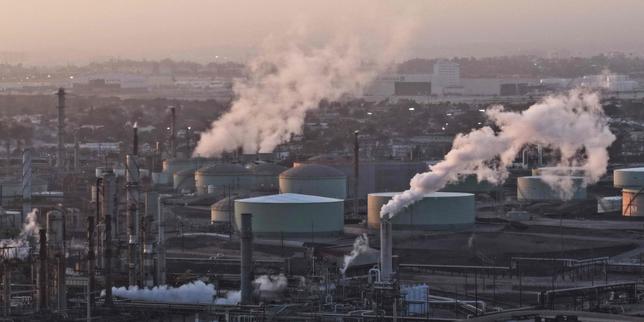
The environmental and infrastructure toll of this "record-breaking" era is being socialized while the profits are privatized. The Permian Basin is being hollowed out. Flaring—the burning of excess natural gas because we don't have enough pipes to move it—is at levels that would be a national scandal if it happened anywhere else.
We are literally burning money because we are so obsessed with the "Total Barrels Exported" metric. It’s a vanity metric. It’s the "Likes" and "Retweets" of the energy world. It feels good, it looks great in a press release, but it doesn't pay the bills long-term.
Dismantling the "Safe Haven" Narrative
Is U.S. oil a safe haven? Ask the investors who lost their shirts in the 2014 and 2020 shale busts. The industry is currently in a "harvest" mode. They aren't reinvesting in massive new discoveries; they are draining existing inventory to pay back the shareholders they've disappointed for a decade.
The record exports are a liquidation sale.
When a store announces it’s moving record inventory, you check to see if they’re opening a new branch or if they’re going out of business. The U.S. oil industry isn't going out of business tomorrow, but it is behaving like a company that is liquidating its best assets to keep the stock price up during a crisis.
The Actionable Reality
Stop looking at volume and start looking at margin. The U.S. is exporting record volumes because it has to, not because it wants to.
If you want to understand where the power lies, don't look at the tankers leaving Corpus Christi. Look at the refineries in the Midwest that are still paying a premium for heavy crude from Canada. Look at the strategic reserves that are being drained to manage optics rather than actual emergencies.
The next time you see a chart showing U.S. oil exports climbing toward the moon, don't cheer. Ask yourself why we are so eager to get rid of our most valuable resources during a global conflict. The answer isn't "dominance." The answer is that we've built a system that is too big to stop and too specialized to actually serve its own people.
We are exporting our way into a corner. By the time the world realizes that "record sales" were actually a "clearance event," the easy oil will be gone, the Middle East will still be volatile, and the U.S. will be left with the bill for a party it didn't even get to enjoy.
The "Energy Superpower" is a mirage. We are just the world's most over-leveraged gas station.