The headlines are screaming about the end of an era. The Middle East Eye and a dozen other mainstream outlets are busy drafting obituaries for the American presence in Syria, citing a "full withdrawal" after a decade of boots on the ground. They point to empty barracks and dusty convoys as proof that the U.S. has finally folded its hand.
They are dead wrong.
What we are witnessing isn’t a retreat; it’s a rebrand. The "withdrawal" narrative is a comfort blanket for a public tired of "forever wars," but for anyone who understands how modern power projection actually functions, it’s a transparent shell game. Washington isn’t leaving the Levant. It’s simply migrating from a visible, politically expensive footprint to a deniable, technologically superior, and economically entrenched shadow presence.
If you think a lack of a flag over a base means a lack of influence, you’re still playing 20th-century risk while the house has moved to a digital, high-frequency trading floor.
The Myth of the Hard Exit
The lazy consensus suggests that because 900 or 2,000 troops cross a border, the mission is over. This assumes that power is measured in heartbeats per square mile. In reality, the U.S. military-industrial complex has spent the last twenty years perfecting the art of the "over-the-horizon" strike and the "proxy-first" doctrine.
A "withdrawal" in the age of autonomous systems and regional security architectures is a tactical pivot, not a strategic surrender. Look at the geography. You don’t need a brigade in Deir ez-Zor when you have regional hubs in Iraq, Jordan, and Turkey that can put a kinetic effect on a target in fifteen minutes.
The mainstream media loves the visual of a tank on a flatbed trailer. It’s easy to film. It feels final. But they ignore the persistence of the "intelligence footprint." You don’t withdraw the NSA. You don’t withdraw the logistical contracts that keep local militias on the payroll. You don’t withdraw the financial sanctions that act as a more effective blockade than a carrier strike group ever could.
The Oil Obsession is a Distraction
Critics and supporters alike often fall into the trap of "keeping the oil." They argue over whether the U.S. was there to guard refineries or prevent an ISIS resurgence. This is a low-resolution debate.
The U.S. doesn’t need Syrian oil for its own consumption; it’s a net exporter. The presence was never about having the oil; it was about denying the revenue to the Damascus-Moscow-Tehran axis. That denial doesn't require a permanent garrison. It requires a credible threat of destruction. By "withdrawing," the U.S. shifts the burden of security onto regional players while maintaining the "veto power" of air superiority and financial blacklisting.
I have watched billions of dollars flow into "stabilization" efforts that were little more than high-interest loans for influence. When the military "leaves," the contractors stay. The private security firms, the NGOs that function as soft-power outposts, and the local intermediaries don't just vanish. They just change their billing codes.
The Intelligence Vacuum Fallacy
"People Also Ask": Won't a withdrawal create a power vacuum for ISIS or Iran?
This question is fundamentally flawed because it assumes the vacuum is accidental. In the brutal logic of realpolitik, a controlled vacuum can be a tool. By pulling back visible forces, Washington forces its rivals—Russia, Turkey, and Iran—to stop complaining about American "imperialism" and start paying the actual cost of occupation.
Occupation is expensive. It’s a drain on the soul and the treasury. By stepping back, the U.S. invites its adversaries to bleed out in the same sand. It’s a classic move: stop being the target and start being the observer who occasionally disrupts the game.
The Economic Warfare Pivot
We need to stop looking at the Department of Defense and start looking at the Department of the Treasury. The "withdrawal" is the final transition of the Syrian conflict from a military problem to an economic one.
The Caesar Act and subsequent sanctions are more devastating than a Tomahawk missile. They freeze the reconstruction of the country. They prevent the "normalization" that the Assad regime craves. You don't need a soldier at a checkpoint when you can prevent a bank in Dubai from clearing a transaction for a Syrian construction company.
This is the nuance the "withdrawal" reporters miss. They are looking for soldiers; they should be looking for SWIFT codes.
The Risk of the Shadow Doctrine
Is there a downside to this contrarian view? Absolutely. The shadow doctrine—relying on proxies, drones, and sanctions—is inherently unstable. It lacks the accountability of a formal military presence. When things go wrong, there is no one to hold responsible. It creates a "gray zone" where human rights abuses can be outsourced to local partners with a wink and a nod.
But from the perspective of an empire looking to cut costs while maintaining "dominance," it’s the only logical move. A formal presence is a liability in a domestic election year. A shadow presence is an asset that doesn't appear on a balance sheet.
The Mirage of Sovereignty
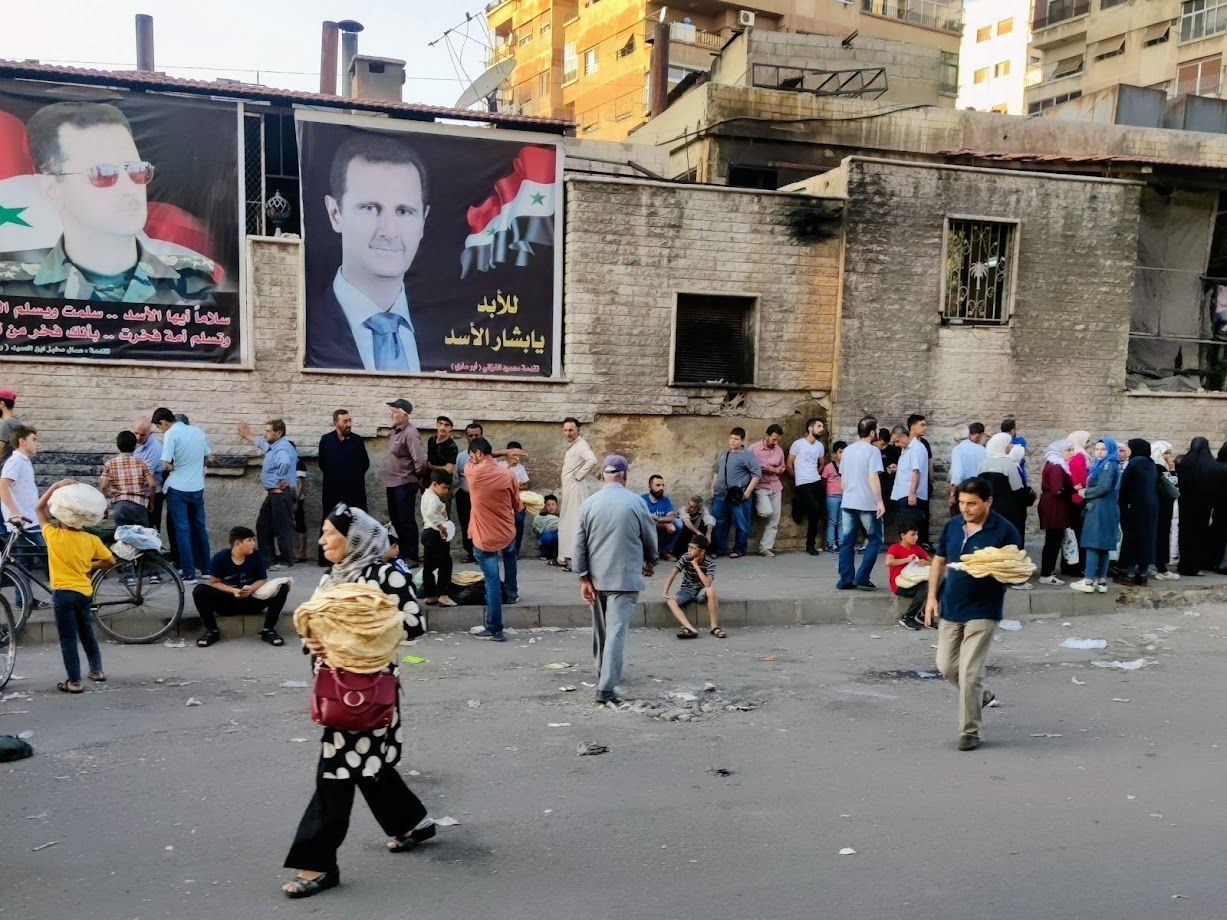
The Middle East Eye article suggests this is a win for Syrian sovereignty. That is the most laughable take of all. Syria remains a playground for five different foreign militaries and a dozen intelligence agencies.
Russia isn’t leaving Khmeimim. Iran isn’t leaving its "land bridge." Turkey isn’t leaving its "safe zones." The U.S. "withdrawal" is simply a tactical repositioning to a more sustainable, less visible, and more lethal stance.
Stop watching the convoys. Watch the drone flight paths. Watch the sanctions list. Watch the offshore accounts of the militia leaders.
The war hasn't ended. It’s just gone into stealth mode.
If you’re waiting for a "Mission Accomplished" banner or a final helicopter off a roof, you’re looking for a 1970s ending to a 2020s problem. The U.S. is "out" of Syria the same way a high-frequency trader is "out" of the market when they close their laptop—they’re still connected to every nerve, ready to strike the second the algorithm triggers.
Pack up the cameras. The real conflict is just getting quiet.