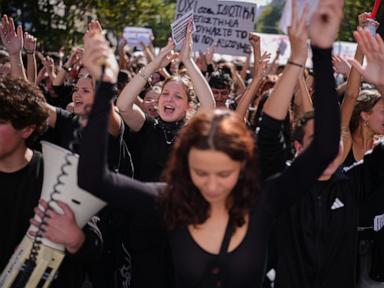
When thousands of students and teachers march through Athens over the cost of living, they aren't just venting about pricey groceries. They're protesting a squeeze that hits both ends of the classroom at once: skyrocketing rent and utility bills at home, and crumbling, understaffed schools on the inside.
You see the tension right away in Syntagma Square outside Parliament. University students hold banners demanding cheaper student housing and larger accommodation stipends, while school teachers march alongside public-sector unions over stagnant wages and unfilled classrooms. Demonstrators have even dumped bags of rubble outside Parliament to dramatize neglected school facilities, and rallies on October 21, 2026 drew crowds estimated by different outlets from roughly 5,000 up to around 10,000 in the capital alone, backed by parallel protests across other Greek cities.
What makes this moment sting even harder is the timing. Many households barely feel like they've recovered from Greece's grueling 2009–2018 debt crisis, yet inflation and housing costs are biting again. Reports on the unrest noted September inflation at 5.1% year-on-year in Greece against a 3.8% euro area average, alongside Eurostat data showing Greece spending 3.3% of GDP on education versus an EU average of 4.7%. Even if you take macro stats with a grain of salt—since real household pain depends heavily on local rents and wage growth—the gap between official recovery headlines and everyday life in Athens is huge.
Why Greek Students and Teachers March Over the Cost of Living
At first glance, pairing college students with primary and secondary school teachers might look like two separate grievances sharing a megaphone. Look closer, though, and both groups are fighting the exact same math problem.
Rent is the obvious flashpoint. Across Athens, Thessaloniki, and popular islands or tourist hubs, housing costs have climbed faster than entry-level salaries and family allowances. For a university student moving away from home, rent can easily turn public tuition into an unaffordable bill anyway. Student associations have pushed for lower rents, higher housing allowances, wider eligibility rules, and more dorm spots in university residences.
Substitute and newly appointed teachers face a brutal twist on that same problem. As reported by GreekReporter, the Federation of Secondary School Teachers (OLME) pointed out that newer and substitute educators assigned to islands or tourist areas get hammered by steep rents and commuting costs. Taking a teaching post far from home doesn't feel like a career step when half your paycheck vanishes into a lease and ferry or bus fares.
Wages vs. Everyday Bills
Teachers and civil servants aren't marching in a vacuum. The public-sector union confederation ADEDY has tied walkouts and rallies directly to living expenses, arguing that pay hasn't kept pace with what families actually spend each month. When electricity bills spike in autumn or winter and basic essentials keep creeping up, a modest public salary stretches thin fast.
As teacher Ioannis Rompas put it during the October 2026 protests, educators are striking because families can't keep struggling to make it to the end of the month while school conditions worsen year after year. That quote captures the core frustration better than any policy memo. It's personal, practical, and exhausting.
What's Actually Happening Inside Greek Schools
Cost of living is the spark, but day-to-day school conditions keep the pressure boiling. When classrooms lack permanent staff or basic maintenance, students and teachers feel the squeeze every single morning.
Staffing shortages have been a recurring flashpoint. Unions have warned of thousands of vacant teaching positions—with reports citing shortages around 13,000 to 15,000 teachers—forcing schools to rely on patchwork staffing or leaving classes under-supported. The Greek Federation of Primary School Teachers (DOE) has pressed for permanent appointments, smaller class sizes, safer buildings, and adequate state funding.
Physical upkeep is another sore spot you can't spin away. Protesters have pointed to broken heating, falling plaster or ceiling pieces, and safety worries in aging school buildings. Even safety scares—like a major Athens school complex closure over a suspected gas leak—feed the sense that basic infrastructure isn't getting enough attention.
- Permanent staffing: Unions want steady, permanent hires rather than chronic gaps and last-minute cover.
- Class sizes and support: Smaller groups help teachers reach struggling kids without burning out.
- Safe, heated buildings: Basic repairs shouldn't require street protests to get noticed.
- University funding: Higher education needs stronger public investment alongside student housing relief.
The Bigger European Picture Behind the Protests
Athens didn't erupt on its own island. Similar cost-of-living and public-service frustrations have flared across parts of Europe, with demonstrators in Greece explicitly drawing parallels to unrest in countries like France, Italy, and Albania.
When you watch news coverage from across the continent, a pattern jumps out. Even where governments point to GDP growth or macroeconomic stability, ordinary people judge the economy by rent, groceries, energy bills, and public services. When those basics feel out of reach, street protests become a way to force the issue back onto the front page.
At the same time, there's a genuine debate over fiscal limits. Governments argue that runaway public spending can reignite debt trouble or inflation, whereas unions and student groups argue that starving education and housing relief carries a steep long-term cost too. Prime Minister Kyriakos Mitsotakis has stressed that Greece will not return to the social upheaval of the 2009–2018 crisis, a reminder of how sensitive any talk of budgets and debt remains in Greek politics.
Honestly, both sides are grappling with real constraints, even if they read the urgency differently. Fiscal caution matters—especially in a country with Greece's recent financial history—but telling a teacher paying high rent on an island or a student skipping meals over housing costs to be patient doesn't solve next month's bills.
Common Myths About These Protests
Whenever big marches hit Athens, quick hot takes usually distort what's really going on. A few assumptions deserve pushing back on:
- Myth: It's only about tuition fees. Public university tuition isn't the whole story. Hidden living costs—especially rent, utilities, and daily expenses—are a massive barrier for students from outside major cities.
- Myth: Teachers only care about pay raises. Pay matters hugely when prices rise, yet teachers consistently pair salary demands with classroom realities like staffing shortages, class sizes, and building safety.
- Myth: One march settles anything. Organizers and union leaders have signaled that single-day rallies rarely shift entrenched budgets on their own, which is why protests and strikes keep resurfacing.
Practical Ways to Follow and Verify What Happens Next
If you're tracking these demonstrations—whether for research, travel planning, or staying informed on European news—don't rely on a single viral clip or headline estimate. Crowd sizes and political spin vary wildly from outlet to outlet.
- Cross-check crowd and event details: Compare coverage from multiple outlets, such as The Associated Press via CP24, GreekReporter, and To Vima, to separate verified union calls and march routes from rumor.
- Watch union announcements for strike dates: Groups like ADEDY, DOE, and OLME announce walkouts and marches ahead of time, which tells you which sectors or regions may see disruptions next.
- Build buffer time into Athens or regional travel: If you're visiting Greece around major union marches or general strikes, expect metro station closures, downtown traffic detours, and possible transport delays—plan early and keep a backup route handy.
- Look at actual policy follow-through: Pay attention to concrete budget allocations, housing stipend rules, and permanent hiring announcements rather than rhetorical promises alone.