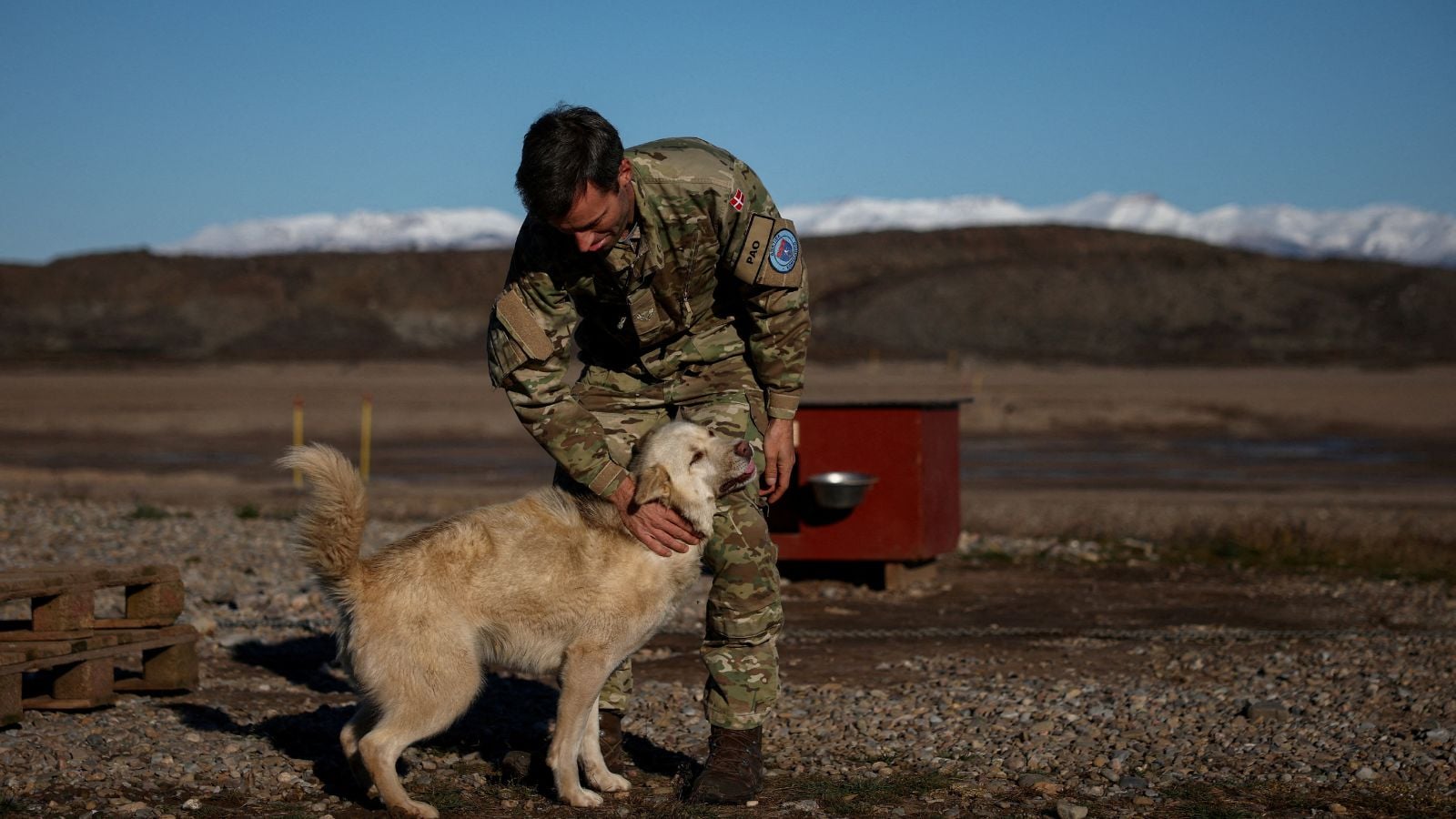
Every major defense publication spent the last couple of months hyperventilating over headlines about the United States expanding its footprint in the Arctic. The narrative goes that reopening a Cold War-era airstrip in Narsarsuaq and setting up a toehold at Mestersvig on the east coast represents a sudden, aggressive escalation of great power competition.
It is a comfortable narrative for cable news. It fits neatly into the stale box of twentieth-century geopolitics. And it is entirely wrong.
The lazy consensus views these new agreements through the smoky rearview mirror of the Cold War. Analysts pull up old maps from 1958, count up historical radar stations, and assume Washington is simply dusting off a playbook to counter Russia and China in the high north. That view ignores the structural reality of modern logistics, satellite surveillance, and raw economics.
Pituffik Space Base—formerly Thule Air Base—already provides the US military with a massive, high-latitude radar and missile warning anchor. If the Pentagon wanted pure ballistic missile early warning, building brand new installations from scratch in crumbling southern gravel pits or expanding dog sled outposts would be an absurdly inefficient way to do it.
The real driver behind these moves has nothing to do with conventional troop surges or stationing thousands of combat boots on the ice. It is about resource jurisdiction, infrastructure anchoring, and supply chain choke points in a warming ocean.
The Logistics Fallacy
Let us look at the geography that commentators love to ignore. Narsarsuaq sits in the south. It features a relatively mild climate by Arctic standards and historical infrastructure that has rotted away for decades. Mestersvig is an isolated eastern outpost. Neither location is a natural springboard for mechanized armored warfare or carrier strike group deployments.
Treating these sites as traditional "military bases" in the European theater mold misunderstands how modern force projection works. In the twenty-first century, sovereignty and strategic presence are maintained through dual-use infrastructure. Whoever controls the airfields, the communication relays, and the maritime monitoring stations controls the commercial shipping lanes that open up as the polar ice cap recedes.
When the tripartite framework involving Washington, Copenhagen, and Nuuk was ironed out, the core victory for the West wasn't about parking fighter jets on the ice sheet. It was about locking down screening rights against non-NATO foreign investments in sensitive Arctic minerals. Rare earths, critical metals, and deep-sea shipping corridors are the real prizes. The military agreements are simply the insurance policy written to protect those economic corridors.
The Sovereignty Paradox
Another favorite trope of the foreign policy establishment is that these agreements trample local self-determination. Polls in Nuuk show widespread local skepticism toward foreign military build-ups. Paternalistic pundits love to frame Greenland as a helpless victim caught in the crossfire of a renewed superpower rivalry.
This perspective infantilizes a government that is actively navigating its path toward full independence from Denmark. Greenlandic leaders are not passive bystanders. They understand that as the ice thretens to melt, their island transitions from a forgotten frozen periphery to the geopolitical center of the Northern Hemisphere. By tying their security framework explicitly to NATO while retaining strict control over domestic resources, they are playing a high-stakes leverage game. They are trading access for permanent economic guarantees and security underwriting that Copenhagen could never afford on its own.
To frame this as American imperialism misses the transactional pragmatism driving every party at the table.
What Actually Happens Next
Forget the breathless reports of an impending military buildup reminiscent of the 1950s. You will not see ten thousand troops deployed to the fjords.
Instead, look for specialized intelligence infrastructure, expanded runway maintenance for long-range transport aircraft, and deep-water sensor arrays. The footprint will remain light, digital, and deeply integrated with allied satellite networks. The real competition in the Arctic is quiet, bureaucratic, and fought over commercial extraction rights and communications cables.
Stop viewing the Arctic through the lens of twentieth-century invasion scenarios. The modern battlefield is about who writes the rules for the northern trade routes before the ice finishes clearing.
US Plans Two New Military Bases in Greenland as Denmark and NATO Address Arctic Security
This video provides additional context regarding the geographical locations and the tripartite diplomatic framework surrounding the Arctic defense arrangement.