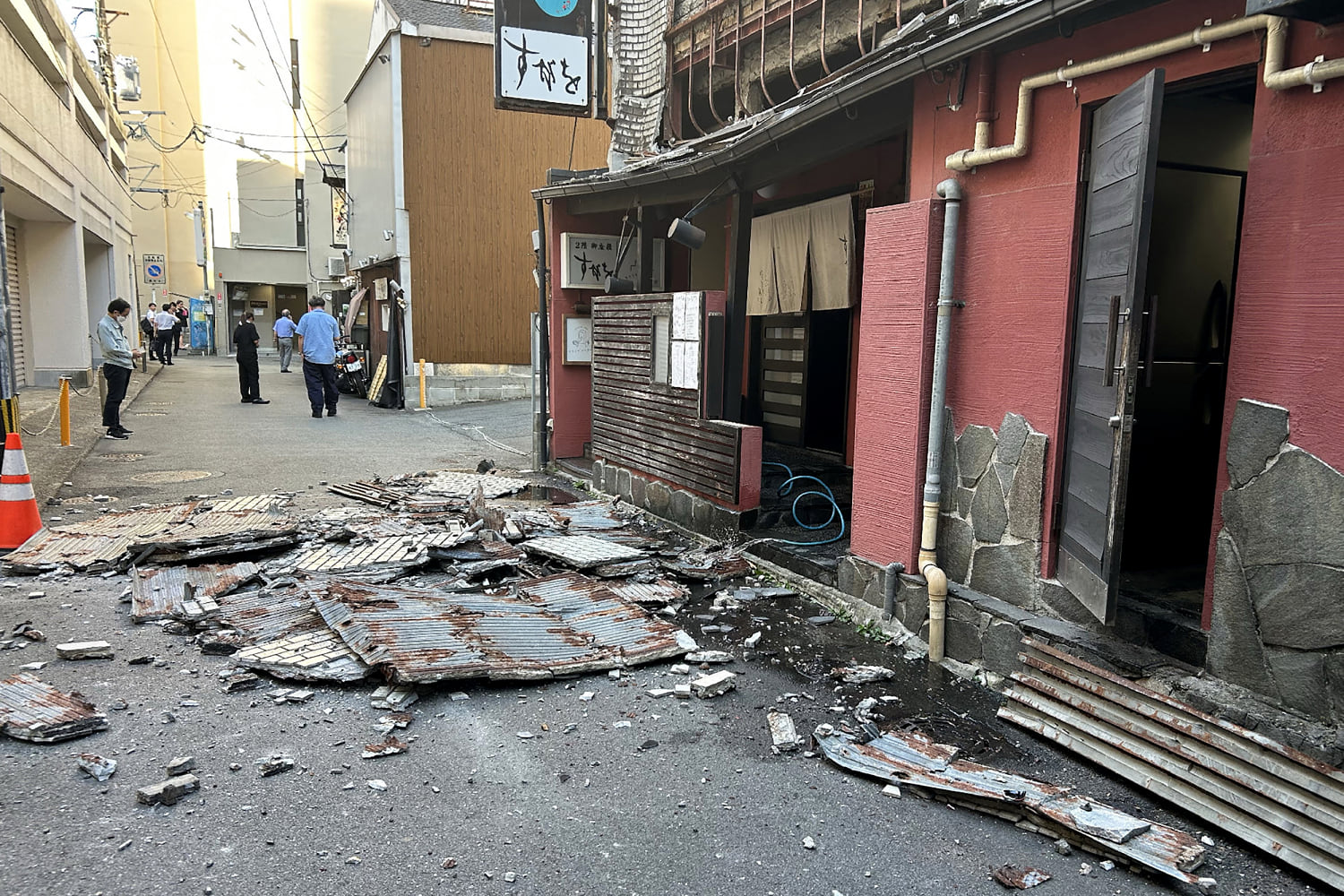
The afternoon air across Kumamoto felt heavy, thick with the steady humidity of late July, until the earth simply decided to break. At precisely 4:27 p.m., reality fractured.
There is a distinct sound to a magnitude 7.1 earthquake before you actually feel it. It begins as a low, subterranean growl, a sound that vibrates through the soles of your feet long before it reaches your ears. Then comes the violent, lateral wrenching. For residents on Japan’s southern island of Kyushu, the violent shuddering brought an immediate, chilling familiarity. This is ground that remembers. A decade ago, deep seismic trauma scarred these very streets, leaving behind memories of collapsed tiles, shattered masonry, and a community forced to rebuild from the dust.
When the tremor struck on Tuesday, history didn't just rhyme; it repeated with terrifying force.
Consider what happens next in the frantic seconds after the shaking starts. Shelves empty themselves in cascades of glass. Elevated highways buckle like cheap plastic. Across Kumamoto Prefecture, panic rippled instantly through homes, offices, and transit hubs. Public broadcaster NHK footage soon revealed the raw extent of the initial chaos: plumes of thick black smoke rising from localized fires, roads slashed with jagged fissures, and bridges twisted out of alignment.
At the local Aeon Mall in Kashima, routine afternoon shopping transformed into a nightmare scenario. A sudden structural failure on the upper level trapped multiple shoppers and employees inside as emergency services rushed to the scene. Witnesses blocks away described a concussive blast echoing through the complex, sending a massive plume of debris and smoke billowing into the wind like volcanic ash.
The statistics began trickling in through emergency channels, painting a portrait of widespread disruption. At least 50 people were rushed to area hospitals with varying injuries, while rail networks—including the vital Shinkansen bullet trains—slammed on their emergency brakes, suspending operations for safety checks. High above the ground, the region's infrastructure strained against nature's raw output. Roughly 45,000 households lost electrical power, plunging neighborhoods into sudden darkness as twilight approached. Major industrial mainstays in the region, including global semiconductor and tech heavyweights like Sony and TSMC, immediately paused operations to secure their facilities and account for personnel.
Yet, amid the panic, the architecture of modern disaster response swung into motion with practiced precision.
Prime Minister Sanae Takaichi appeared before reporters in Tokyo, delivering a calm, resolute directive urging immediate self-protection and coordinated evacuations. Behind the scenes, the Fire and Disaster Management Agency issued instructions for approximately 300,000 residents to seek safety in designated evacuation centers. For a terrifying window of time, the Japan Meteorological Agency issued a coastal tsunami advisory, warning of potential one-meter waves crashing toward vulnerable bays. Fortunately, because the epicenter was located inland, that threat receded just as quickly as it came, with authorities lifting the advisory within hours. Meanwhile, the Nuclear Regulation Authority confirmed that neighboring nuclear facilities registered zero operational abnormalities, averting a compound catastrophe.
Earthquakes are rarely polite reminders of planetary mechanics. They are brutal interruptions of human life. They turn grocery aisles into hazard zones and transform familiar asphalt into broken puzzles.
As night falls over Kyushu, search and rescue teams are working under harsh emergency lights, picking through rubble and checking structural integrity house by house. The aftershocks remain a constant, menacing threat, whispering that the earth has not yet finished settling its accounts. In the quiet spaces between the sirens, residents wait, watching the horizon, bonded once again by the resilience required to live on a restless planet.