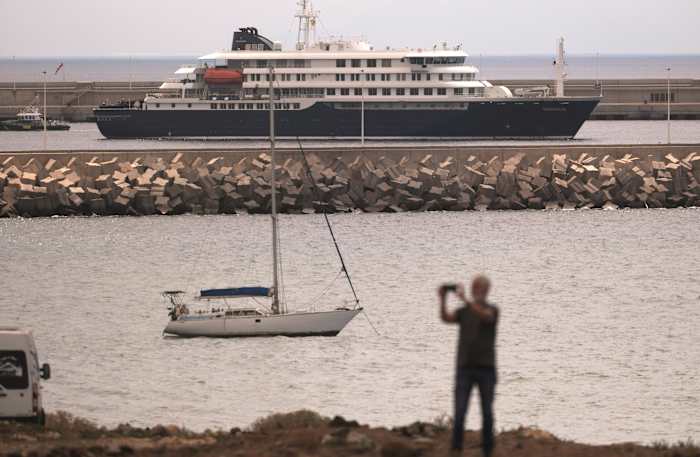
The shipping industry is currently paralyzed by a case of "wait-and-see" regarding a hantavirus-linked vessel. The operator is playing the classic corporate stalling game: awaiting more information before deciding on future cruises. It sounds responsible. It sounds measured. It is actually a fundamental misunderstanding of viral transmission and operational risk management.
Hantavirus is not the next COVID-19. It is not even the next Norovirus. By treating a localized rodent-borne incident like a respiratory pandemic, the industry is setting a precedent that will bleed balance sheets dry while doing exactly zero to improve actual passenger safety.
The Rodent Reality No One Wants to Discuss
The current narrative suggests the ship is a floating petri dish. This is biologically illiterate. Hantavirus is primarily transmitted through contact with the urine, droppings, or saliva of infected rodents. Unlike the flu, it doesn't hop from human to human in the buffet line.
When a cruise line says they are "awaiting information," what they are really saying is they don't have a handle on their pest control logs. If a rodent problem exists to the point of viral transmission, the "information" is already there. It’s in the bilge. It’s in the dry storage. It’s in the cracks of the infrastructure that should have been sealed months ago.
Waiting for a lab report to tell you whether to sail is like waiting for a weather report to tell you if you’re currently standing in the rain.
The Panic Premium
Most operators fear the PR fallout more than the virus itself. They shutter operations because they lack the guts to explain basic science to their customers.
- Fact: You cannot "catch" hantavirus from the person in the cabin next to you.
- Fact: The incubation period is long, meaning the "incident" happened weeks ago.
- Fact: Scrubbing the decks with bleach does nothing if the entry points for rodents remain open.
The False Security of the Deep Clean
Watch any news cycle regarding a "sick ship" and you’ll see B-roll of workers in hazmat suits spraying down railings. This is safety theater at its most expensive.
I’ve seen companies dump six figures into "sanitization protocols" that are essentially expensive perfume. Hantavirus in the dust of a ventilation system isn't solved by wiping down a mahogany bar top. If the operator wants to actually fix the problem, they don't need "more information" from health officials; they need a structural engineer and an aggressive integrated pest management (IPM) overhaul.
Why Corporate Stalling is a Strategy of Failure
By pausing cruises to "evaluate," the operator signals to the market that the ship is inherently dangerous. This creates a vacuum filled by speculation.
- Consumer Trust Erases: Every day of silence is a day the public assumes the ship is crawling with plague.
- Logistical Decay: Ships are meant to move. A docked ship is a decaying asset where stagnant water systems and reduced crew activity actually invite more pests.
- Financial Hemorrhage: The burn rate for a docked cruise ship is astronomical.
Instead of waiting for a government agency to give them a "thumbs up" that may never come with the certainty they want, the operator should be pivoting to a radical transparency model. "We found a rodent issue, we fixed the structural breach, we are sailing."
Stop Asking the Wrong Questions
The media is asking, "Is it safe to sail?"
The operator is asking, "What will the CDC let us do?"
Both questions are distractions. The only question that matters is: "What was the failure in the supply chain that allowed an infected vector onto a closed environment?"
Rodents don't just swim to a ship in the middle of the ocean. They come in via the pallets. They come in via the port facilities. If you aren't auditing your suppliers with the same intensity you're auditing your passengers' health forms, you are just waiting for the next headline.
The Nuance of Risk vs. Hazard
A hazard is the virus. The risk is the probability of exposure. On a ship, the risk is incredibly low once the specific nesting site is destroyed. Unlike a respiratory virus, you can physically remove the source of hantavirus. Once the droppings are gone and the area is disinfected, the risk drops to near zero almost instantly.
Continuing to hold the ship in limbo is an admission that the operator doesn't understand their own environment.
The Economic Cowardice of Modern Shipping
We live in an era where "abundance of caution" is used as a shield for lack of expertise. If you know how hantavirus works, you know that a 48-hour intensive structural audit and targeted remediation is more effective than a two-week "pause."
The industry follows a sheep-like pattern. One line pauses, so they all pause. No one wants to be the "reckless" one who kept sailing, even if the science supports it. This cowardice costs jobs, destroys vacation plans, and feeds a cycle of health illiteracy.
The Playbook for the Bold
If I were running that line, we wouldn't be "awaiting information."
- Identify the Breach: Find the specific container or port where the vector entered.
- Seal the Envelope: Move beyond basic traps. Use thermal imaging to find nests.
- Educate, Don't Evade: Tell the passengers exactly what happened. Explain the transmission vector. Show the work.
People aren't afraid of facts; they are afraid of the unknown. By staying silent and "deciding on cruises" later, the operator is making the virus seem more powerful than it is.
The Hidden Cost of the "Wait-and-See" Approach
When a ship sits idle, you lose your best crew. The talent moves to lines that are actually moving. You are left with a skeleton crew and a mounting list of maintenance issues that have nothing to do with a virus but everything to do with inactivity.
The hantavirus incident is a symptom of a larger rot: the inability of the travel industry to stand by its operational protocols when faced with a scary-sounding headline. Hantavirus Pulmonary Syndrome (HPS) is serious, yes. But it is also rare and preventable through basic, albeit rigorous, pest management.
If you can't keep mice off a ship, you shouldn't be in the business of moving thousands of people across the ocean. If you can keep them off, then a single incident shouldn't ground a fleet.
The operator isn't waiting for information. They are waiting for the news cycle to end. It’s a strategy of silence that treats the customer like an idiot and the science like an inconvenience.
The ship should be cleaned, the holes should be plugged, and the engines should be started. Anything else is just expensive posturing.
The industry needs to stop acting like every health hiccup is a global catastrophe. It’s time to get back to the business of sailing, backed by data rather than dread. If the ship is structurally sound and the vectors are gone, the "decision" is already made. Move.


