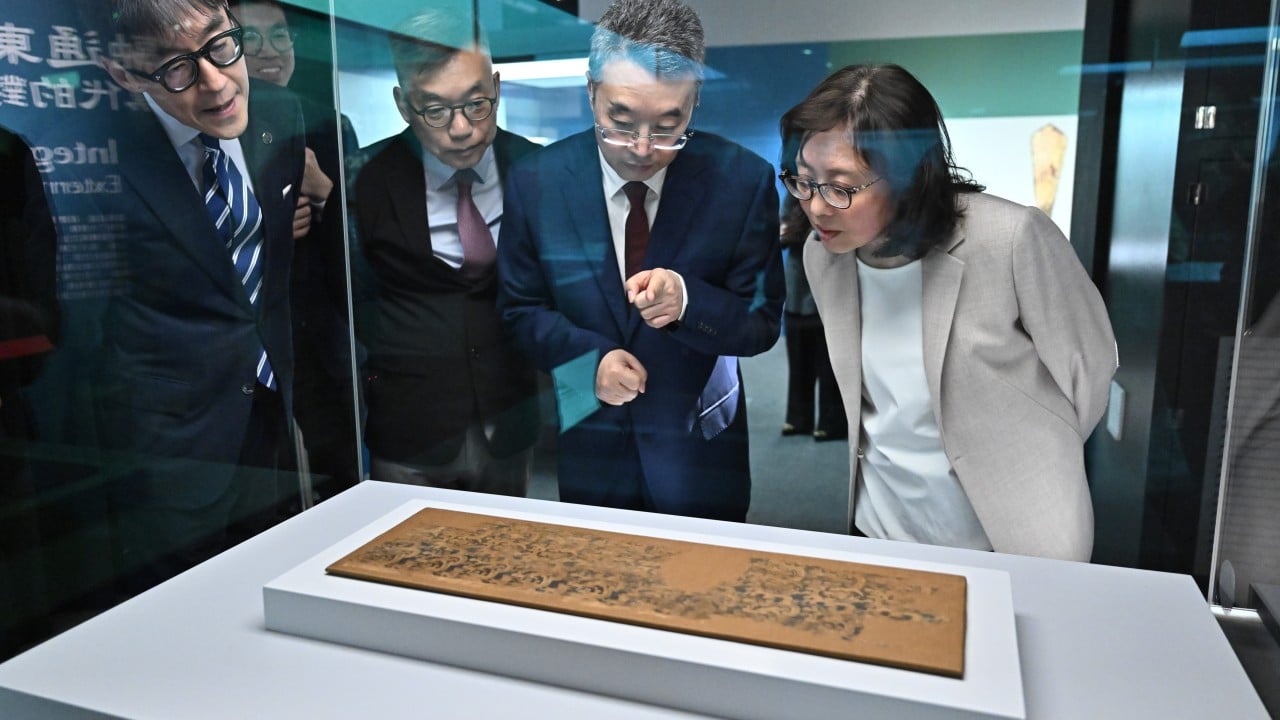
You don't need to be a history buff to feel the weight of 2,000 years when you walk into the Hong Kong Museum of History. Most people think of ancient China and see static, dusty images of old men in robes. They're wrong. The Han Dynasty was a sprawling, high-energy empire that basically set the blueprint for what China is today. Right now, a massive showcase in Hong Kong is proving that by putting over 250 rare relics on display. It's not just a collection of old stuff. It's a look at the DNA of a civilization.
The exhibition, titled "The Great Era of the Han Dynasty—Policy and Life," is a collaboration between the China Cultural Relics Exchange Centre and local authorities. It brings together pieces from over 40 museums and cultural institutions across the mainland. If you’ve ever wondered how a scattered group of warring states became a unified superpower, this is where you find the answer.
The Jade Suit That Defied Death
One of the first things that'll stop you in your tracks is a jade burial suit sewn with gold thread. It's incredible. These weren't just for show. The Han elite genuinely believed jade could prevent the body from decaying. They spent years and a fortune crafting these suits. Seeing one up close makes you realize how much the Han people obsessed over the afterlife. It wasn't just about dying; it was about maintaining status forever.
You aren't just looking at rocks and metal. You're looking at a culture that valued craftsmanship so highly that they’d spend decades on a single outfit for a corpse. It’s wild. This specific suit comes from the Shijiazhuang Museum, and it’s one of the best-preserved examples in existence. It tells us that the Han weren't just good at war; they were masters of logistics and art.
Real Power in Bronze and Silk
The Han Dynasty didn't just expand through speeches. They did it with tech. You'll see bronze mirrors, intricate lamps, and weapons that were lightyears ahead of what else was happening in the world at the time. The "Changxin Palace Lamp" is a standout. It's shaped like a servant girl, and it's designed to funnel smoke into the body so it wouldn't pollute the room. That’s 2,000-year-old air purification.
The exhibition also highlights the Silk Road. We talk about globalism like it’s a new thing. It isn't. The Han were trading with the Roman Empire while the rest of the world was barely getting started. You see it in the motifs on the pottery and the quality of the textiles. They were the world's first true economic engine.
Why Hong Kong is the Right Venue
There's a specific reason this matters in Hong Kong. The city has always been a bridge. By hosting these relics, the Museum of History is reminding everyone of the deep cultural roots that tie the region together. It’s a bit of a power move. It says, "Look at where we came from." For locals and tourists, it’s a chance to see items that rarely leave their home provinces in places like Hebei or Gansu.
Everyday Life Wasn't Just for Kings
The best part of this showcase isn't the gold. It's the small stuff. There are miniature pottery houses and figurines of farm animals. These were buried in tombs to give the deceased a comfortable "home" in the next world. They give us a glimpse into what a Han kitchen looked like or how they raised pigs.
- Agricultural tools: You see the shift from wood to iron.
- Terracotta musicians: Evidence of a society that valued leisure and art.
- Daily utensils: Some of these spoons look like they could be in a modern kitchen.
It makes the people of the Han Dynasty feel real. They weren't just names in a textbook. They were people who liked music, worried about their houses, and wanted their families to be comfortable.
The Logistics of a Mega Exhibition
Moving 250 Grade-I national treasures isn't easy. It’s a nightmare. The insurance alone would make your head spin. But the fact that they pulled this off shows a level of coordination that’s rare. Each piece has to be climate-controlled and transported under heavy guard. When you look at the "Galloping Horse Treading on a Flying Swallow" (even if it's a high-quality replica or a related bronze piece in the set), you're seeing something that survived thousands of years of rot, war, and looters.
Don't just breeze through the rooms. Stop and look at the inscriptions. The Han perfected the clerical script. It’s the reason modern Chinese characters look the way they do. They standardized everything—money, weights, measures, and writing. That’s how you run an empire.
Getting the Most Out of Your Visit
If you’re planning to go, don't go on a weekend. It'll be packed. Go on a Tuesday morning if you can. Give yourself at least two hours. The lighting is dim to protect the artifacts, so it takes a minute for your eyes to adjust to the detail on the smaller seals and coins.
Most people make the mistake of only looking at the big statues. The real story is in the seals. These tiny blocks of stone were the "passwords" of the ancient world. They carried the authority of the Emperor. If you had the seal, you had the power.
How to Find the Museum
The Hong Kong Museum of History is in Tsim Sha Tsui. It's an easy walk from the MTR. Admission for these special exhibitions usually requires a separate ticket, so check the website before you head out. They often run out of time slots for the more popular relics.
This isn't just about looking at the past. It's about understanding why the world looks the way it does now. The Han Dynasty didn't just end; it evolved into the foundation of an entire culture. Go see it before the pieces head back to their respective provinces. You won't get another chance to see this many top-tier relics in one room for a long time.
Check the museum's official schedule for guided tours in English or Cantonese. They usually have experts who can point out the tiny details you'd otherwise miss, like the specific way a bronze sword was tempered or the symbolism behind a particular bird motif on a silk fragment. Just get there early.