Ten thousand feet above the earth, the world looks neat. Rivers are ribbons. Cities are clusters of glowing quartz pressed against velvet dark. Up here, physics is a quiet engine and time is measured in gallons of jet fuel per minute. Passengers sleep with their mouths slightly open, trusting an invisible contract written in titanium and burnt hydrocarbons. They trust the steel tube. They trust the blue light of the cockpit instruments.
Mostly, they trust that the person in the left seat has a heartbeat steady enough to ignore the static.
Cabin air smells of recycled oxygen, dry coffee, and old wool. It is a sterile, floating room hurtling through the stratosphere at eight hundred kilometers an hour. Outside, the night is a hungry vacuum. Inside, a flight attendant collects a plastic cup of lukewarm ginger ale. A child dreams of cartoons in row twenty-four.
Then, the dashboard sings a song no pilot wants to hear.
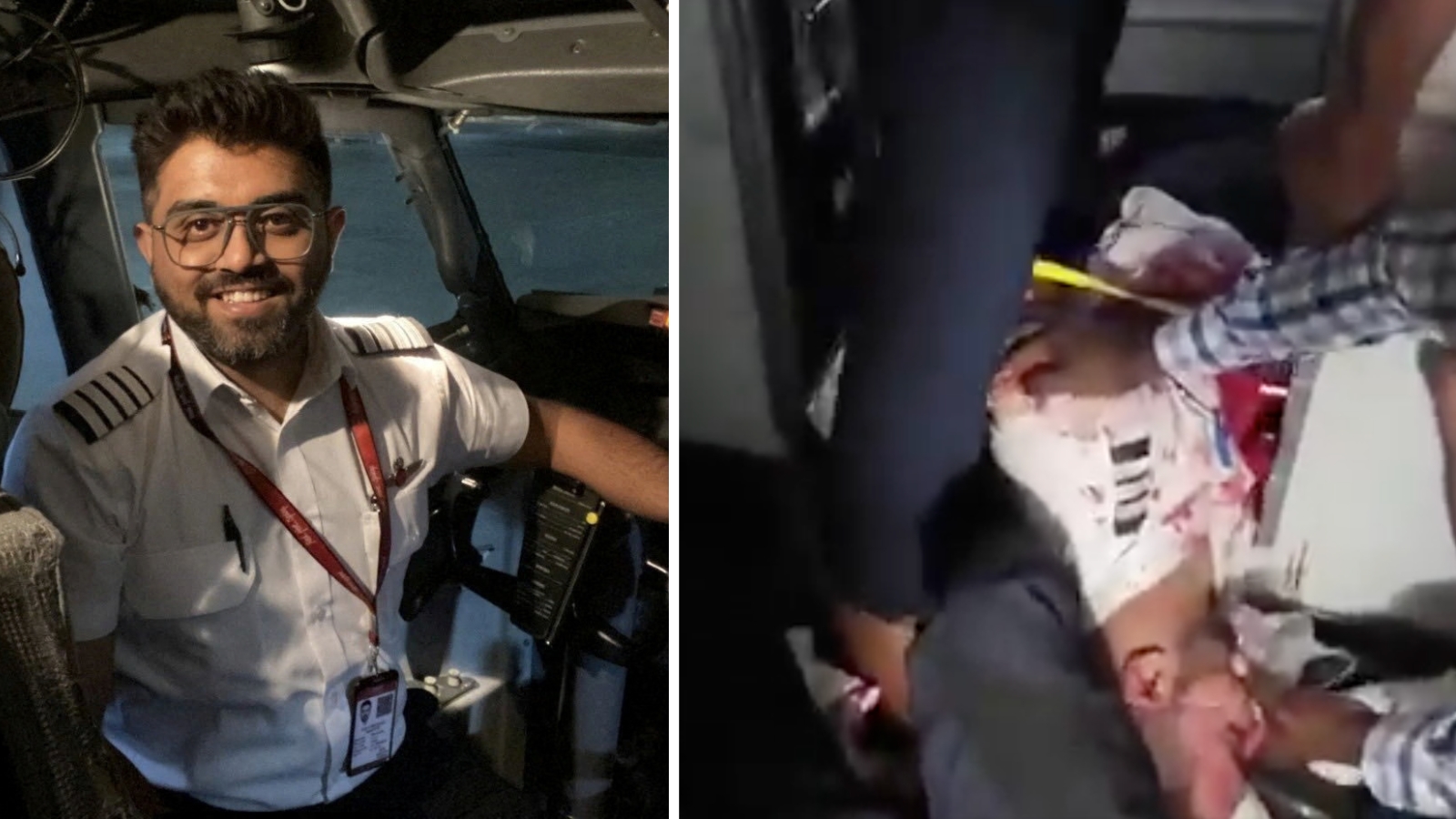
Captain Sumeet Sabharwal did not become a pilot by accident. Aviation is not a career you drift into like a lukewarm bath; it is a discipline that requires you to trade parts of your youth for math textbooks, simulator sweat, and an intimate acquaintance with exhaustion. You learn to read weather patterns the way an old farmer reads the skin of a peach. You learn that a cockpit is not a place for panic. It is a laboratory of consequence.
When a medical emergency strikes at cruising altitude, the rules of the ground dissolve. There are no traffic lights to pull over beside. There is no roadside emergency lane. There is only the flight deck, the air traffic controllers whispering through headphones from hundreds of miles away, and a cabin where someone’s breath is beginning to rattle.
Mid-air emergencies are terrifyingly fragile things. They do not arrive with cinematic explosions or theatrical alarms. They arrive as a quiet knock on the heavy flight deck door. A voice, tight with professional restraint, tells the captain that a passenger in row twelve is unresponsive, or that a medical condition has flared into a life-or-threatening crisis.
Suddenly, the destination ceases to matter. The flight plan is instantly shredded. The only metric that counts is the ticking of a wrist watch and the nearest stretch of tarmac capable of absorbing a massive metal bird at a moment's notice.
For a FlyDubai flight bound for Israel, that realization hit somewhere over the middle reaches of an international route.
Imagine the scene in the cockpit. The dim amber glow of the flight management computer. The hum of the avionics cooling fans. The sudden spike of adrenaline that cold-sweats the palms against the yoke. Captain Sabharwal didn't flinch. In aviation, the first rule of an emergency is simple to say and agonizing to execute: fly the plane.
Before you can save a life in the cabin, you must keep the thousands of lives in the fuselage from tumbling out of the sky. Every switch flicked, every frequency changed, every fuel calculation performed is a dance on the head of a pin.
Air traffic control frequencies crackled. The dialogue between the cockpit and the ground shifted from routine operational chatter to urgent calculus. Where is the nearest equipped medical facility? Which sovereign airspace can we slice through without waiting for diplomatic clearance? What is our landing weight, and can we burn fuel fast enough, or do we drop the gear and slam onto the runway heavy and hot?
Captain Sabharwal chose speed, precision, and human life.
He didn't think about headlines. He didn't think about the geopolitical friction of the region or the weight of the flag painted on the vertical stabilizer. He thought about oxygen saturation, heart rates, and the geometry of an emergency descent.
A commercial airliner is not a sports car. You cannot simply pull a U-turn in the clouds. Descending a wide-body or narrow-body jet from thirty-eight thousand feet to sea level requires a delicate choreography of thrust reduction, spoiler deployment, and altitude management. Push the nose down too fast, and the inner ears of three hundred passengers begin to bleed; descend too slowly, and the person dying in row twelve runs out of tomorrows.
As the FlyDubai aircraft dipped its nose, cutting through cloud layers that swallowed the moonlight, the cabin transitioned from mild boredom to collective holding of breath. Oxygen masks didn't drop—this wasn't a decompression—but the sharp angle of descent told everyone who was awake that something was profoundly wrong.
In moments like these, passengers look at the cabin crew for cues. If the flight attendants are calm, the cabin stays quiet. If the flight attendants panic, terror fills the aisles like smoke.
The crew on that flight held the line. They worked the medical kit, monitored vitals, and kept the stricken passenger tethered to hope while Captain Sabharwal carved a desperate path toward the runway.
Landing an emergency flight is an exercise in controlled aggression. The tires scream against the concrete. Reverse thrusters roar like an avalanche, throwing the weight of the aircraft forward into shoulder harnesses. The brakes glow cherry red beneath the wheel wells, shedding heat energy faster than a blacksmith's iron.
As the jet taxied to a halt, the red-and-white lights of emergency vehicles began to paint strobes across the cabin windows. Paramedics boarded. The patient was offloaded into the cold night air, handed over to hands that could administer IV drips and defibrillators.
In the aftermath, the internet does what it always does. It looks for a hero. It wants a face to pin to the miracle.
Captain Sumeet Sabharwal was hailed across media channels, his name whispered with reverence in aviation forums and news broadcasts. Social media feeds flooded with praise. People called him a savior.
If you ever meet a pilot like Sabharwal, do not call him a hero to his face. He will look uncomfortable. He will shift his weight from one foot to the other, adjust the collar of his crisp white shirt, and tell you a very simple, unglamorous truth: I was just doing my job.
And therein lies the paradox of modern transit. We build these absurd, miraculous machines that defy gravity, flying us across oceans in the time it used to take a horse to cross a county. We populate them with hundreds of strangers who share nothing in common except a boarding pass and a destination. And we entrust their survival to quiet, unremarkable professionals who drink lukewarm coffee from paper cups and study emergency checklists until they are worn flat at the corners.
We live in an age that worships disruption, flash, and algorithmic genius. We celebrate the founders of apps and the creators of digital noise. But when the engine coughs, or when a heart stumbles at thirty thousand feet over a dark sea, we do not pray to Silicon Valley.
We pray to the person in the left seat. We pray to the steady hands that know which toggle to flip when the world tilts sideways.
The plane took off again hours later, after the paperwork was signed, after the fuel tanks were topped off, after the cockpit windows were cleared of condensation. The passengers boarded with slightly wider eyes, looking at the flight deck door with a new kind of awareness. They weren't just cargo anymore. They were survivors of an invisible storm.
Up ahead, the runway lights stretched out like a string of amber pearls into the dark. Captain Sabharwal pushed the throttles forward. The engines spooled up with a deep, guttural growl that vibrated right through the soles of your shoes. The runway centerline rushed beneath them, a blur of white paint and rubber marks.
Then, the wheels left the ground. The earth dropped away. And the sky, once again, belonged to the quiet ones.