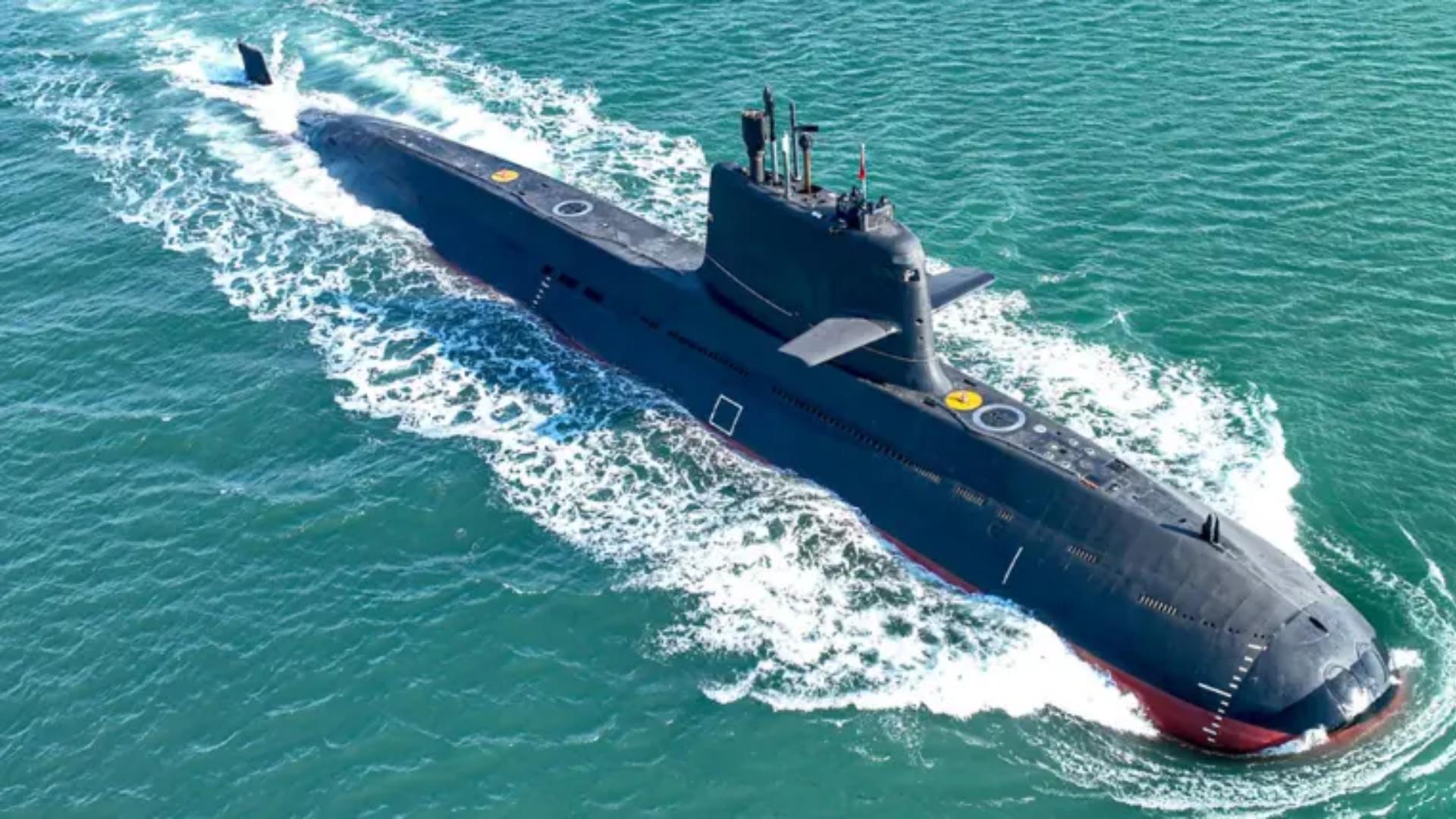
The power balance in the Indian Ocean just shifted. On April 30, 2026, the Pakistan Navy officially commissioned its first Hangor-class submarine, the PNS Hangor, in Sanya, China. If you think this is just another boat in the water, you're missing the bigger picture. This isn't just about adding a hull; it's about Pakistan securing a stealthy, long-range "silent killer" that can stay underwater for weeks at a time without coming up for air.
For a country that's historically been outmatched by India's massive surface fleet, these submarines are the ultimate equalizer. They provide an asymmetric edge that makes an adversary think twice before trying to blockade a port or dominate the Arabian Sea.
The Tech That Makes Hangor Dangerous
The real star of the show here is Air-Independent Propulsion (AIP). Most diesel-electric submarines have a major weakness: they have to "snorkel" or surface to run their engines and recharge batteries. When they do that, they're sitting ducks for radar and aircraft.
AIP changes that. It allows the Hangor-class to remain submerged for significantly longer periods—we’re talking weeks, not days. It uses a Stirling engine system (the tech is basically a closed-loop heat engine) that doesn't need atmospheric oxygen.
Here’s why that matters. In the shallow, noisy waters of the Arabian Sea, a submerged submarine with AIP is nearly impossible to find. It doesn't make much noise, and it doesn't leave a thermal footprint on the surface. Honestly, it’s a nightmare for anyone trying to run anti-submarine warfare (ASW) operations. While India has a larger navy, many of its current conventional subs are still waiting for AIP retrofits, giving Pakistan a temporary but very real technical head start.
More Than Just a Chinese Import
You’ll hear some critics say Pakistan is just buying Chinese "off-the-shelf" tech. That’s a lazy take. While the Hangor-class is based on China's Type 039B Yuan-class, it’s a customized beast.
- Displacement: Around 2,800 tons. It’s slightly heavier and more packed with gear than the original S26 export design.
- Weaponry: Six 533mm torpedo tubes. These aren't just for torpedoes. They can launch anti-ship missiles and, most importantly, the Babur-3 cruise missile.
- The Nuclear Angle: The Babur-3 is nuclear-capable. By putting these on a stealthy AIP submarine, Pakistan basically cements its "second-strike" capability. If things ever went south on land, these subs would be the insurance policy out at sea.
The deal itself is also about long-term survival, not just a one-time purchase. Out of the eight submarines ordered, only four are being built in China. The other four are being constructed right in Karachi at the Karachi Shipyard & Engineering Works (KS&EW). This is a massive transfer of technology. Pakistan isn't just learning how to sail these things; it's learning how to build them. That’s how you get "naval sovereignty."
Why the Name Hangor Matters
Names have weight in the military, and "Hangor" is legendary in Pakistan. The original PNS Hangor was a Daphne-class sub that made history during the 1971 war. It sank the Indian frigate INS Khukri, marking the first time a submarine had sunk a warship since World War II.
By naming this new class Hangor, the Pakistan Navy isn't just being nostalgic. It’s sending a very clear message about its intent and its heritage. It’s a psychological play as much as a tactical one.
The Strategic Shift in the Indian Ocean
Let’s look at the map. The Indian Ocean is becoming a crowded neighborhood. You’ve got the China-Pakistan Economic Corridor (CPEC) ending at Gwadar. You’ve got massive energy shipments coming through the Strait of Hormuz.
If you're Pakistan, your "economic lifelines" are entirely dependent on these waters staying open. Admiral Naveed Ashraf pointed this out during the ceremony: disruptions at maritime choke points are a global threat. The Hangor-class is designed to protect those Sea Lines of Communication (SLOCs).
It also complicates things for India. A larger, more capable Pakistani submarine fleet means India has to spend way more on expensive ASW ships, helicopters, and P-8I surveillance planes just to keep track of them. It’s a classic case of making your opponent spend $10 to counter your $1.
What Happens Next
The commissioning of the first boat in Sanya is the starting gun. The second, third, and fourth submarines have already been launched and are undergoing trials. By the time 2028 rolls around, Pakistan will have a fleet of eight of these AIP-equipped hunters.
If you're following the defense sector, keep an eye on the Karachi-built versions. The first "Made in Pakistan" Hangor-class will be the true test of whether the technology transfer worked.
If you want to understand the future of this region, stop looking at the tanks on the border and start looking at what's sliding under the waves of the Arabian Sea. The silent service just got a whole lot louder.
Actionable Next Steps
- Monitor the Sea Trials: Watch for the induction of the second and third boats in late 2026. This will signal the pace of the fleet’s operational readiness.
- Watch the Babur-3 Integration: The first successful test-fire of a Babur-3 from a Hangor-class tube will be the moment Pakistan’s sea-based deterrent becomes fully "credible."
- Track Karachi Shipyard Progress: The delivery of the first locally-built sub (expected around 2028) will determine if Pakistan can maintain this fleet without constant Chinese oversight.