Silence.
In an arena built to hold twenty thousand screaming souls, with bass thumping through the floorboards like an anxious heartbeat and nacho cheese cooling under heat lamps in the concourse, the sudden quiet before tip-off feels almost unnatural. You can hear the squeak of a sneaker on polished maple forty feet away. You can hear the low hum of television trucks parked outside in the cold night air. Then the first brass notes of "The Star-Spangled Banner" rise toward the rafters, and suddenly every posture in the building is being graded. If you found value in this post, you might want to check out: this related article.
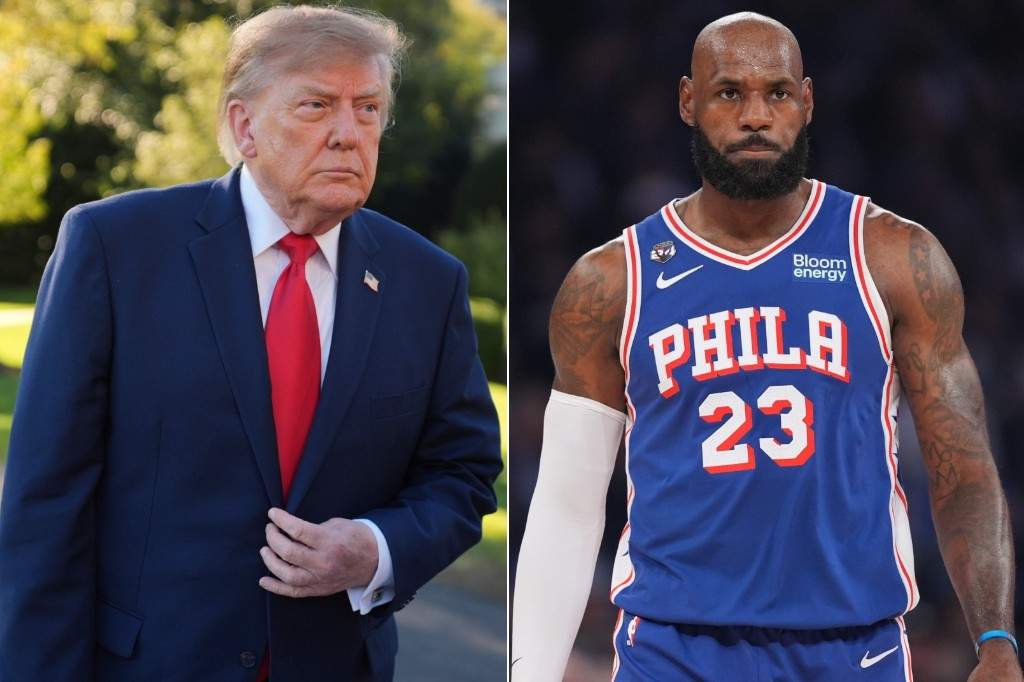
That is where the trouble begins. Not in the melody, and not even in the words written more than two centuries ago during the bombardment of Fort McHenry, but in the split-second choreography that follows. Standing. Sitting. Kneeling. Looking up at the giant flag stretched across the hardwood or the jumbotron. In modern American sports, a song that was meant to unify a crowd after battle has become a litmus test of loyalty—and when Donald Trump accuses LeBron James of showing "disrespect" during the U.S. national anthem, the sound waves travel far past the arena walls. They land in living rooms, group chats, barbershops, and campaign rallies where people are already exhausted from arguing about who loves the country the right way.
I have stood in enough press rows and tunnel walkways over the years to know how a three-second clip can turn into a three-week war. You watch the game with one eye on the play design and the other on a producer's monitor as someone rewinds a moment ten times in slow motion. What looks like a player adjusting a headband, catching a breath after pregame warmups, or standing still while teammates shift their weight can be framed in a single frame as defiance or devotion. Truth be told, I find myself confused and uneasy whenever an athlete's posture becomes a proxy for every grievance in the culture. Watching two towering figures—a former president who commands the oxygen of every political room and a basketball icon who has spent two decades under a microscope since high school—collide over national anthem etiquette makes you wonder whether anyone is actually listening to the music anymore. For another look on this story, refer to the latest coverage from Bleacher Report.
To understand why a remark from Trump about LeBron James stirs such immediate heat, you have to look at what both men represent in the American imagination. Let's use a metaphor here: think of the national anthem as a mirror hanging in a crowded hallway. One person walks past it and sees a family heirloom passed down through generations of service and sacrifice; another walks past it and sees a promise that has never quite kept up with its own words. When Trump speaks about athletes and the anthem, he is speaking to millions of people for whom standing tall, hand over heart, signals respect for the flag, the military, and the traditions that hold a sprawling nation together. When LeBron James speaks out on social justice or pushes back against political criticism, he is speaking to another massive audience that views public platforms as spaces to demand accountability and equality, even when that makes powerful people uncomfortable.
Consider what happens next: neither side is arguing in a vacuum. The modern clash over anthem conduct did not start yesterday, and it is not unique to basketball. Since Colin Kaepernick first knelt during the NFL preseason in 2016—an act he later explained was meant to protest racial injustice and police brutality rather than insult service members—the pregame ritual has carried a heavy political charge across football, basketball, soccer, and beyond. NBA rules require players to stand respectfully during the anthem, and leagues have wrestled for years with how to balance tradition, expression, and television ratings. Meanwhile, Donald Trump has repeatedly made athlete patriotism and anthem observance a central talking point in interviews, rallies, and social media posts, framing criticism of high-profile stars like LeBron James as a defense of traditional American values.
Facts matter here, even when emotions run hot. A headline that says Trump accused LeBron James of disrespect during the anthem points straight to a recurring flashpoint between the two men, yet public claims and viral clips often blur details. Sometimes a dispute centers on an athlete sitting, kneeling, or appearing not to stand at attention during a specific broadcast moment; other times, critics widen the word "disrespect" to cover broader political clashes, interviews, or public stances taken by LeBron outside the ninety seconds of the song itself. Separating what actually happened on the court from how a statement is framed on cable news or social media takes patience—and patience is in short supply when everyone wants an instant verdict.
To feel how this plays out away from television cameras, let's build a hypothetical scenario—clearly marked as fiction, though drawn from real conversations I have had across the Midwest and along the coasts.
Picture a Tuesday night in November in a modest sports bar outside Akron, Ohio, LeBron's hometown. The walls are lined with framed jerseys, faded pennant banners, and a neon beer sign buzzing softly behind the taps. At the end of the bar sits Ray, a retired machinist in his late fifties who spent thirty-four years working second shift and whose younger brother served in the Army. Ray isn't looking for a fight. He likes cold lager, tight fourth quarters, and the simple comfort of seeing everyone stand together when the anthem plays. When the screen shows a clip of a basketball star not standing quite the way Ray thinks he should—or when a clip of Trump calling out LeBron for disrespect flashes across the ticker—Ray's jaw tightens. To Ray, standing is basic manners. You stand for the anthem the way you stand when an older neighbor walks into the room or when a funeral procession passes by.
Three stools down sits Maya, a twenty-six-year-old high school history teacher and former college track athlete. She grew up ten miles from where Ray works, and she has watched LeBron's rise from a kid in a tough neighborhood to a billionaire philanthropist funding school programs and housing initiatives. When Maya hears accusations of disrespect leveled at LeBron, she doesn't hear a debate about flag etiquette. She hears a double standard: why is a Black athlete's patriotism constantly put on trial while his investments in communities and his vocal defense of voting rights and civil liberties get brushed aside?
Neither Ray nor Maya is a caricature. Both of them love their country. Both of them have reasons for feeling defensive when someone tells them what patriotism looks like. Yet sitting a few feet apart under the same fluorescent glow, they are reading two completely different subtitles on the exact same broadcast.
Why does that gap feel so wide right now? Part of the answer lies in how our brains process symbols. Psychologists and historians have long noted that national symbols—flags, anthems, oaths—do heavy emotional work precisely because they are open-ended. They act like containers into which people pour their memories, their pride, their fears, and their hopes. When someone appears to treat that container casually, or when a leader calls out a famous figure for falling short of an unwritten code, the reaction is rarely measured. It feels personal. A critique of anthem behavior can feel to one person like a necessary defense of shared respect, and to another like an attempt to police dissent and silence voices they admire.
And then there is the attention economy, which feeds on outrage the way a dry brushfire feeds on wind. A nuanced explanation about arena camera angles, league policies, or the difference between protesting an injustice and hating a country gets three likes and scrolls off the screen. A sharp accusation from a former president or a defiant response from an NBA superstar gets millions of views before dinner. We are living inside an outrage machine that rewards volume over understanding, turning every public figure into a target or a trophy.
Still, I cannot pretend this is simple, or that I have a neat formula that makes the tension vanish. As someone who has covered locker rooms where players talk quietly about feeling misunderstood—and stood in crowds where fans talk just as quietly about feeling looked down upon by elites and celebrities—I know how easy it is to talk past one another. Sometimes a player genuinely makes a mistake or looks distracted during a solemn moment. Sometimes a critic exaggerates a clip to score political points. Sometimes both things are true at once: a moment is ambiguous, and people rush in to fill the silence with their own assumptions.
What gets lost in all that noise is the humanity of the people involved. LeBron James is not just a brand, a jersey number, or a political foil; he is a husband, a father, an athlete managing a body that has logged more minutes than almost any in basketball history, and a man who has navigated fame since he was a teenager. Donald Trump is not just a caricature on a screen either; he is a political force whose words move millions of people who feel their way of life is under siege. When we reduce either of them—or the fans watching them—to pure villainy or pure sainthood, we shrink our own capacity for clear thinking.
Look closely at what happens when the anthem ends in any arena. Within seconds, the solemnity breaks. Coaches bark instructions. Players clap hands, slap sweat from their brows, and jog toward the scorer's table. The ball goes up, the clock starts ticking, and the crowd roars back to life. For the next two hours, nobody cares about politics—or rather, everyone brings their own life into the stands while the game itself demands attention.
Maybe the real test isn't whether every person in a stadium stands at the exact same angle with the exact same thought in their head. Maybe the harder, more honest question is whether we can look at a moment of friction—like Trump accusing LeBron James of disrespect during the national anthem—and ask what is really beneath the surface before we pick up a stone. Are we defending genuine respect, or are we just looking for proof that the other side is wrong?
The arena lights still shine bright long after the final buzzer fades. Out on the empty court, the hardwood gleams under rows of dark seats, quiet once more, waiting for the next crowd to walk through the doors and decide what every note and every gesture is going to mean.