Borders don't just exist on paper. They live online now.
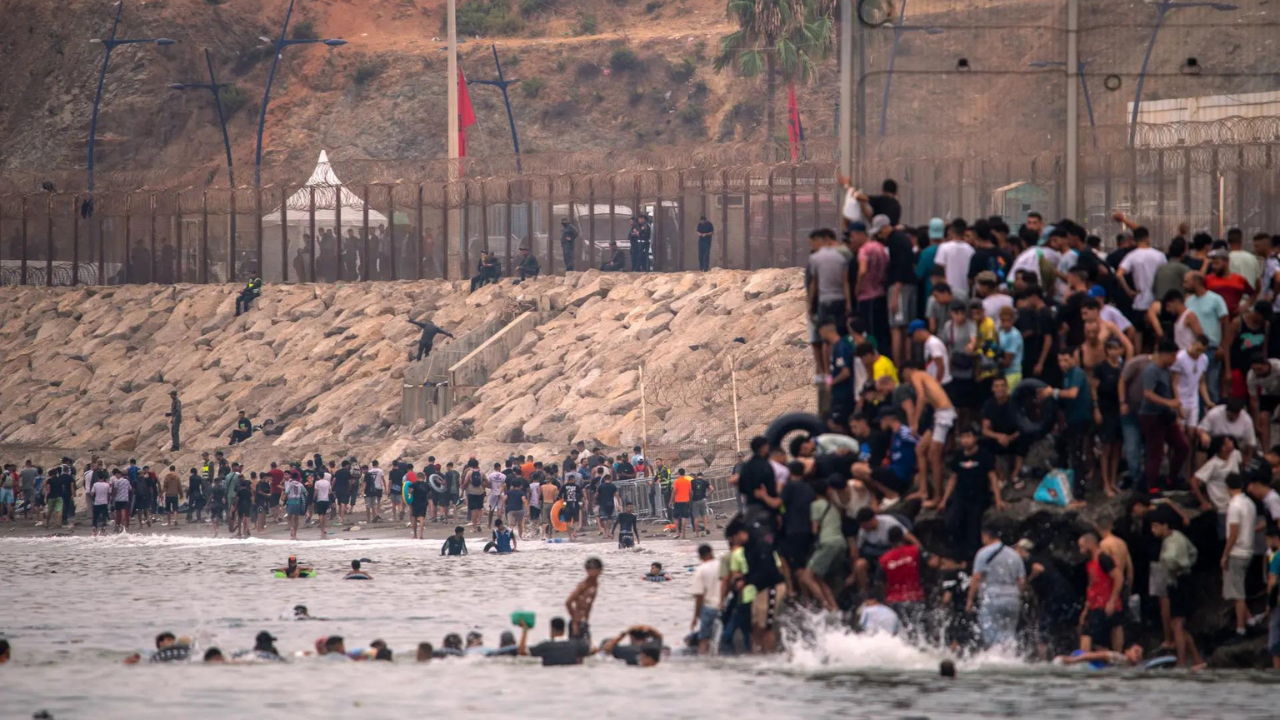
When anonymous accounts start pushing dates for a mass rush on Europe, the ripple effect hits real hills, real concrete, and real riot shields. Moroccan police detained at least 111 people near the border town of Fnideq after digital invitations triggered a fresh wave of movement toward the Spanish North African enclave of Ceuta.
If you're wondering why a handful of online posts can mobilize hundreds of people into the mountains, you have to look at the pressure cooker building up just out of sight.
The Digital Spark and the Ground Reality
Two weeks after a staggering influx on July 30—where more than 72,000 people surged across the frontier and at least 96 people died trying to reach European soil—Rabat and Madrid were already on high alert. Unknown accounts began circulating messages pointing to August 15 as the date for another collective rush.
People listened. Groups packed bags, bypassed highway checkpoints by taking mountain tracks, and gathered on the rough terrain outside Fnideq, roughly three kilometers from the border fence.
It didn't work. Moroccan authorities deployed police, military units, naval vessels, and drones. Security forces used tear gas to scatter groups hiding in the hills, rounding up 109 sub-Saharan African migrants and two Moroccan nationals in the sweep. Local outlets floated numbers nearly triple that official count, but the message from the landscape was clear: the state was ready.
Inside Ceuta and the Fallout Within Europe
On the Spanish side of the fence, the atmosphere told its own story. Madrid didn't take chances. More than 500 additional police officers rushed in from mainland Spain, pushing the total security presence inside the tiny enclave past 1,600 personnel. Soldiers guarded local supermarkets. A brand-new maritime barrier cut across the coastal water to block anyone thinking of swimming around the land border.
Spanish Interior Minister Fernando Grande-Marlaska made the policy stance blunt. Roughly 5,000 migrants who made it during the July 30 surge are stuck in limbo, living in makeshift beach shelters. They aren't getting legal papers, and they aren't heading to mainland Spain. Unless extreme vulnerability applies, they're going back to Morocco.
The political shockwaves didn't stop at the border fence. The sheer volume of people moving through North Africa triggered diplomatic friction inside the European Union. Italy temporarily threw up Schengen border checks for air and sea arrivals coming from Spain, terrified of secondary movements. Spain fired back with reciprocal checks before trying to de-escalate the diplomatic spat.
Why the Internet Rumors Keep Working
Why do thousands keep trying when the odds are stacked so heavily against them?
Talk to the people living through it, and you get a stark reality check. Driss Sadik, a 22-year-old who swam for five hours during the July 30 crossing, has a direct warning for anyone thinking about following digital advice: "Don't cross now, my brothers. You're only going to suffer."
Adil Jamil, a 17-year-old caught up in the reality of life inside the enclave, put it even more bluntly. "Those who enter aren't going to benefit from anything. There will just be more and more of us, and they won't find a solution for all."
He explained that these attempts rely on strength in numbers orchestrated by anonymous organizers who pick a date and disappear. The crowd gathers, believing safety is found in a massive mob, only to face tear gas, detention, or blocked mountain paths.
Authorities across Morocco have tried to cut the head off these operations. Police set up road filters in major hubs like Casablanca, Fez, and Kenitra, yanking people off trains and buses before they could sniff the northern coast. Schools in Fnideq, normally meant for students, were converted into makeshift barracks for the wave of security personnel holding the line.
If you are tracking how migration routes react to digital coordination, watch the algorithms as closely as the coastlines. When false promises spread unchecked on social feeds, security forces respond with heavier boots on the ground—and the people caught in the middle pay the heaviest price.


