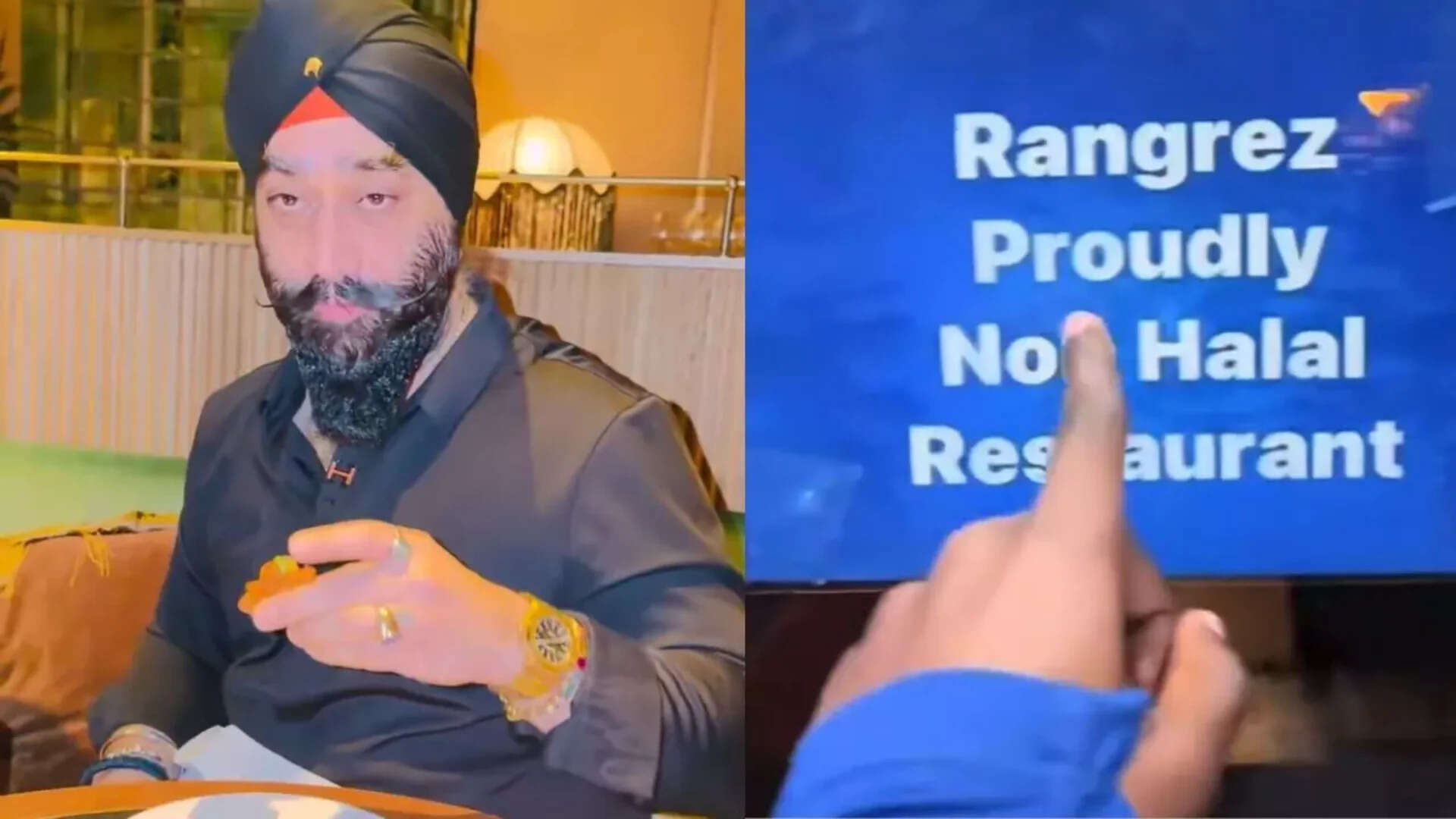
A peaceful afternoon at a family-run restaurant shouldn’t end with police sirens and a jail cell. But for Gurdeep Singh, an Indian-origin Sikh business owner, that’s exactly what happened. This isn't just a story about a misunderstanding over a menu. It's a sobering look at how fast a digital mob can move and how slow the authorities are to step in when the target isn't the loudest voice in the room.
The conflict started with a simple question about dietary requirements. It spiraled into a nightmare that saw Singh detained, his reputation smeared, and his safety ignored. When he asked for protection, he says the response was silence. You might also find this similar coverage insightful: Strategic Asymmetry and the Kinetic Deconstruction of Iranian Integrated Air Defense.
Why the Halal Row Was Never About Food
Most people looking at this story see a dispute over meat. That’s a surface-level take. In reality, this was a targeted harassment campaign fueled by online misinformation. Singh runs a business that caters to a diverse crowd. He’s been clear about his sourcing. Yet, a group of individuals decided to make an example of him, filming him and accusing him of "tricking" customers.
The "no halal" row wasn't an accident. It was a weaponized narrative. In the UK, food labeling and religious dietary requirements are sensitive topics. When you inject a false claim into that mix, you aren't just starting a debate. You're painting a bullseye on someone's back. Singh found himself defending his heritage and his livelihood against a crowd that didn't want answers. They wanted a confrontation. As reported in detailed reports by NBC News, the effects are widespread.
The Moment the Police Failed to Protect
Singh’s account of his release is chilling. After being detained following the initial heated exchange, he expected a level of professional conduct from the authorities. He didn't get it. He claims he told the police he felt unsafe. He pointed out the people waiting for him outside. He literally asked for a safe exit.
They refused.
Think about that for a second. You have a business owner with no criminal history, caught in the middle of a volatile community dispute, and the people sworn to keep the peace basically told him to walk out the front door and figure it out. It’s a massive lapse in judgment. It also highlights a broader issue in modern policing. There’s a fear of being seen as "taking sides" in communal disputes, which often leads to a total failure to protect the individual.
How Digital Mobs Overpower Facts
You’ve probably seen the videos. Someone holds a phone six inches from a business owner’s face, shouting questions and cutting off the answers. These clips are edited to make the victim look guilty or evasive. By the time the full story comes out, the damage is done.
In Singh’s case, the accusations were loud and the facts were quiet. He has maintained that his restaurant follows specific standards. He’s been transparent. But transparency doesn't go viral. Outrage does. The people who showed up at his restaurant weren't there to check a certificate. They were there to create content for a specific audience.
This is the new "trial by social media." It bypasses the legal system and goes straight for the jugular—the victim's ability to earn a living.
The Sikh Community Identity Under Fire
This incident isn't happening in a vacuum. The Sikh community has often found itself caught between different political and religious frictions. By targeting a Sikh restaurateur over halal issues, the agitators were tapping into deeper tensions. It’s a classic tactic. You take a specific religious practice and use it as a wedge to create "us vs. them" scenarios.
Singh’s Sikh identity is central to who he is and how he runs his business. Sikhs have a long history of providing food to everyone, regardless of background, through the tradition of Langar. To accuse a Sikh of being intentionally deceptive about food is a specific kind of insult. It hits at the core of their faith’s commitment to service and honesty.
What the Law Says About Harassment and Menus
If you're a business owner, you need to know your rights. You aren't legally required to provide every type of meat to every person. You are required to be honest about what you're serving. Singh was honest. The harassment he faced, however, often crosses the line into criminal behavior.
- Public Order Offences: Using threatening or abusive words to cause alarm or distress.
- Harassment: A course of conduct that is intended to intimidate.
- Malicious Communications: Sending or posting content online to cause harm.
The problem isn't a lack of laws. It's a lack of enforcement. When police see a "protest" or a "dispute," they often treat it as a civil matter. They wait until someone gets punched before they move. For someone like Singh, waiting for the punch isn't an option. His life and business are already being hit every day the harassment continues.
Rebuilding After the Viral Storm
Singh is out now, but the "no halal" tag will follow his restaurant in search results for years. That’s the real tragedy. Even after the facts are cleared up, the SEO of hate lasts longer than the truth. He’s spoken out because he has to. If he stays quiet, the narrative belongs to the people who filmed him.
If you want to support businesses facing this kind of targeted nonsense, the steps are simple. Don't engage with the rage-bait videos. Check the actual reviews from long-term customers. Most importantly, realize that a 30-second clip on a phone is almost always a lie by omission.
The next time you see a "confrontation" video, ask yourself why the camera started rolling right then. Ask why the police are standing in the background doing nothing. Singh’s experience shows that the system won't always have your back. You have to be loud enough to demand the protection you're already owed.
Check your local community guidelines on business harassment and ensure you have your own high-quality CCTV. Don't rely on the police to be your only witness. Record your own evidence and get a lawyer involved the moment a "protest" starts on your doorstep. Silence is what the mob counts on.