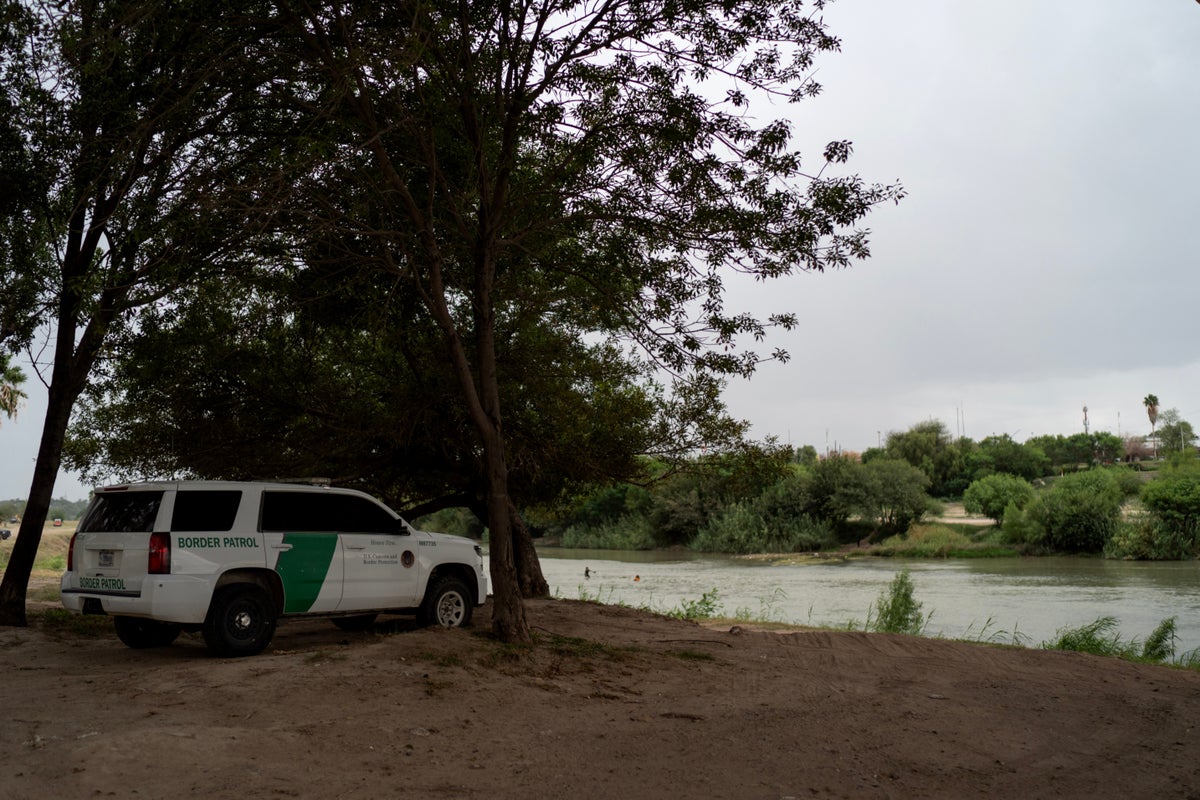
A rail worker in a desolate stretch of Eagle Pass, Texas, made a discovery that's becoming a grim staple of border reality. Six people were found dead inside a shipping boxcar. They weren't just names on a manifest. They were human beings who gambled their lives on a metal oven. It's a tragedy that hits with the weight of a sledgehammer, yet it often gets buried in the relentless cycle of political bickering.
This isn't an isolated incident. It's a systemic failure. When you look at the geography of Eagle Pass, you see why it's a flashpoint. It sits right on the Rio Grande. It's a gateway that looks like an opportunity but often turns into a trap. The heat in South Texas doesn't play around. Inside a steel container, temperatures don't just climb. They multiply. We're talking about a space that becomes a literal pressure cooker within minutes of the sun hitting the metal. Meanwhile, you can explore related developments here: The Mechanics of Dignified Diplomacy: Deciphering Iran's Strategic Negotiation Framework.
People want to know how this keeps happening. They ask why anyone would get into a boxcar in the first place. The answer is usually desperation. If you're fleeing violence or total economic collapse, a risky train ride looks like a calculated gamble. But the house always wins.
Why the Eagle Pass Rail Line is a Death Trap
Railways are the arteries of North American commerce. Thousands of cars move across the border every single day. Border Patrol agents and railroad security teams do their best to scan these cars, but the sheer volume is staggering. It's impossible to check every nook and cranny of every train. To see the bigger picture, check out the excellent analysis by The Washington Post.
Eagle Pass serves as a primary hub for Union Pacific and other major rail lines. The tracks run through vast, unpopulated ranch land where help is hours away. If someone gets trapped or realizes they're in trouble, there's no one to hear them scream. The isolation is total.
Most of these boxcars are designed to be airtight or at least securely locked from the outside to prevent theft. Once that door slides shut and the latch drops, you're at the mercy of the schedule. If a train gets sidelined in a yard for twelve hours under the Texas sun, it's a death sentence. There's no ventilation. There's no water. There's just the heat.
The Physics of Heat Stroke in a Metal Container
I've talked to emergency responders who've worked these scenes. It’s never easy. The human body starts to fail once its core temperature hits 104 degrees Fahrenheit. Inside a boxcar in 100-degree weather, the internal air temperature can easily spike to 130 or 140 degrees.
Your sweat stops evaporating because the humidity inside the cramped space reaches 100%. Your heart rate triples as it tries to pump blood to your skin to cool down. Eventually, your organs just quit. It’s a slow, agonizing way to go.
- Dehydration hits first, clouding judgment and making escape attempts futile.
- Heat exhaustion follows, leading to fainting and an inability to move.
- Heat stroke is the final stage, causing permanent brain damage or cardiac arrest.
The six individuals found in that boxcar likely didn't stand a chance once the train stopped moving. Without the airflow generated by a moving train, that metal box becomes a furnace.
Mapping the Risk Along the Border
The "remote spot" mentioned in initial reports is typical for these discoveries. Smugglers often direct migrants to board trains in staging areas just south of the border. They tell them they'll be in San Antonio or Houston in a few hours. They don't tell them about the delays. They don't tell them about the "siding" where trains wait for hours for other traffic to pass.
Texas DPS and Border Patrol have increased their presence, but the border is nearly 2,000 miles long. You can't police every inch. The cartels know this. They treat human lives like disposable cargo. To them, those six people were just a payday that didn't clear.
The Failure of Current Deterrents
We keep hearing that more "boots on the ground" or higher fences will stop this. It hasn't. The numbers tell a different story. According to data from U.S. Customs and Border Protection (CBP), migrant deaths have remained alarmingly high even as enforcement surges.
The problem is that as you close the "easy" routes, people take the harder ones. They move from crossing at bridges to crossing in the brush. They move from trucks to trains. Each shift in strategy by law enforcement pushes migrants into more dangerous territory.
- Increased surveillance at checkpoints makes rail travel more attractive.
- Technology like X-ray scanners at rail yards catches some, but not all.
- The vastness of the Texas landscape remains the greatest obstacle to safety.
What Needs to Change Right Now
We need more than just mourning. We need actionable shifts in how we handle border rail security and humanitarian aid.
First, the rail companies need to be held to a higher standard of inspection before trains leave the border zones. Technology exists to detect heartbeats and CO2 levels inside containers. It’s expensive, but so is the cost of human life.
Second, there has to be a more aggressive crackdown on the smuggling rings that sell the "railroad dream" to vulnerable people. These aren't mom-and-pop operations. These are sophisticated criminal enterprises that use rail logistics better than some legitimate companies do.
If you want to stay informed or help, look into organizations that provide water stations in the desert or groups that advocate for safer migration pathways.
Check the daily reports from the Maverick County Sheriff’s Office if you want the raw data on what’s happening in Eagle Pass. Don't rely on filtered news. Look at the local reports. Contact your representatives and demand that rail safety and humane border processing become a priority over soundbite politics. The heat isn't going away, and neither is the desperation. We have to do better before the next boxcar is opened.