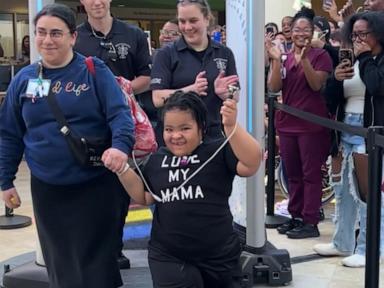
He walked out of the hospital doors to the sound of thunderous applause. It wasn’t a celebrity or a star athlete. It was a young boy who’d spent more time in a sterile ward than on a playground. You’ve probably seen the video of the clap-out ceremony for a child with a rare genetic disorder. It goes viral because it touches something primal in us. It’s a victory lap for a kid who had to fight just to stand up.
But behind those thirty seconds of heartwarming footage is a story that most news clips skip. They focus on the tears and the smiles. They rarely talk about the years of diagnostic dead ends, the insurance battles, or the sheer physical exhaustion of a family living in a medical bubble. When a child with a rare genetic condition finally gets discharged, it isn't just a happy ending. It’s the start of a whole new, complicated chapter of life at home.
The Long Road to the Hospital Exit
Rare diseases aren't actually that rare when you look at the collective data. While an individual condition might affect fewer than 200,000 people in the United States, there are over 7,000 known rare diseases. Roughly 30 million Americans are living with one. Most of these are genetic. Most of them affect children.
The boy in the ceremony represents a fraction of these kids. For many, the hospital stay isn't a one-off event for a broken bone. It’s a recurring cycle. Getting to that "clap-out" moment often involves a diagnostic odyssey that lasts an average of five to seven years. Think about that. A child can spend half their decade just trying to get a name for what’s making them sick.
When the diagnosis finally comes, it’s rarely a relief. It’s a roadmap for a journey no parent wants to take. These conditions often require multidisciplinary care—specialists in neurology, cardiology, GI, and physical therapy all trying to coordinate a single life. The hospital becomes a second home. The staff becomes a second family. That’s why those nurses are crying in the video. They’ve seen the midnight scares and the small, hard-won milestones.
What a Clap Out Ceremony Really Signifies
A clap-out ceremony is a tradition in many children's hospitals. Staff line the hallways. They cheer, they blow bubbles, and they play music. On the surface, it’s a celebration of health. Dig deeper and it’s an acknowledgement of resilience.
It’s about the "rare" part of the genetic disorder. Patients with these conditions often feel invisible. The world doesn't have a ribbon or a month for most of these diseases. A clap-out is a moment of pure visibility. For one minute, the world isn't looking through them or pitying them. The world is recognizing their strength.
It’s also a massive psychological boost for the parents. Caring for a child with complex needs is isolating. You spend your days tracking oxygen levels and managing medication schedules. You lose your identity as a person and become a full-time medical advocate. Seeing a hallway full of experts cheering for your kid? It’s a validation that your struggle matters.
The Gap in Rare Disease Care
We love the viral moment, but we’re bad at the long-term support. The healthcare system is built for "fixable" problems. You get an infection, you take an antibiotic, you get better. Genetic disorders don't work like that. They are chronic. They are progressive. They are expensive.
- Insurance hurdles: Many life-saving treatments for rare disorders are labeled "experimental" by insurers to avoid paying the astronomical costs.
- Research funding: Because the patient populations are small, pharmaceutical companies often don't see a profit motive in developing "orphan drugs."
- School integration: Moving from a hospital setting to a classroom is a logistical nightmare involving IEPs and specialized nursing.
The boy in the video is heading home, but home isn't the same as it is for everyone else. Home is now a mini-clinic. It’s filled with feeding pumps, monitors, and stacks of paperwork. The transition from the 24/7 care of a hospital to the 24/7 responsibility of a parent at home is terrifying. The cheering stops at the parking lot.
Genetic Advancements Changing the Narrative
It’s not all grim. We’re in a golden age of genomic medicine. Technologies like CRISPR and mRNA therapies are moving from science fiction to clinical trials. Ten years ago, many of these "rare" children wouldn't have had a clap-out ceremony. They wouldn't have left the hospital at all.
Precision medicine allows doctors to look at a child’s specific genetic code and tailor a treatment that targets the root cause, not just the symptoms. Organizations like the National Organization for Rare Disorders (NORD) and Global Genes are pushing for policy changes that make these treatments more accessible.
We’re seeing kids with spinal muscular atrophy (SMA) who, thanks to gene therapy, are hitting developmental milestones that were once thought impossible. These aren't just medical miracles. They are the result of decades of aggressive advocacy by parents who refused to take "there’s no cure" for an answer.
How to Support Families Beyond the Viral Video
If you see a video like this and want to help, don't just hit the "heart" button. The reality of life with a rare disorder is lived in the quiet moments between the celebrations. Families need a support system that lasts longer than a social media trend.
- Offer specific help: Don't say "let me know if you need anything." Say "I'm bringing dinner on Tuesday" or "I'll sit with the kids while you take a nap."
- Educate yourself: Ask about the condition without making it weird. Understanding the basics of a friend’s child's disorder reduces the "othering" that these families feel.
- Advocate for policy: Support legislation like the Orphan Drug Act or bills that cap out-of-pocket costs for rare disease treatments.
- Don't look away: People often avoid families with "sick" kids because it makes them uncomfortable or sad. That's a mistake. They need friendship more than they need your pity.
The boy with the rare genetic disorder didn't just win a battle. He’s surviving a war. Every step he took down that hospital hallway was a middle finger to the odds. Our job isn't just to watch the video and feel good. Our job is to make sure the world he’s walking back into is one that actually supports his right to keep moving forward.
Check your local hospital’s foundation page. Most have specific funds for "patient family housing" or "uncompensated care" specifically for families traveling long distances for rare disease specialists. Contributing there does more for the next kid waiting for their clap-out than a thousand likes ever will.