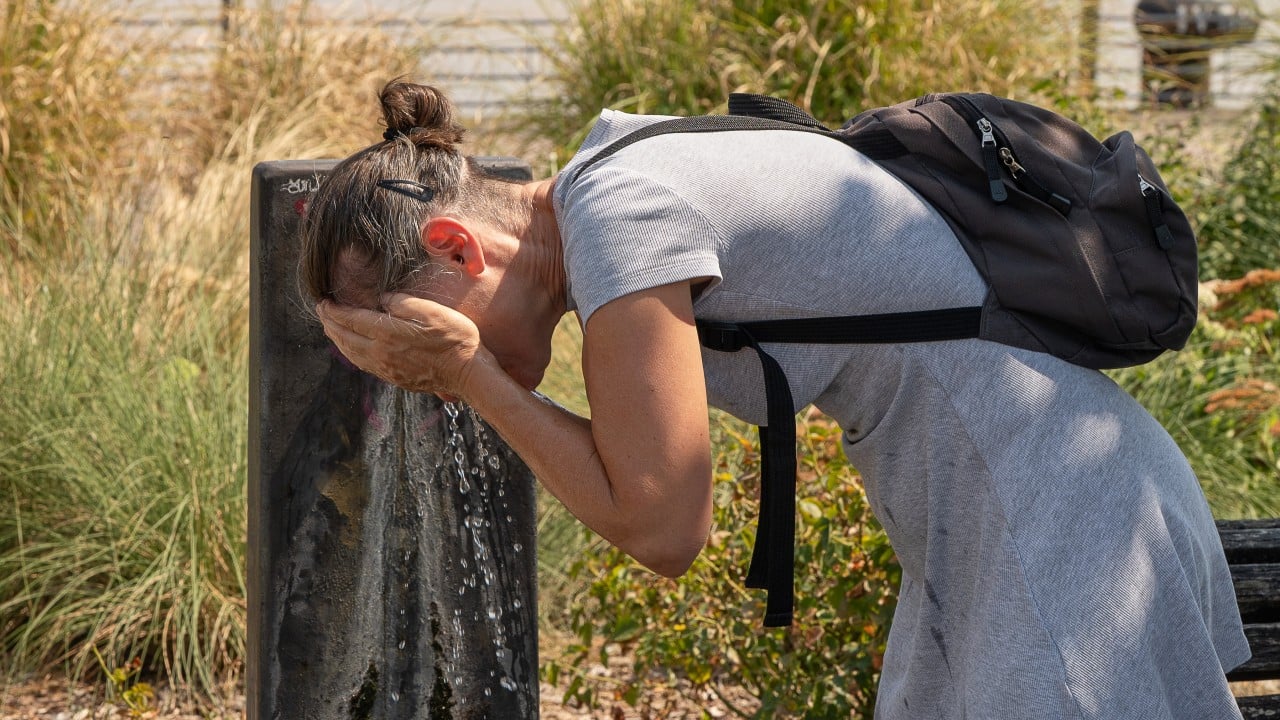
The air did not move. It sat heavy against the stone facades of Paris, trapping the smell of hot asphalt and dry plane tree leaves long after the sun had slipped behind the horizon.
In a top-floor apartment under the zinc roof of the 11th arrondissement, eighty-four-year-old Henri set his glass of tepid tap water on the nightstand. The fan in the corner whirred, but it only pushed the feverish air around, offering no salvation. Outside, the city sirens wailed their familiar, frantic chorus, echoing off limestone walls that had absorbed thirty-five degrees of sun all afternoon and refused to give it back at midnight.
Henri did not know about the official tallies yet. He did not know that epidemiologists at public health agencies were already staring at computer screens with rising dread, tracking a grim ledger that would eventually record over 7,300 excess deaths during the crushing summer heatwaves. He only knew that his chest felt tight, that his tongue felt like sandpaper, and that the night was not cooling down.
That is the quiet terror of modern heat. We think of a heatwave as a weather event. We look at the red numbers flashing on the evening news—forty degrees, forty-two degrees—and we think of sunscreen, crowded beaches, and iced coffee. We treat the sun like a loud, obvious adversary.
We are wrong.
The real killer is not the afternoon sun. It is the night.
To understand why thousands of bodies simply stopped functioning during these historic European summers, you have to look at what happens when the urban environment loses its ability to exhale. Concrete, brick, and asphalt are greedy materials. All day long, they swallow solar radiation. When evening comes, forests and fields release that heat into the open sky, cooling the ground below. But cities are stone canyons. The heat bounces back and forth between buildings, trapped by narrow streets and towering walls, creating what scientists call the urban heat island effect.
For a young, healthy body, a hot night is an annoyance. For an aging heart, it is a marathon with no finish line.
When ambient temperatures stay above twenty-five degrees Celsius all night, the human cardiovascular system cannot rest. To cool the body down, the heart must pump blood fiercely to the skin, working overtime hour after hour. Blood pressure drops. Electrolytes imbalance. The kidneys, struggling to maintain fluid homeostasis, begin to fail. If you live alone on the fifth floor of a walk-up apartment with no cross-breeze, and your windows look out onto a sun-baked courtyard, your home becomes a slow-cooker.
We like to think of statistics as sterile things. Numbers on a spreadsheet. 7,300 dead. It rolls off the tongue with the numbing ease of a bureaucratic report.
Consider what a single unit of that statistic looks like.
An old woman in Lyon finds her electric bill too steep to justify running an air conditioner, assuming she even has one—for air conditioning remains surprisingly rare in many historic European residential buildings, viewed historically as an American luxury or an environmental sin. She keeps her shutters tightly closed to block the glaring light, turning her apartment into a tomb of stagnant shadows. She forgets to drink water because her sense of thirst has dulled with age. By the time her daughter calls two days later, just to check in, the phone rings out into an empty room.
This is the invisible anatomy of a climate disaster. It leaves no shattered roofs behind like a hurricane. It triggers no dramatic flash floods sweeping cars down narrow mountain passes. It arrives silently, wrapping its fingers around the throat of public health infrastructure while everyone is busy complaining about how sweaty the metro is.
Public health officials tried to sound the alarms. They implemented color-coded alert systems, opened air-conditioned municipal rooms, and launched television campaigns reminding people to check on their elderly neighbors.
Yet, warnings run up against a stubborn cultural myth. We are conditioned to endure summer. We romanticize the heat. We celebrate the long days and the golden hour light, ignoring the fact that the atmosphere has fundamentally shifted beneath our feet. The baseline has moved. What used to be a once-in-a-century anomaly is now the new structural reality of July and August across Western Europe.
The French healthcare system, one of the most sophisticated in the world, bent under the invisible pressure. Emergency rooms filled with patients suffering from acute dehydration, heat exhaustion, and secondary complications from chronic respiratory and cardiac conditions. Ambulances idled outside hospitals for hours. The system was designed to handle the predictable ebbs and flows of seasonal illness, not a sudden, systemic shock that stresses every single organ system in millions of vulnerable bodies simultaneously.
We are standing in the middle of a slow-motion transformation, and our architecture, our urban planning, and our social habits are lagging decades behind.
Look at the streets of Paris, Madrid, or Rome. They are monuments to a climate that no longer exists. Centuries of architectural heritage, built out of dense stone and slate, prioritized keeping the cold out during brutal European winters. Today, those same buildings are thermal traps. Planting trees, painting roofs white, replacing miles of dark asphalt with permeable, reflective surfaces, and mandating passive cooling retrofits in residential buildings are no longer aesthetic choices or radical environmental talking points. They are triage.
Back in the apartment in the 11th arrondissement, the air eventually shifted. A cold front from the Atlantic finally breached the continental wall, bringing a sudden, violent thunderstorm that battered the zinc roofs and sent torrents of cool rain rushing down the gutters.
Henri survived. He woke up to the smell of wet pavement and a breeze that actually felt cold against his skin, drinking three glasses of water in rapid succession with shaking hands.
But down the street, across the river, and in quiet apartments all over the continent, thousands of other Henris did not wake up. The storm washed away the humidity, but it could not rewrite the ledger. The heat had already done its work, leaving behind empty chairs, silent phones, and the sobering realization that the summer sky can no longer be trusted.