Summer doesn't feel like summer anymore. It feels like a threat. If you live in Mexico, Italy, or any of the world's worsening heat zones, you already know this. You don't need a scientific report to tell you that the air is heavier, the nights don't cool down, and the air conditioning bills are eating your savings.
A massive shift has occurred right under our feet. Recent climate analysis shows that parts of the world now experience up to two additional months of extreme heat stress every single year compared to the 1970s. Think about that. Sixty extra days of your body fighting just to stay cool. This isn't a projection for some distant year like 2050. This is the reality on the ground right now.
The conversation around global warming often gets bogged down in abstract global averages. A fraction of a degree here, a minor sea-level rise there. But people don't live in global averages. They live in local climates. The dramatic expansion of heat stress days in countries like Mexico and Italy shows that the environment we built our cities, farms, and lifestyles around has fundamentally vanished.
The Brutal Reality of Sixty Extra Days
We need to talk about what heat stress actually means. It isn't just a high number on your phone's weather app. Heat stress happens when the human body can no longer shed excess heat efficiently. This depends on a combination of air temperature, humidity, wind speed, and solar radiation.
When you look at data tracking these conditions back to the 1970s, the trajectory is horrifying. Fifty years ago, a severe heat event was an anomaly. It lasted a few days, broke, and allowed communities to recover. Today, these events drag on for weeks. In parts of Mexico and the Mediterranean basin, the window of comfortable, safe outdoor life is shrinking fast.
Why these specific regions? It comes down to geography and atmospheric circulation. Mexico sits in a subtropical belt that is becoming increasingly arid as global weather patterns shift. Italy is trapped in the Mediterranean basin, a region that climate researchers long ago identified as a prominent warming hotspot. The surrounding sea, which used to provide a cooling breeze, now acts like a warm bath, pumping moisture into the air and driving up humidity levels. High humidity makes even moderate temperatures dangerous because your sweat can't evaporate to cool you down.
What is Happening on the Ground in Mexico
Mexico is bearing the brunt of this shift in ways that threaten basic survival. Walk through the streets of Monterrey or Hermosillo during the peak of summer. You'll see a society trying to adapt to conditions that are hostile to human biology.
The extra two months of heat stress have crippled the nation's water infrastructure. Reservoirs across the country frequently drop to single-digit percentages. When the heat lingers for two extra months, the ground bakes dry, evaporation rates skyrocket, and the winter rains simply cannot replenish what was lost. This isn't just an inconvenience for city dwellers who face water rationing. It is an existential crisis for small-scale farmers in states like Chihuahua and Sinaloa.
Crop failures are becoming a regular occurrence rather than a rare tragedy. Corn and bean yields are dropping because the plants hit their thermal tolerance limits before they can mature. Farmers who have worked the same land for generations are throwing in the towel. They can't outsmart a climate that refuses to give them a break. This agricultural strain feeds directly into migration patterns, pushing people out of rural areas and into already overcrowded cities or toward the northern border.
In urban centers, the situation turns into a health emergency. The phenomenon known as the urban heat island effect traps this prolonged heat in concrete and asphalt. Concrete absorbs heat all day and radiates it back out all night. Your body needs nighttime temperatures to drop below a certain threshold to recover from daytime exertion. In cities like Mexico City or Guadalajara, those cool nights are disappearing. The result is chronic exhaustion, increased cardiovascular strain, and a spike in emergency room visits.
Italy and the Mediterranean Heat Trap
Across the Atlantic, Italy faces an equally grim scenario. The country is famous for its outdoor lifestyle, its ancient stone piazzas, and its agricultural heritage. But that heritage is colliding with a climate that looks more like North Africa every year.
The additional weeks of heat stress are transforming Italian life. Look at the health data from recent summers. During the worst heat waves, mortality rates among the elderly in cities like Rome, Milan, and Palermo spike dramatically. Many historic buildings in these cities were designed centuries ago to keep heat out during short summers. They were never intended to withstand months of unrelenting, humid oppression without modern cooling systems. Installing air conditioning in a centuries-old apartment building is incredibly difficult and expensive, leaving millions of vulnerable residents trapped in literal brick ovens.
The economic impacts are hitting Italy's primary industries. Tourism is the lifeblood of the Italian economy, but the traditional summer rush is becoming unviable. Travelers don't want to trudge through the ruins of Pompeii or queue outside the Colosseum when the index hits dangerous levels. We are already seeing a shift where northern Europeans choose to travel in spring or autumn, leaving southern European businesses struggling to survive the barren, scorching summer months.
Agriculture is also rewriting its rules. The Po Valley, Italy's agricultural heartland, has suffered historic droughts driven by prolonged heat and lack of alpine snowpack. Olive groves and vineyards are creeping further up hillsides to find cooler air. Traditional wine-making regions are realizing that the grapes that made them famous are ripening too fast, altering sugar levels and threatening the quality of world-class vintages.
The Myth of the 1970s Baseline
People who want to downplay climate change often argue that summers have always been hot. They point to historical heatwaves or suggest that we are simply softer than our ancestors. This argument is completely disconnected from historical data.
The 1970s baseline matters because it represents the climate stability that built the modern world. Our energy grids, water systems, labor laws, and agricultural calendars were all calibrated to the weather patterns of the mid-to-late twentieth century. When you inject two whole months of additional heat stress into that system, the infrastructure begins to crack.
We aren't talking about a slight increase in discomfort. We are talking about crossing critical thresholds. The human body has hard physiological limits. When the wet-bulb temperature, a metric that combines heat and humidity, reaches a certain point, even a healthy person sitting in the shade with plenty of water will eventually die of heatstroke. The data shows we are edging closer to those thresholds in more places, for longer periods, than ever before.
The Economic Toll Nobody Wants to Acknowledge
The financial cost of this extended heat stress is staggering, and we are completely unprepared for it. Most economic models fail to capture the slow, draining impact of prolonged high temperatures on human productivity.
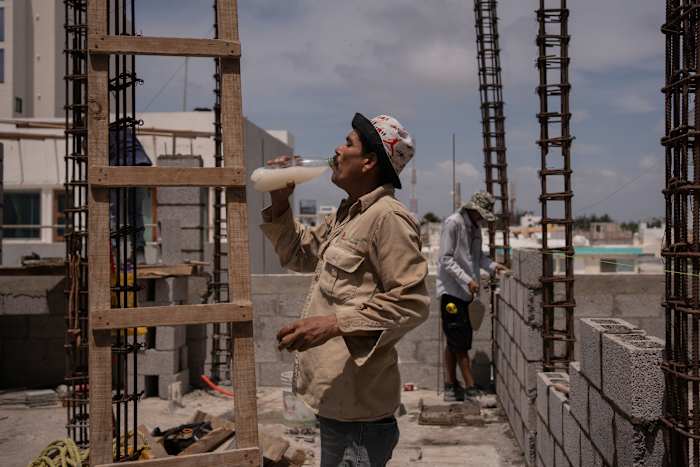
Labor productivity plummets when the heat index rises. Construction workers, agricultural laborers, delivery drivers, and factory staff cannot work at full capacity when their bodies are fighting off heat exhaustion. In countries like Mexico, where a massive portion of the workforce relies on informal, outdoor labor, this translates directly to lost wages and reduced economic output. You can't just tell an outdoor worker to stay inside. If they don't work, they don't eat.
Then there is the strain on the electrical grid. Two extra months of heat means two extra months of fans and air conditioners running at maximum capacity. Grids in Mexico and Italy are feeling the strain. Blackouts are becoming common during peak heat periods, creating a dangerous cycle. When the power goes out during a heatwave, the indoors quickly becomes a death trap for the elderly and infants.
What Needs to Happen Now
We need to stop treating these extended heat seasons as sudden disasters that catch us by surprise every June. They are predictable, recurring events. The data tells us exactly what is coming, and our response must change accordingly.
Cities must be retrofitted for thermal survival. This means an aggressive push for urban greening. Planting millions of trees to create canopy cover can drop local surface temperatures by several degrees. We need to replace dark asphalt roads and roofs with reflective surfaces that bounce solar radiation back into space rather than absorbing it.
Labor regulations have to adapt to the new calendar. We need mandatory rest breaks, shifted working hours that avoid the midday sun, and legally enforced access to hydration and cooling stations for all outdoor workers. If the climate has shifted by two months, the work calendar must shift with it.
On a personal level, you need to audit your own resilience. Relying solely on the power grid is a risky strategy. If you live in a high-risk zone, invest in passive cooling techniques. Use heavy thermal curtains to block out daytime sun. Ensure your home has cross-ventilation. Understand the early warning signs of heat exhaustion—dizziness, nausea, heavy sweating, and a rapid pulse—before they escalate into life-threatening heatstroke.
The luxury of ignoring climate data is gone. The two extra months of heat stress aren't a future warning. They are our current reality, and survival means changing how we live, work, and build.