Paper.
To most eighteen-year-olds stepping behind a privacy curtain for the first time, a ballot is nothing more than a stiff piece of cardstock, smelling faintly of toner and fluorescent gymnasium lights, waiting to be fed into a humming optical scanner. You fill in the ovals. You take the cheap adhesive sticker. You walk back out to your car and check your phone.
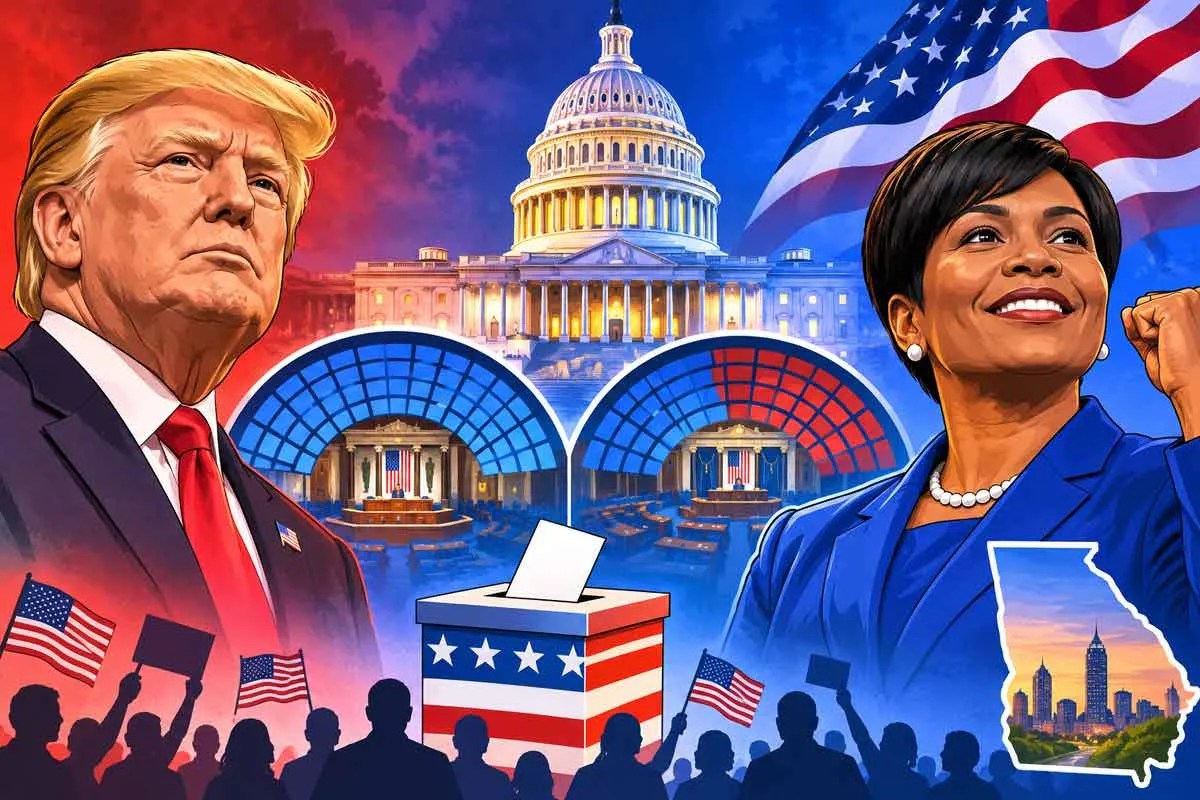
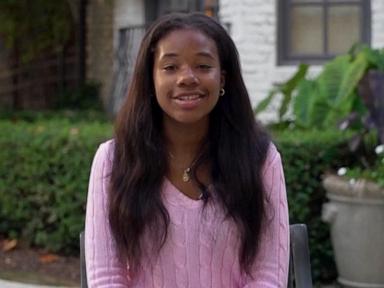
But when Yolanda Renee King walked into an early voting location in Atlanta, Georgia, in late October 2026 to cast her first ballot, the air inside that room carried a completely different atmospheric pressure. Born on May 25, 2008, the only grandchild of Dr. Martin Luther King Jr. and Coretta Scott King was not merely participating in a civic routine. She was closing a bloody, sixty-year circle.
If you watched the brief local news clips that circulated that afternoon, you saw the surface version of the event. You saw a poised young woman wearing a crisp dark blazer, flanked by her parents, Martin Luther King III and Arndrea Waters King. You saw cameras flashing. You saw a smile, a dropped ballot, and a round of applause from poll workers who recognized the cheekbones and the cadence of a family that reshaped the modern world. Standard news coverage treats a moment like this as a pleasant human-interest footnote—a feel-good segment wedged between traffic reports and campaign ad spend breakdowns.
That framing misses the entire point. To understand what actually happened in that Georgia precinct, you have to strip away the cameras and look at the invisible architecture holding up the floor beneath her sneakers.
The Ghosts in the Precinct
Every voter carries baggage into the booth, even if they don't know it. For most of us, that baggage is contemporary: the price of groceries, anxiety over interest rates, anger at a local school board, or a vague sense that the country is tipping off its axis.
Consider a hypothetical first-time voter standing two booths down from Yolanda in that same Atlanta precinct—let’s call him Marcus. Marcus is eighteen, fresh out of high school, nervous about messing up the bubble sheet, mostly thinking about whether his shift at the warehouse starts at four or five. For Marcus, the right to vote feels like gravity: an invisible, permanent law of nature that was simply waiting for him to reach the right birthday. He doesn't have to think about literacy tests, poll taxes, or the terror of having his name printed in the local newspaper the morning after he registers, signaling to his employer and his landlord that it is time to ruin his life.
Yolanda Renee King does not have the luxury of forgetting how gravity was invented.
Her grandfather did not live to see her. Dr. King was assassinated on a Memphis balcony in April 1968, forty years and one month before Yolanda took her first breath. Her grandmother, Coretta, died in January 2006, two years before Yolanda arrived. Yet Yolanda grew up inside the living echo of their unfinished business. When she was just nine years old, standing before hundreds of thousands of people at the March for Our Lives in Washington, D.C., she didn't deliver a timid rehearsed speech; she led a massive crowd in chanting her grandfather's rhythmic cadence, declaring that her generation would be the one to end gun violence. By fifteen, she was standing at the Lincoln Memorial on the sixtieth anniversary of the March on Washington, warning that the dream her grandfather spoke of was still under siege.
So when she turned eighteen in May 2026, qualifying her for her first federal midterm election cycle, the act of voting was never going to be casual. In Georgia—a state that has spent the last decade at the absolute epicenter of American battles over ballot access, early voting windows, drop-box restrictions, and voter roll purges—walking into a precinct with the last name King is an act of quiet defiance.
What It Actually Cost to Print That Cardstock
We tend to sanitize history until it looks like a black-and-white photograph in a middle school textbook: neat, inevitable, and safely locked in the past. We forget how chaotic, terrifying, and uncertain the fight actually was.
Think of the Voting Rights Act of 1965 not as a dusty statute, but as a dam built out of human bone and endurance. Before President Lyndon B. Johnson signed that bill into law on August 6, 1965—with Dr. King standing right behind his shoulder—registering to vote as a Black citizen in the American South was functionally a contact sport played without pads. In Selma, Alabama, early that year, fewer than two percent of eligible Black residents were registered to vote, despite making up more than half the population. Local registrars asked prospective Black voters to recite the entire Constitution from memory, or guess how many jellybeans were in a glass jar, or prove their "good character" through white vouchers who would never step forward.
Then came March 7, 1965. Bloody Sunday. Six hundred marchers crossed the Edmund Pettus Bridge and were met with billy clubs, bullwhips, and tear gas. Amelia Boynton was beaten unconscious on the asphalt. John Lewis had his skull fractured. Days later, after Dr. King led a second, symbolic turn-around march and finally a third, federally protected trek to Montgomery, the nation's conscience cracked open just wide enough to force the legislation through Congress.
When you hold that history in your hands, the simplicity of an optical-scan ballot becomes almost overwhelming.
I remember my own first time voting, standing in a cramped church basement in the rain, sweating through my jacket because I was terrified I would accidentally spoil my ballot and have to ask a stern-looking retiree for a replacement. My anxiety was entirely self-conscious. I worried about looking foolish. I didn't worry about my house being firebombed. I didn't worry about a sheriff's deputy waiting by the exit door with a camera and a trumped-up warrant. That gap—the distance between my nervous sweat and the blood spilled on an Alabama bridge—is the exact space Yolanda Renee King walked across in Atlanta.
The Burden of the Inherited Megaphone
There is a particular kind of psychological weight that comes with inheriting a legendary name, and it is easy to romanticize it from the outside while ignoring how suffocating it can be from within.
Imagine being eighteen years old and knowing that every time you open your mouth, millions of people are subconsciously measuring your voice against one of the greatest orators in human history. If you speak softly, you are called timid. If you speak boldly, you are accused of trading on a famous surname. You didn't choose the pulpit; you were born on top of it.
Over the last few years, as Yolanda has stepped further into public life—publishing a children's book, We Dream a World, speaking at national rallies, and advocating alongside her parents for federal voting protections like the John R. Lewis Voting Rights Advancement Act—she has had to navigate a strange paradox. She is simultaneously a symbol of a triumphant past and a citizen of a deeply fractured present.
Because here is the uncomfortable truth that the cheerful local news clips gloss over: Yolanda Renee King cast her first ballot in an era where the very law her grandfather bled to secure has been systematically hollowed out.
In 2013, the U.S. Supreme Court's decision in Shelby County v. Holder gutted Section 4(b) of the Voting Rights Act—the precision formula that required states with a history of racial discrimination, including Georgia, to get federal "preclearance" before changing their voting rules. Think of preclearance like a building inspector checking the blueprints before a landlord is allowed to brick up the fire exits. Once the Supreme Court fired the inspector, the renovations began almost immediately. Within hours of the ruling, states began implementing strict photo ID laws, closing hundreds of polling places in minority neighborhoods, trimming early voting days, and purging millions of voters from the rolls under the guise of "list maintenance."
By the time Yolanda walked into her Atlanta polling place in 2026, Georgia had passed Senate Bill 202 and subsequent administrative rules that reshaped how ballots are requested, delivered, and counted. To vote in Georgia as a Black eighteen-year-old in 2026 is not a victory lap. It is an obstacle course that happens to have a welcome mat at the front door.
Why One Eighteen-Year-Old’s Ballot Matters to People Who Don’t Care About Politics
If you are exhausted by politics—and honestly, who isn't?—it is tempting to look at a story about a famous activist's daughter voting and shrug. Of course she voted, you might think. It's the family business.
Let’s test that cynicism against reality.
In almost every American election, young adults between the ages of eighteen and twenty-four represent the largest untapped reservoir of political power in the country—and the least reliable voting bloc. In midterm elections especially, youth turnout routinely craters compared to voters over sixty-five. The reasons aren't mysterious. Young people move frequently, making registration a headache. They work hourly jobs without paid time off to stand in two-hour lines. Many don't own printers to mail in forms, or driver's licenses that match their current campus address.
More than anything, though, young voters suffer from a crisis of imagination. When politicians treat you like an afterthought, apathy feels like self-defense. You start to believe that one ballot is a grain of sand thrown into a hurricane—mathematically invisible, functionally pointless.
Watching Yolanda Renee King cast her first ballot disrupts that excuse, not because she is famous, but because of how she approached the moment. In her remarks outside the polling site, she didn't speak like a politician reciting talking points. She spoke like a peer reminding her generation that democracy isn't a spectator sport or an inheritance that stays shiny in a glass case. It is a muscle. If you don't use it, it atrophies. And if you hand over your spot in line because you think the system is rigged or boring, someone else—someone who does not have your best interests at heart—will gladly take your turn at the wheel.
Consider our hypothetical voter Marcus again. Suppose Marcus didn't actually go to the polls that Tuesday. Suppose he looked at the line wrapping around the gymnasium, checked the clock on his phone, calculated that he would be fifteen minutes late for his warehouse shift, and drove away. Multiply Marcus by fifty thousand eighteen-year-olds across a single swing state, and suddenly school funding formulas shift, minimum wage bills die in committee, housing initiatives evaporate, and judicial appointments tilt for the next thirty years. Absence is never neutral. Not voting is simply voting to let other people decide your future without your permission.
The Quiet Weight of the Sticker
There is a detail in the footage from Atlanta that stays with you long after the pundits stop talking.
After feeding her ballot into the scanner, Yolanda stood beside her mother and father, wearing the standard Georgia "I'm a Georgia Voter" peach sticker on her lapel. For a fraction of a second, before turning back toward the microphones and the waiting reporters, her expression shifted. The practiced, public-facing composure softened into something quieter, almost private—the look of a teenager realizing that a milestone she had heard about around the dinner table her entire life had finally become her own lived memory.
Her father, Martin Luther King III, looked on with the unmistakable pride of a parent watching his child step into adulthood, tempered by the sobriety of a man who knows exactly how fragile that right remains. Her mother, Arndrea, stood close, both shield and witness.
We live in a media ecosystem addicted to spectacle. We reward outrage, loud arguments, viral meltdowns, and apocalyptic predictions. Against that constant noise, the act of walking into a fluorescent-lit room, verifying your address, darkening a few small ovals with a felt-tip pen, and sliding a piece of paper into a machine feels almost laughably small. There are no fireworks when the scanner accepts your ballot. The counter on the digital screen simply ticks upward by one.
Yet that quiet tick is the entire architecture of self-government. Every major turning point in American history—every expansion of human dignity, every hard-won protection for workers, women, and minorities—eventually narrows down to that exact, unglamorous transaction between a citizen and a piece of paper.
Dr. King never got to see his granddaughter grow up. He never got to watch her graduate high school, or debate her over dinner, or walk beside her to an Atlanta precinct on a crisp autumn morning. He died believing that the arc of the moral universe is long, even when the immediate horizon looks pitch black.
When Yolanda Renee King pressed that peach sticker onto her jacket and stepped back out into the Georgia sunlight, the scanner behind her had already digested her ballot and moved on to the next person in line, leaving behind nothing more—and nothing less—than a single digital digit added to the count, and a sixty-year debt briefly, fiercely answered.