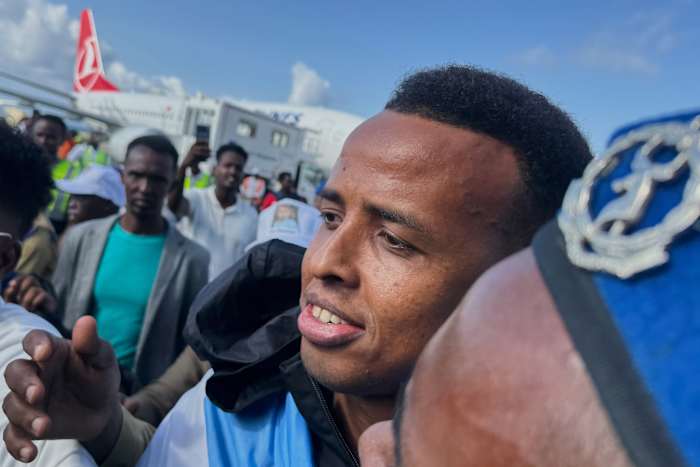
The media loves a predictable David and Goliath story. A referee from a developing nation climbs to the absolute pinnacle of international sports, gets selected for a major tournament, and then gets blocked by a cold, bureaucratic Western immigration system. He returns home to a cheering crowd, airport banners, and political speeches celebrating his resilience. The narrative is set: local hero triumphs over systemic disrespect.
It is an inspiring script. It is also completely wrong.
Celebrating a administrative failure as a symbolic victory does not fix the broken pipeline of international sports officiating. It masks it. When a World Cup-caliber official is denied entry to a host nation, treating the resulting airport reception as a "hero's welcome" shifts the focus from structural accountability to empty emotionalism. We are applauding the consolation prize while the actual institutional problem gets swept under the rug.
Having analyzed the intersection of international sports governance and immigration protocols for over a decade, I can tell you that these visa denials are rarely arbitrary acts of malice. They are the predictable result of a massive disconnect between sporting bodies and federal immigration laws.
The Illusion of the Sacred Sporting Passport
The lazy consensus among sports commentators is that elite athletic credentials should function as a golden ticket. There is an unspoken assumption that organizations like FIFA or the International Olympic Committee possess a level of global authority that supersedes national sovereignty.
They do not.
To a border enforcement agent, a World Cup invitation is just a piece of paper. It is not an ironclad guarantee of entry. National immigration departments operate on strict, legally mandated risk profiles that look at country of origin, economic ties, and political stability.
- The Bureaucracy Factor: Federal agencies look at statistical data, not athletic prestige. If an applicant comes from a nation with a high rate of visa overstays or ongoing civil unrest, the baseline scrutiny is intensely high.
- The Timeline Trap: Sporting bodies often finalize referee selections mere weeks before a tournament begins, leaving zero buffer room for the mandatory background checks and administrative processing times required by foreign consulates.
When we look at cases like the recent entry denial of elite African match officials to North American tournaments, the public outrage focuses entirely on the denial itself. No one asks why the organizing committees failed to secure specialized government exemptions months in advance. The outrage is misdirected. The blame belongs to sports federations that treat immigration as an afterthought, assuming their brand power will force governments to bend the rules.
Dismantling the "People Also Ask" Assumptions
When these stories break, public search trends reveal a deep misunderstanding of how international sports and immigration intersect. Let us break down the flawed premises driving these questions.
Why do Western countries deny visas to official World Cup referees?
The premise here is that the denial is an attack on the individual's credentials. In reality, immigration officers are legally required to evaluate every applicant against standard statutory requirements. If an applicant cannot definitively prove strong economic or familial ties to their home country—ties that guarantee their return—the visa is rejected under standard immigration clauses. The system is designed to be blind to celebrity status. A referee whistle carries no legal weight at a consulate window.
Can FIFA or the IOC overrule a government's visa decision?
Absolutely not. No private sports entity holds sovereignty over a nation's borders. Even during the Olympic Games, host nations retain total control over who crosses their borders. While host countries usually sign "seat agreements" promising to facilitate entry for accredited participants, these agreements still require individuals to pass standard security screenings. If a sports federation cannot navigate these legal frameworks, their officials pay the price.
The True Cost of Symbolism over Substance
Turning an administrative failure into a nationalist celebration does more harm than good. When local politicians and fans throw a parade for an official who was barred from a tournament, it normalizes the exclusion. It reframes a professional disaster as a cultural victory.
Imagine a scenario where a top-tier software engineer is denied a visa to speak at a global tech conference due to corporate negligence regarding paperwork. The tech company does not throw a party at the airport to celebrate the engineer's return. They fire the logistics team, audit their legal department, and demand answers.
In sports, we do the opposite. We romanticize the disappointment.
This emotional shield protects sports federations from scrutiny. As long as the public is satisfied with the narrative of a "heroic return," FIFA, continental confederations, and local football associations do not have to answer hard questions about their administrative incompetence. They are allowed to continue using outdated logistics pipelines that fail their most talented assets.
The Real Vulnerabilities in Sports Governance
| Stakeholder | The Flawed Approach | The Real Consequence |
|---|---|---|
| International Federations | Relying on brand prestige to bypass standard immigration laws. | Officials missed tournaments, ruined career milestones. |
| Local Associations | Treating visa denials as purely political snubs. | Zero institutional pressure to improve administrative pipelines. |
| The Media | Focusing on airport celebrations and emotional narratives. | Shifting public focus away from structural solutions. |
Stop Applauding the Consolation Prize
The path forward requires abandoning the romanticism of the frustrated underdog. If the international community wants to see referees from developing nations on the world stage, the entire approach to sports logistics must be overhauled.
First, international governing bodies must establish permanent, year-round diplomatic liaisons tasked solely with managing visa pipelines for officials. These teams need to work directly with foreign ministries at least six to twelve months before a tournament, utilizing specific sports entertainment visa categories rather than relying on standard visitor applications.
Second, local sports federations must stop letting international bodies off the hook. Instead of holding press conferences celebrating a referee’s "indomitable spirit" after a denial, they should be filing formal grievances and demanding financial compensation for the lost professional development of their officials.
We must stop validating the narrative that a hero's welcome at home makes up for a denied opportunity abroad. It doesn't. Every parade held for a sidelined referee is an admission of defeat masquerading as a victory. It is time to demand competence over choreography. Stop cheering for the return of officials who should have never been left behind in the first place.