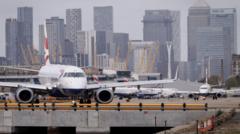
The battle lines are drawn over the new City Airport jet expansion plans, and honestly, it is not just about noisy mornings anymore. Local residents and environmental groups are furious about the proposals to introduce larger, modern aircraft and extend operating hours. The airport claims these changes are vital for economic growth. But for the people living directly under the flight paths, it feels like a direct assault on their quality of life.
You cannot blame them for fighting back.
This clash highlights a massive contradiction in urban planning. How do we balance global connectivity with the health of local communities? The response from neighborhood coalitions proves that the economic argument does not automatically win anymore. People want quiet skies, clean air, and local politicians who actually listen to their concerns.
Why the City Airport Jet Expansion Plans Are Sparking Fury
The core of the dispute rests on the airport's desire to welcome a newer generation of larger commercial jets. Management argues these planes are quieter and more fuel-efficient per passenger. That sounds great on paper. In reality, larger planes mean reconfigured taxiways, a totally different noise profile, and the capacity to move far more people through a constrained urban environment.
Local pressure groups like HACAN East, which campaigns on behalf of residents under London City Airport flight paths, have historically shown that "quieter" planes rarely result in a quieter environment. Why? Because the total volume of flights usually increases to offset any minor noise reductions.
The current proposals also push for relaxed weekend restrictions. Right now, many urban airports observe a mandatory weekend lull to give residents a break from the constant drone of engines. Altering these hours is a massive red flag for local communities. It disrupts sleep schedules, ruins outdoor activities, and lowers property values in surrounding areas.
The Economic Myth vs the Reality of Urban Flight Paths
Airport executives love to throw around massive numbers. They talk about millions of pounds injected into the local economy, thousands of secondary jobs, and better links for business travelers. They treat these benefits as absolute facts.
But independent economic analyses often tell a different story. The New Economics Foundation has previously argued that the local economic benefits of short-haul urban airport expansions are frequently overstated. Much of the spending happens inside the terminal, not in the surrounding neighborhoods. Meanwhile, the costs—like air pollution, increased traffic congestion, and health issues related to sleep deprivation—are entirely born by the locals.
Consider the sheer density of the population surrounding an urban airstrip. We are not talking about an isolated runway in a desert. These flight paths cross directly over schools, parks, and densely packed residential blocks. The microscopic particulate matter, known as PM2.5, emitted by these aircraft settles into the lungs of children living nearby. No amount of corporate public relations can smooth that over.
How Communities Can Successfully Fight Local Airport Expansions
If your neighborhood is facing a similar corporate push, you cannot just sit back and hope the local council does the right thing. Activism requires strategy, data, and relentless pressure.
First, ignore the emotional arguments and focus on measurable data. Invest in independent noise monitors. Organizations like the Aviation Environment Federation provide excellent resources on how to track and log decibel spikes that violate current agreements. When you present a stack of hard data to a planning committee, it carries far more weight than a general complaint about noise.
Second, build a broad coalition. The most successful campaigns unite unexpected allies. Tie the noise complaints of wealthy homeowners together with the health concerns of lower-income families living closest to the perimeter fence. Bring in local climate groups who oppose the carbon footprint of increased aviation.
Lastly, target the decision-makers where it hurts most: their public reputation. Attend every single public consultation. Force airport representatives to answer tough questions on camera. Write directly to your local MPs and councillors, making it clear that their stance on the City Airport jet expansion plans will directly influence how you vote in the next election cycle.
Local authorities frequently underestimate community resolve. By organizing early, gathering independent evidence, and forcing transparency during the planning stages, neighborhoods can successfully halt disruptive infrastructure projects and protect their local environment.