The air inside the Dalian convention center carries the distinct, sharp hum of heavy cooling systems working against a humid June afternoon. Outside, the coastal city breathes the saltwater of the Yellow Sea; inside, at the 2026 Summer Davos forum, the currency is purely economic confidence. Executives in tailored charcoal suits mingle with policy architects, swapping optimism over glasses of sparkling water.
But beneath the polite murmur of global trade talk, a silent tremor is moving through the plumbing of Chinese wealth management.
Consider a hypothetical investor, the type of person whose decisions ultimately shape these high-level summits. Let’s call him Mr. Zhou. He is a mid-tier tech entrepreneur from Shenzhen. For years, Zhou has watched the domestic property market cool and local equities fluctuate. Like thousands of affluent mainland residents, his primary instinct has shifted from aggressive growth to fierce preservation. He wants his capital in a jurisdiction that feels disconnected from domestic policy shifts.
To achieve this, Zhou doesn't use suitcases of cash. Instead, he turns to a quiet digital backdoor provided by domestic brokerages operating just on the edge of the regulatory grey zone. Through these firms, mainland capital flows out of the sightlines of Beijing’s central planners and into the offshore waters of Hong Kong, finding a home in foreign equities and international funds.
It is a comfortable arrangement. Until the valve gets turned off.
The Thirty-Two Billion Dollar Valve
That valve is now closing with immense force. Beijing’s regulatory apparatus recently launched a sweeping enforcement action targeting three major brokerages accused of facilitating these precise overseas investment channels for mainland residents. The scope of the crackdown is staggering, threatening to freeze or disrupt up to 250 billion Hong Kong dollars—roughly 32 billion US dollars—in Hong Kong-linked assets.
To the casual observer scrolling through a financial news feed, 32 billion dollars is just an abstract digit on a ledger. But to the markets, and to the individuals whose wealth is bound up in those accounts, it represents an existential tightening of the financial borders. It is the sound of a heavy steel door sliding into place.
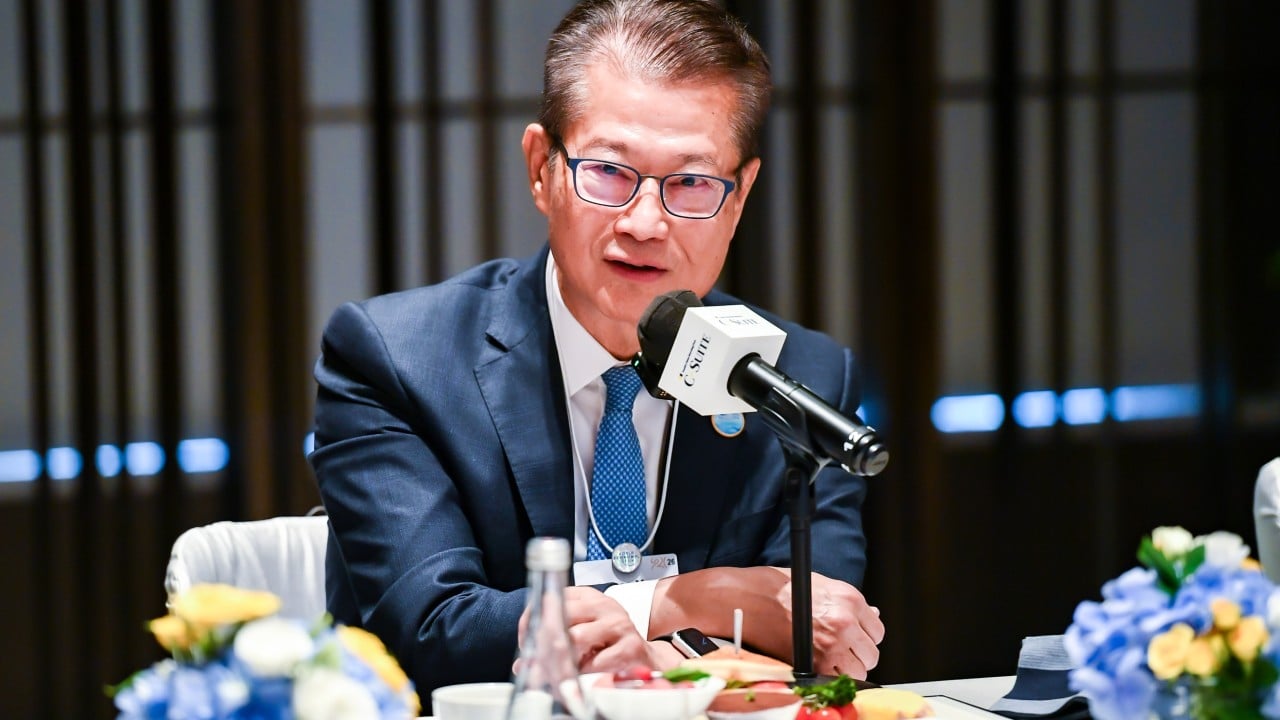
Sitting at a closed-door event on the sidelines of the Dalian summit, Hong Kong Financial Secretary Paul Chan addressed the elephant in the room with the measured clarity of a seasoned diplomat. He did not mince words about the underlying motivation behind Beijing's maneuvers.
The objective is simple: to stop the leakage.
Foreign exchange leakage is the nightmare of any economy attempting to manage a controlled currency. When billions of yuan leave the domestic ecosystem through illegitimate channels, it erodes the central government's ability to stabilize the currency, manage domestic credit, and ensure that wealth generated within China stays within China to prop up the national economy.
For Beijing, the probe isn't an arbitrary exercise in corporate punishment. It is a structural repair on a wall that was beginning to seep.
The Super-Connector’s Delicate Tightrope
For Paul Chan, the situation requires a masterful balancing act. He is tasked with defending the integrity of Hong Kong’s status as a global financial hub while simultaneously endorsing the disciplinary actions of the mainland authorities. It is a performance played on a very high, very thin wire.
To understand the anxiety in the room, one must understand the unique psychological contract that binds Hong Kong to the mainland. Hong Kong thrives because it acts as a "super-connector"—a legal and financial oasis where western capital can meet Chinese opportunity under a system of predictable, transparent laws. When Beijing cracks down on the financial mechanisms that feed Hong Kong's wealth management sectors, international investors naturally start to sweat. They worry that the unique autonomy of the city is being slowly submerged by the regulatory tides of the mainland.
Chan’s response to the crowd in Dalian was designed to neutralize that exact fear. He reframed the crackdown not as an assault on wealth, but as an essential housecleaning measure designed to preserve the city’s long-term health.
True stability cannot coexist with lawlessness. By routing capital flows through legitimate, transparent channels rather than clandestine brokerage backdoors, both Beijing and Hong Kong are attempting to build an ecosystem where risk is quantifiable and rules are absolute. The crackdown on illegal trades, Chan argued, will ultimately help the city by weeding out the volatile, shadow-soaked capital that threatens systemic stability.
Capital with Patience
Yet, as the backdoors close, the question shifts from how capital leaves to where it goes next. The wealth of entrepreneurs like our hypothetical Mr. Zhou does not simply evaporate because a brokerage account is frozen; it searches for new, sanctioned expressions.
This is where the strategy shifts from defense to offense. At the same gathering, Clara Chan, the head of the Hong Kong Investment Corporation, offered a glimpse into the alternative future the government is trying to manufacture. The goal is to redirect the vast pools of Chinese and international wealth away from speculative foreign equities and into what she termed "patient capital."
Patient capital is the antithesis of the hot, fast money that slips through brokerage leaks. It is long-term, institutional investment designed to anchor itself in early-stage, high-tech enterprises—artificial intelligence, biomedical advancements, and advanced manufacturing. It is capital that is willing to endure economic cycles, acting as an anchor rather than a transient guest.
The vision is clear: if you want to invest through Hong Kong, you must do so in the open light of day, and your money must build something tangible.
The transition from a speculative playground to a structured incubator is a painful one, marked by regulatory audits, frozen accounts, and market jitters. For the brokers who made fortunes padding the escape routes of mainland capital, the party is decisively over. For the investors who relied on them, the world has grown significantly smaller, requiring a reassessment of what it means to deploy capital in an era of total transparency.
As the afternoon sessions in Dalian drew to a close, the executives stepped out of the air-conditioned halls and into the softening coastal light. The hum of the cooling systems faded, replaced by the distant roar of the city's ports. The global economy would keep moving, but the rules of the game had silently shifted beneath their feet, leaving a world where the walls are thicker, the doors are locked, and every single drop of capital must account for itself.