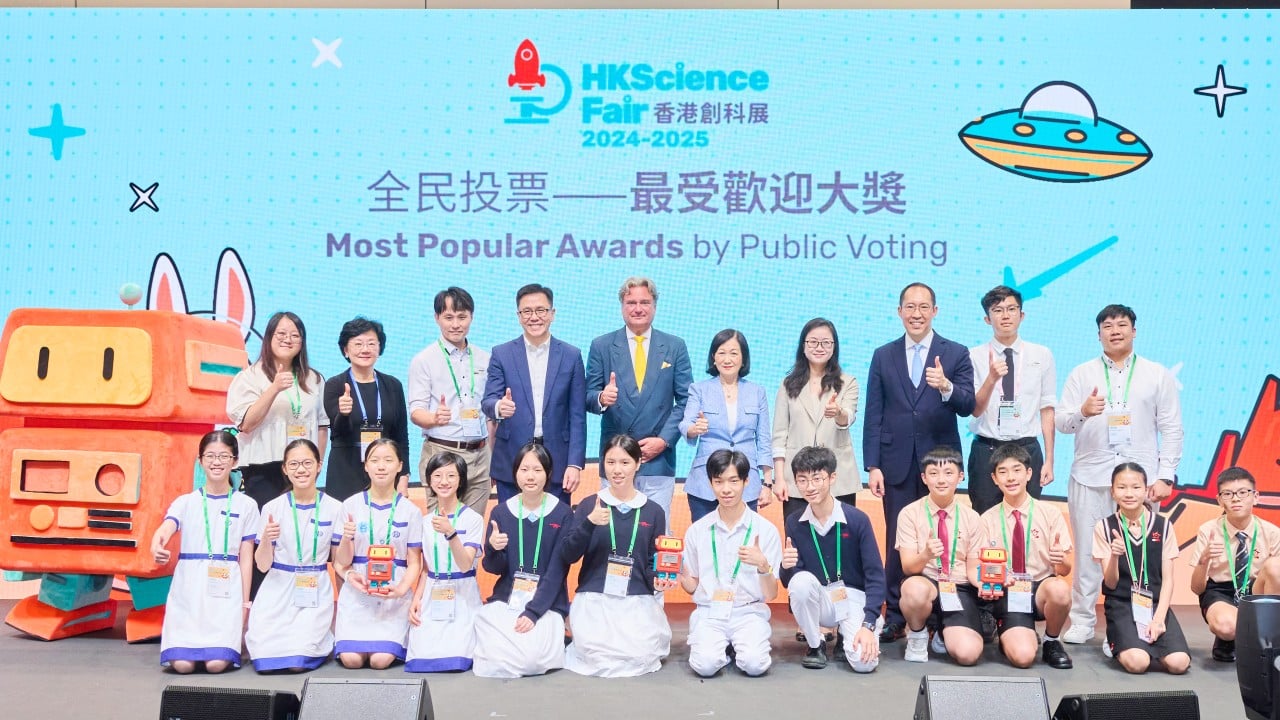
The Hong Kong Science Fair just crossed its five-year milestone. On paper, the celebration is exactly what you would expect. Hundreds of student projects filled the convention halls, local officials shook hands with teenagers holding solar-powered prototypes, and press releases praised the city’s rising generation of tech talent. It looks like a resounding success.
Look closer at the actual career trajectories of these participants, however, and a much more complicated reality comes into view. The primary challenge facing Hong Kong's youth innovation push is not a lack of student enthusiasm or corporate sponsorship. The true bottleneck is a rigid local economy and an education system that treats science fairs as weekend extracurriculars rather than long-term career pipelines. While these events generate excellent public relations, the city is still struggling to convert childhood curiosity into a sustainable technology workforce. Meanwhile, you can read similar developments here: The Snapchat Lawsuits Are Asking the Wrong Question About Teen Safety.
The Disconnect Between Classrooms and Conventions
Walk through any student tech exhibition and the energy is palpable. You will see middle-schoolers demonstrating AI-driven sorting algorithms or high-schoolers showing off biodegradable plastics. The intellectual raw material is there.
The trouble begins on Monday morning. Hong Kong secondary schools remain tied to high-stakes examinations, primarily the Diploma of Secondary Education (HKDSE). This exam-heavy structure leaves very little breathing room for deep, unscripted experimentation. To win a science fair, a student needs to fail repeatedly, pivot, and explore dead ends. To score perfectly on local exams, a student must avoid mistakes entirely and memorize standardized marking schemes. To see the bigger picture, we recommend the excellent analysis by The Verge.
This creates a systemic double life for young researchers. Time spent optimizing a machine learning model for an exhibition is time taken away from drilling for chemistry or physics papers. Talk to teachers off the record, and they will admit the dilemma. They want to support inventive kids, but school rankings depend on exam scores, not trophies from a weekend science fair. Consequently, these competitions often become isolated sprints rather than integrated parts of a student's development.
The Illusion of Funding
A common defense of the current setup is the sheer volume of capital available. The government and private donors pour millions into innovation funds, school lab upgrades, and competition prize pools.
Money alone cannot buy an ecosystem. Providing a school with a 3D printer or a suite of tablets is relatively easy. Finding teachers who have the specialized industry experience to guide students through complex engineering challenges is another matter entirely. Most local educators are trained in traditional pedagogy, not hardware development or venture capital pitches. Without that deep mentorship, student projects frequently hit a ceiling, resulting in clever gadgets that lack the technical depth required for real-world application.
The Post Fair Talent Drain
The ultimate test of any youth talent initiative is retention. Where do these students end up five or ten years after they hoist their trophies on stage?
For the top tier of Hong Kong science fair winners, the destination is rarely the local tech sector. Instead, a well-documented pattern emerges. A student builds a standout project, catches the attention of international recruiters, and secures a scholarship to a university in the United States, the United Kingdom, or Singapore. Once abroad, they are quickly absorbed by global tech giants or research institutions that offer starting salaries and research infrastructure that local firms simply cannot match.
For those who do stay in Hong Kong, the economic gravity pulls them away from engineering. Consider the local corporate structure. Hong Kong’s economy is historically dominated by real estate, finance, and logistics.
Typical Career Paths for High-Achieving Hong Kong STEM Graduates:
[STEM Graduate] ───► International Universities ───► Global Tech Hubs (Silicon Valley/London)
              ├───► Local Universities ─────────► Financial Services / Investment Banking
              └───► Local Tech Startups ────────► Early-Stage Pivot or Career Change
When a brilliant math or computer science student graduates from a local university, they face a stark choice. They can join an early-stage hardware startup in the Science Park for a modest salary, or they can take an entry-level quantitative analyst role at an investment bank in Central that pays double. The math wins almost every time. The city’s brightest minds are systematically diverted into optimizing trading algorithms or managing property portfolios rather than building physical technology companies.
What True Integration Requires
Fixing this structural drain requires moving beyond the annual festival model. Celebrating youth innovation for three days a year is meaningless if the city's economic machinery spends the other 362 days actively discouraging technical risk-taking.
First, the academic credit system must change. Participation in long-term engineering projects needs to carry the same weight as traditional exam scores when it comes to university admissions. If a student spends two years developing a functional medical device, that portfolio should clear their path into top-tier universities, regardless of whether they dropped a few points on a Chinese history exam.
Second, the local startup ecosystem needs to bridge the gap between high school projects and commercial ventures. Currently, a student wins a fair, receives a cash prize, and the project dies in a school storage room. There is no clear mechanism to hand that prototype off to university incubators or angel investors who can turn a teenager's concept into a legitimate patent or business.
The Cost of Inaction
Hong Kong cannot afford to treat technological literacy as a luxury hobby. Neighboring cities like Shenzhen and Singapore have built aggressive, highly coordinated pipelines that identify young talent early and anchor them to local industries through targeted state support and competitive venture ecosystems.
If Hong Kong continues to rely on the optics of youth science fairs without fundamentally altering its underlying economic and educational incentives, it will remain a net exporter of brilliant minds. The city will continue to fund the early education of innovators, only to watch other global economies reap the long-term rewards of their productivity. True innovation is not measured by the number of ribbons handed out in an exhibition hall, but by the number of viable technology companies running in the city a decade later.