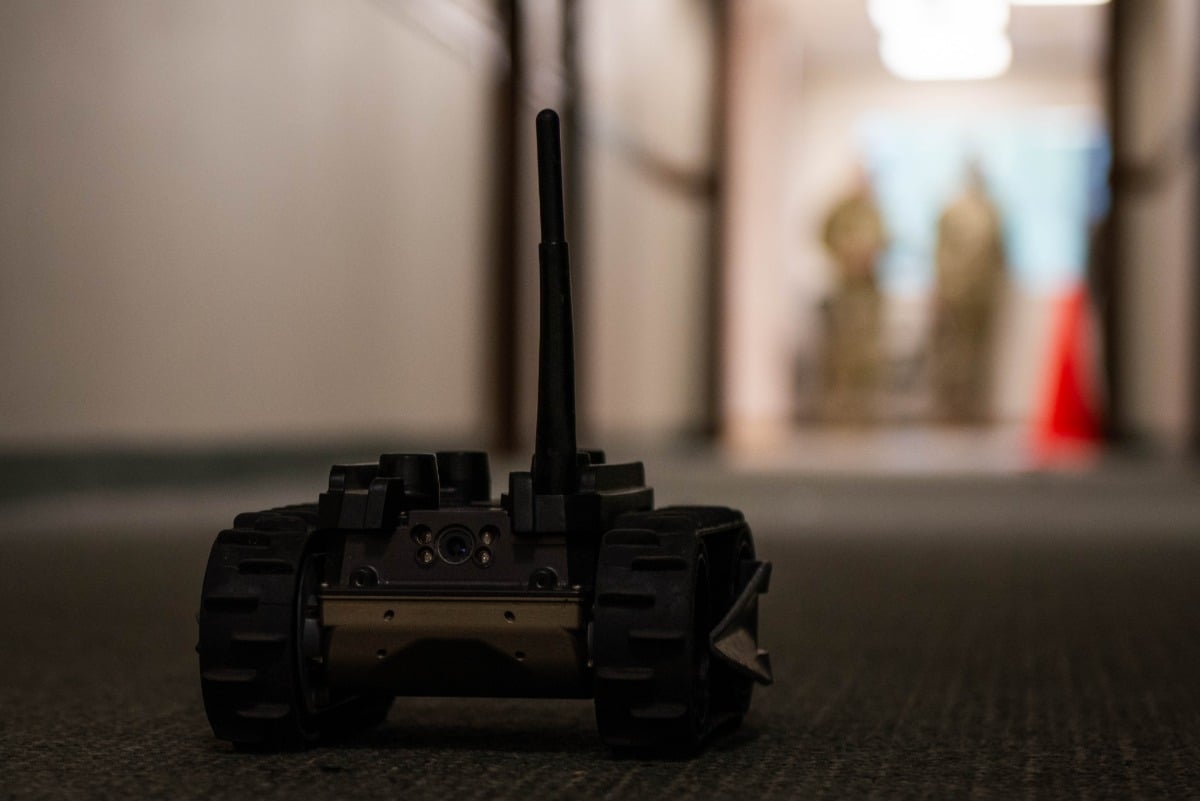
The United States recently delivered 110 micro-reconnaissance robots to the Tunisian Armed Forces. On the surface, the transfer of these throwable, palm-sized tactical devices represents a routine security assistance package aimed at bolstering Tunisia’s border security and counterterrorism capabilities. However, a deeper examination of this transfer reveals a complex intersection of geopolitical positioning, the evolving nature of proxy border management, and the limitations of tactical technology in resolving deep-seated, systemic security challenges.
This is not merely a story of hardware changing hands. It is a window into how Washington seeks to project influence and monitor volatile borders in North Africa without putting American boots on the ground. For an alternative look, see: this related article.
Shifting the Burden of Border Patrol
Tunisia shares a porous, highly unstable 285-mile border with Libya to its east, and a rugged, mountainous western border with Algeria. Both regions have long served as transit corridors for illicit trafficking networks, weapons smugglers, and militant groups aligned with Al-Qaeda in the Islamic Maghreb (AQIM) and the Islamic State.
The delivery of 110 throw-functional reconnaissance robots is designed to address a specific operational vulnerability: the extreme danger Tunisian infantry units face when clearing caves, tunnels, urban hideouts, and dense brush. Related analysis regarding this has been shared by The New York Times.
These devices, typically weighing less than two pounds, can be thrown over walls, through windows, or down shafts. They transmit real-time video and audio back to handheld controllers, allowing operators to peer around corners before exposing themselves to hostile fire.
But tactical convenience obscures a broader strategic reality. By supplying these highly specialized tools, the U.S. is cementing a security doctrine that shifts the physical risks of counterterrorism onto local partners while maintaining a tight grip on the regional intelligence apparatus.
The Limits of Throw-and-Go Technology
While these micro-robots are highly effective in isolated tactical scenarios, they are not a silver bullet for border security.
- Battery Life Constraints: Most micro-reconnaissance robots operate on rechargeable batteries that offer between 60 to 120 minutes of continuous operation. In the vast, remote expanses of the Tunisian-Libyan desert, where patrol missions can last for days, the logistical tail required to keep these systems charged and operational is significant.
- Terrain Vulnerability: While designed to survive drops from high walls, these small wheeled or tracked platforms struggle in loose desert sand and heavily rutted terrain. A robot stuck on its back in a sand dune is an expensive piece of litter, not a tactical asset.
- Maintenance and Supply Chains: Proprietary military hardware requires specialized parts and training to repair. If a Tunisian unit damages a drive axle or a camera lens in the field, the unit is often left waiting weeks or months for replacement parts to arrive through official foreign military sales channels.
The Geopolitical Chessboard of North Africa
To understand why the U.S. chose this moment to equip Tunisia with these specific tools, one must look beyond the immediate tactical utility. The strategic landscape of North Africa is undergoing a profound realignment.
As traditional European powers, particularly France, see their influence wane in the Sahel and parts of North Africa, a vacuum has emerged. Russia, through its paramilitary structures and diplomatic overtures, has aggressively expanded its footprint in neighboring Libya and Mali. China continues to offer infrastructure investments with few political strings attached.
In this environment, Tunisia remains a vital, albeit fragile, democratic experiment and a major non-NATO ally of the United States.
[U.S. Security Assistance to Tunisia]
        │
        ├──► Tactical Level: 110 Micro-Robots (Immediate risk reduction for troops)
        │
        ├──► Operational Level: Enhanced Border Monitoring (Containment of Libyan instability)
        │
        └──► Strategic Level: Countering Russian/Chinese influence in North Africa
By providing highly visible, advanced military technology, Washington signals its continued commitment to Tunis without committing to the massive, politically sensitive financial aid packages that draw scrutiny from congressional budget hawks. It is low-cost, high-visibility diplomacy.
The Human Factor in Automated Surveillance
There is a fundamental tension at the heart of modern border security: the belief that technology can substitute for political stability and economic viability.
The communities living along the Tunisian-Libyan border have historically relied on informal cross-border trade—often classified as smuggling—for their economic survival. Decades of marginalization by successive central governments in Tunis have left these southern regions underdeveloped and deeply distrustful of state authority.
Introducing high-tech surveillance and robotic reconnaissance to clamp down on border crossings can successfully disrupt illicit networks. However, without concurrent economic development, it also strangulates the informal economies that keep these border towns afloat.
When local populations are deprived of their livelihoods by automated and militarized border regimes, the pool of individuals susceptible to recruitment by extremist groups grows. The very technology deployed to suppress security threats can, paradoxically, exacerbate the underlying socio-economic drivers of radicalization.
Dependency by Design
Foreign military aid is rarely a purely altruistic endeavor. It creates a cycle of dependency that binds the recipient nation's military doctrine, training, and logistical pipelines to the donor state.
By integrating American robotic systems into their standard operating procedures, the Tunisian Armed Forces must align their tactical training with U.S. military standards. This ensures deep, ongoing interoperability between the two militaries. It also means that for the foreseeable future, Tunisia’s tactical intelligence-gathering capabilities in close-quarters combat will rely on American-managed supply chains, software updates, and technical support.
This is a quiet, highly effective form of leverage. It ensures that even as political winds shift in Tunis, the military establishment remains structurally tied to Washington.
The delivery of 110 tiny robots is not just a tactical upgrade for a partner nation. It is a calculated investment in long-term access, influence, and containment in a region where the geopolitical stakes are steadily rising.