History often records the birth of a public institution as a simple act of benevolence. In the case of Mother Neff State Park, the narrative is frequently polished into a sentimental story about a pioneer matriarch donating a sliver of land to her neighbors. The reality is more calculated. While Isabella Neff’s 1916 gift of six acres along the Leon River was genuine, it served as the essential architectural foundation for a broader, state-level political strategy orchestrated by her son, Governor Pat Neff.
To understand the origin of the Texas state park system, one must look past the myth of the humble donation and toward the intentional construction of public policy. The six acres provided the legal justification, but Pat Neff provided the momentum. By utilizing his mother’s land as the inaugural site, the governor created an unimpeachable anchor for a state-run conservation agenda that had previously lacked a foothold.
The Neff family property was not merely a plot of dirt. Long before it entered the public domain, the riverbank served as an unofficial community hub. Residents held political rallies, religious revivals, and fraternal meetings there. By the time Isabella Neff passed away in 1921, she had already effectively socialized the space. When her son moved to expand this local amenity into an official state park, he was not creating a new recreational concept; he was codifying an existing social habit into state law.
Governor Pat Neff understood that a legislative body requires concrete proof of success before authorizing large-scale expenditures. By transitioning the family land into a state-managed site, he bypassed the typical bureaucratic hurdles of land acquisition. He essentially gave the state a pilot program. The success of this site—later bolstered by his personal donation of 250 acres in 1934—provided the evidence he needed to secure support for the Texas State Parks Board, established in 1923.
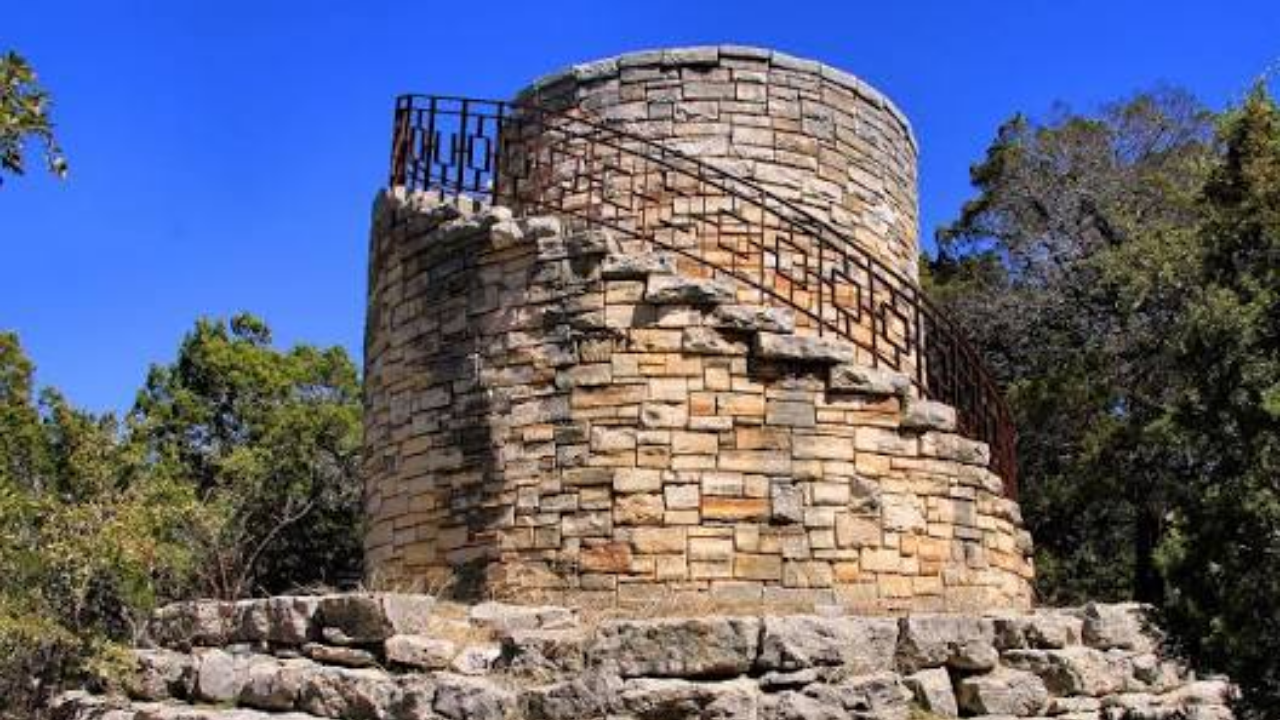
The mechanism of this transformation relied on more than just geography. The Great Depression acted as an unexpected accelerator. When the federal government launched the Civilian Conservation Corps (CCC), Pat Neff was positioned to capture those resources. Between 1934 and 1938, the CCC turned the modest family plot into a professionalized destination. They built the roads, the stone water tower, and the recreational halls that transformed a quiet riverside picnic spot into a symbol of modern Texas infrastructure.
Critics might argue that the state’s involvement was an unnecessary expansion of power, yet the results demonstrate a different truth. Before 1923, Texas had no unified system for protecting its natural assets. By linking his mother’s legacy to the state’s legislative machinery, Pat Neff ensured that conservation was tied to the identity of the state itself. It was a masterclass in political alignment. He took a localized, private affection for the outdoors and translated it into a public mandate.
The reliance on familial land as a political vehicle is not a unique phenomenon, but the efficiency of this particular execution is rare. Consider the logistical advantages: there were no complex land disputes, no bitter eminent domain battles, and no opposition from local landowners who might have otherwise feared government interference. The "gift" was shielded by the moral authority of Mother Neff, a woman who had famously refused payment for public gatherings during her lifetime. Challenging the park’s creation would have been a political misstep for any legislator in the 1920s.
Observers today often overlook the fact that the early state park system was built on a series of these specific, small-scale donations. It was not a grand vision from the top down, but a collection of local interests stitched together by political timing. The Mother Neff donation was the proof of concept. It forced the legislature to acknowledge that the public demanded access to the land. Once that expectation was set, the expansion of the system became a question of speed rather than possibility.
The infrastructure remains a testament to this era. The stone structures built by the CCC are not just buildings; they are physical manifests of a period where the state sought to prove its worth by providing high-quality public spaces during a national crisis. This was the era when the government transitioned from a mere administrator of law to a provider of recreation.
The legacy of the site is often framed as a tribute to one woman’s generosity, but that is only half the story. The park exists because an astute politician understood that grand, abstract plans rarely survive the statehouse. He knew that to build an institution, you need to start with a piece of ground that the people already love. Once the people have a stake in the land, the policy follows.
True sustainability in public infrastructure relies on this kind of initial investment. Whether it is a park, a transit line, or a community resource, the most enduring systems are those that grow out of existing cultural habits. You do not create a public institution by mandate alone. You create it by finding the places where the public already gathers and making it impossible for them to be turned away.
The next time you walk the limestone trails of the Leon River, understand that you are not just walking through a scenic preservation. You are walking through a deliberate, calculated, and highly effective political victory.