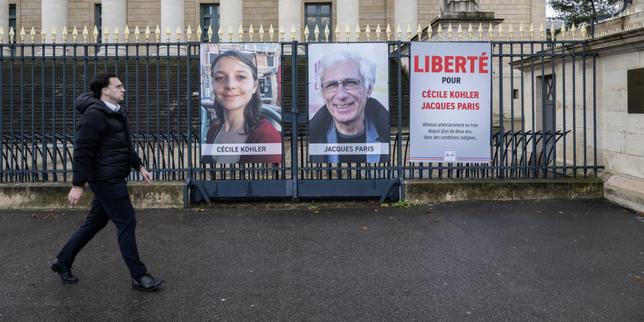
Emmanuel Macron has confirmed that Cécile Kohler and Jacques Paris are finally out of Iranian custody and heading back to French soil. The news breaks a grueling period of detention for the two French teachers who were arrested in May 2022 on charges of espionage and fueling social unrest. While their return is a clear humanitarian victory, it also shines a harsh light on the transactional nature of modern diplomacy with the Islamic Republic. France has secured the release of its citizens, but the mechanics of this "hostage diplomacy" suggest a recurring cycle that Western powers seem unable or unwilling to break.
The Mechanics of the Arrest
Cécile Kohler and Jacques Paris were not high-level diplomats or undercover agents. They were educators and union activists visiting Iran on a tourist visa. Their arrest occurred during a period of significant domestic friction within Iran, specifically regarding labor rights and teacher protests over pay and conditions. By snatching two foreign nationals with links to international labor unions, Tehran effectively manufactured a narrative of foreign interference to delegitimize domestic dissent.
The Iranian state media quickly released "confessions" that bore all the hallmarks of coercion. These videos depicted the pair admitting to working for French intelligence to destabilize the regime. For those who follow the pattern of the Islamic Revolutionary Guard Corps (IRGC), the script was familiar. These arrests are rarely about the individual’s actions; they are about creating a stockpile of human capital to be traded for concessions, frozen assets, or the release of Iranian operatives held abroad.
A Pattern of Transactional Justice
France has long maintained a complex relationship with Iran, attempting to act as a bridge between the West and the Middle East while simultaneously navigating the fallout of the collapsed nuclear deal. However, the release of Kohler and Paris does not happen in a vacuum. It follows a predictable rhythm where long-term detentions are suddenly resolved following quiet, back-channel negotiations that often involve third-party intermediaries like Qatar or Oman.
The "why" is simple. Iran uses these prisoners as diplomatic levers. When the French government demands their release, the conversation inevitably shifts toward broader geopolitical issues. This puts the Quai d'Orsay in a precarious position. If they refuse to negotiate, their citizens languish in Evin Prison. If they do negotiate, they reinforce the IRGC’s belief that kidnapping is an effective tool of statecraft.
Historically, these swaps involve more than just a handshake. In 2023, the release of several European nationals was preceded by the freeing of Assadollah Assadi, an Iranian diplomat convicted in Belgium for a thwarted bomb plot. While the French government has not yet disclosed the specific "considerations" involved in the Kohler and Paris deal, history suggests that something was likely moved on the chessboard to make this possible.
The Human Cost of State Strategy
Living conditions in Iranian detention centers are notoriously brutal. Cécile Kohler’s family spent years campaigning for her, describing a terrifying lack of communication and the psychological toll of indefinite isolation. The Iranian judicial system offers no transparency in these cases. Charges of "undermining national security" are used as a catch-all to bypass legal protections, leaving the accused at the mercy of political whims rather than the rule of law.
For the French public, the relief of seeing them return is tempered by the knowledge that other French nationals, such as Olivier Vandecasteele (who was released earlier) and others still in the system, serve as reminders that the list is never truly empty. The French government currently lists several other citizens as "arbitrarily detained" in Iran. This suggests that even as Kohler and Paris fly home, the leverage game continues with the remaining prisoners.
The Failure of Western Deterrence
The international community has struggled to find a way to stop this practice. Sanctions on IRGC officials have been the primary response, but these measures have done little to change the fundamental calculus in Tehran. As long as the Iranian government perceives that it can extract political or financial value from foreign tourists and academics, the risk to travelers remains extreme.
France, like its neighbors, issues stern travel warnings. The official advice is clear: do not go to Iran. Yet, the burden of these situations eventually falls back on the state. The diplomatic energy spent on these releases is energy taken away from addressing Iran’s regional maneuvers or its nuclear ambitions. It is a distraction that serves the IRGC’s interests perfectly.
The Shadow of the Middle East Conflict
The timing of this release is also significant given the current volatility in the Middle East. With tensions between Israel and Iran at a historic peak, Tehran may be looking to clear certain diplomatic hurdles with Europe to prevent a total collapse of communication. By releasing French citizens, they throw a bone to Paris, potentially hoping for a more moderated French stance in upcoming international forums or a softening of EU-wide sanctions.
It is a cynical game. The freedom of two teachers is a pawn in a much larger struggle for regional dominance. Macron’s announcement is a moment of political relief, but it does not signal a thaw in relations. It is merely the closing of one specific file in a filing cabinet full of grievances.
The Role of Labor Unions and Activism
Interestingly, the case of Kohler and Paris galvanized the international labor movement in a way few other hostage cases have. Their background as unionists meant that organizations like the Federation of National Education (FEN) and international bodies kept the pressure on the French government. This grassroots pressure is often what forces a government to prioritize a specific case, but it also increases the "value" of the hostage in the eyes of the captor.
When a case becomes a cause célèbre, the price for their release goes up. This creates a heartbreaking paradox for families and activists: the louder they scream for justice, the more valuable their loved ones become to the regime that took them.
What Remains in the Shadows
While the cameras will capture the emotional reunion at the airport, the details of the deal will likely remain classified for years. We may never know which frozen bank accounts were unfrozen or which Iranian agents were allowed to walk free in exchange. This lack of transparency is necessary for diplomacy but damaging to the public’s understanding of how their government operates in the gray zones of the world.
The return of Cécile Kohler and Jacques Paris is not the end of a story; it is a chapter in a long-running book on the erosion of international norms. The Islamic Republic has once again proven that it can seize Westerners at will, hold them for years, and eventually trade them for whatever it currently needs.
The immediate priority is the health and recovery of the two returnees. They have spent years in a system designed to break the human spirit. But for the analysts watching from the sidelines, the celebration is short-lived. The infrastructure that took them remains fully intact, the motivations for taking the next set of hostages haven't changed, and the international community’s strategy for stopping this remains as fragmented as ever. France has its people back, but the cost of the ticket remains a closely guarded secret.