The four astronauts assigned to the Artemis II mission represent more than just a crew list; they are the physical manifestation of a multi-billion-dollar bet that NASA can still operate on the bleeding edge of physics. While the public sees polished video feeds and hears rehearsed updates from the flight deck of the Orion spacecraft, the reality of this mission is a gritty, high-risk engineering feat that pushes the limits of 21st-century life support and radiation shielding. This is not a repeat of the Apollo era. It is a fundamental test of whether a modern, bureaucratic space agency can execute a manual lunar flyby using a digital architecture that has never been tested with human lungs breathing its air.
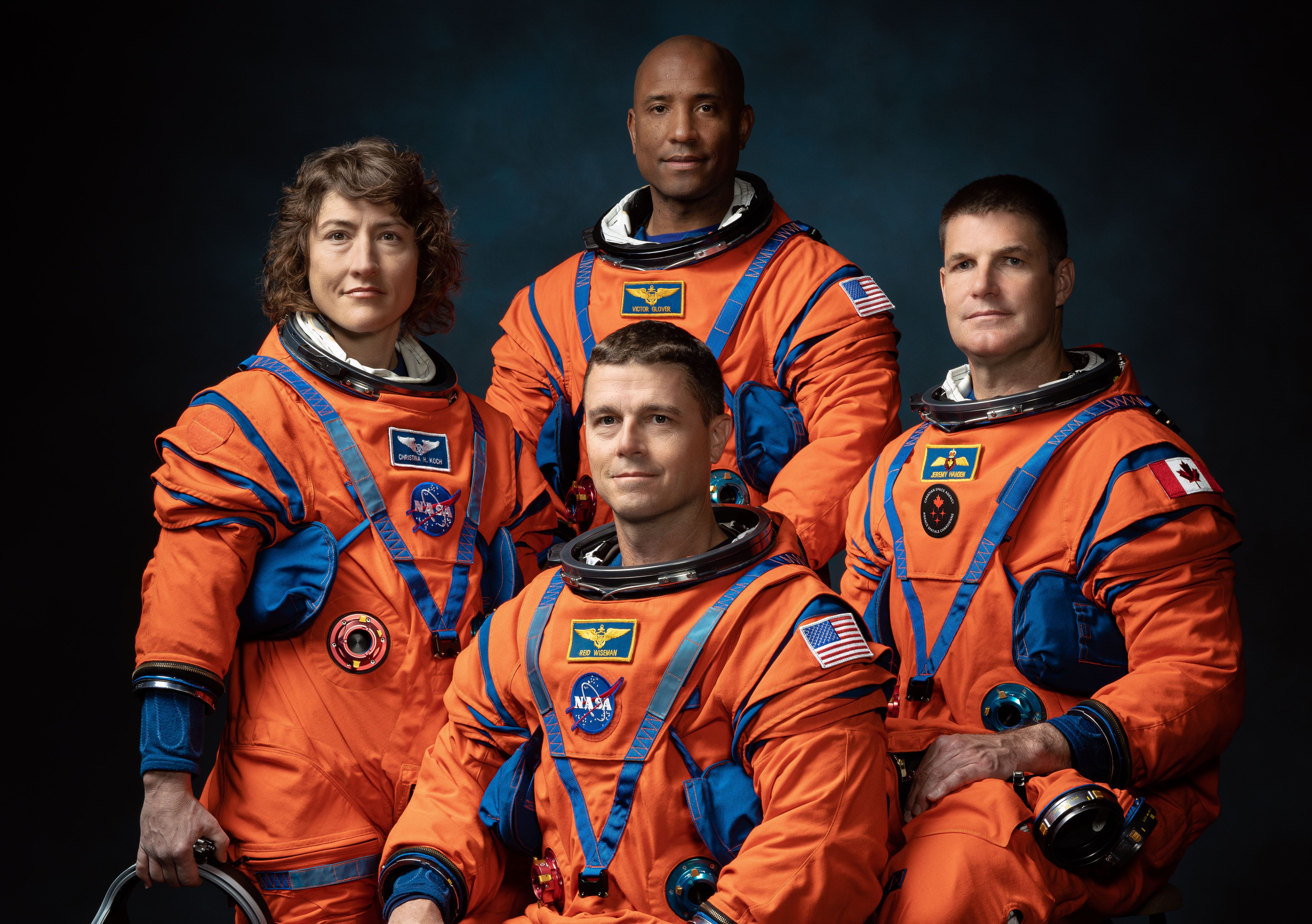
The mission plan is straightforward yet unforgiving. Reid Wiseman, Victor Glover, Christina Koch, and Jeremy Hansen will spend roughly ten days traveling 6,400 miles beyond the far side of the Moon. They are not landing. They are proving that the Orion Multi-Purpose Crew Vehicle (MPCV) can keep four humans alive in a deep-space environment where the Earth's magnetosphere no longer offers protection from solar flares or cosmic rays.
The Life Support Systems Architecture
Engineers have spent years obsessing over the Environmental Control and Life Support System (ECLSS). In low Earth orbit, such as on the International Space Station, a failure is a crisis, but a manageable one. An emergency descent can bring a crew home in hours. Once the Artemis II crew completes their Trans-Lunar Injection burn, that safety net vanishes. They are committed to a free-return trajectory that relies entirely on the internal chemistry of the capsule.
The nitrogen-oxygen atmosphere inside Orion must be meticulously balanced to prevent hypoxia or oxygen toxicity. Unlike previous short-duration capsules, Orion is designed for the long haul, meaning its scrubbers must remove carbon dioxide with extreme efficiency without the luxury of the massive power arrays found on the ISS. We are looking at a closed-loop system where every liter of water and every breath of air is a precious commodity managed by a suite of computers that must remain functional in the face of intense radiation bombardment.
Redundancy Under Pressure
The "how" of this mission lies in the dual-layered redundancy of the Orion systems. If the primary flight computers glitch due to a high-energy particle strike, the backup systems must take over instantly. This isn't just about software. It's about hardware hardened against the harsh environment of the Van Allen belts. During the initial phases of the mission, the crew will perform a series of proximity operations maneuvers. They will use the spent upper stage of the Space Launch System (SLS) rocket as a target, practicing manual piloting. This is a critical skill. If the automated docking systems of future Artemis missions fail, these four individuals must prove that a human pilot can still outmaneuver an algorithm in the vacuum of space.
The Radiation Problem No One Likes to Discuss
Deep space is a shooting gallery of invisible killers. On Artemis II, the crew will travel further from Earth than any human since 1972. This exposes them to Galactic Cosmic Rays (GCRs) and the potential for Solar Particle Events (SPEs). While the hull of Orion provides some shielding, it cannot stop everything.
NASA has implemented a "shelter" protocol. If a massive solar flare is detected while the crew is en route to the Moon, they will be forced to stack equipment and water supplies against the walls of the capsule to create a makeshift radiation bunker. It is a primitive solution to a complex problem, highlighting the limitations of current material science. We still do not have a lightweight material that can perfectly block high-energy iron nuclei or other heavy ions. The crew is essentially trading long-term health risks for the immediate tactical success of the mission.
Why This Mission Matters More Than a Landing
It is tempting to view Artemis II as a mere dress rehearsal for the Artemis III landing. That is a mistake. Artemis II is the true "shakedown" cruise. It validates the Space Launch System’s ability to loft a crewed vehicle into a precise trajectory and, more importantly, it tests the heat shield during a high-velocity reentry.
When Orion returns from the Moon, it will hit the Earth's atmosphere at speeds exceeding 25,000 miles per hour. The friction will generate temperatures around 5,000 degrees Fahrenheit. This is significantly hotter and faster than a return from the ISS. If the Avcoat ablative material on the heat shield doesn't burn away exactly as predicted, the mission ends in disaster before the parachutes ever deploy. The data gathered during those final minutes of atmospheric friction will dictate the design of every deep-space vehicle for the next fifty years.
The Human Component
The selection of this specific crew was a calculated move. You have a mix of veteran ISS commanders and test pilots who understand that their primary job is to be sensors. They are there to report on the "feel" of the spacecraft—the vibrations during launch, the noise levels of the life support pumps, and the ergonomics of the glass cockpit under G-load. No sensor can replace the qualitative feedback of a human pilot who knows when a thruster firing doesn't sound quite right.
The Financial and Geopolitical Reality
Space exploration is often sold as a voyage of discovery, but it is fueled by the cold reality of national prestige and industrial capacity. The SLS and Orion programs have been criticized for their massive costs and traditional "cost-plus" contracting models. Artemis II is the moment where those expenditures must yield a tangible result. If the mission succeeds, it justifies the continued existence of the program and the massive infrastructure built around the Kennedy Space Center. If it falters, it opens the door for a radical shift toward purely commercial lunar architectures.
The global community is watching. This isn't just a NASA mission; it is a signal to international partners—and rivals—that the United States and its allies can still command the cislunar environment. The inclusion of a Canadian astronaut, Jeremy Hansen, underscores this as a diplomatic endeavor as much as a scientific one. By sharing the risk, the mission spreads the political burden, making it harder for future administrations to cancel the program.
Engineering the Descent
The final hurdle is the splashdown. The recovery of the Orion capsule in the Pacific Ocean involves a coordinated effort between the U.S. Navy and NASA recovery teams. The capsule must be stabilized in the water quickly to prevent the crew from suffering from extreme motion sickness or, worse, being trapped in a sinking craft if the uprighting bags fail to deploy.
The recovery team uses a specialized ship with a well deck that allows the capsule to be floated directly into the vessel. It is a delicate dance of maritime skill and aerospace engineering. Every second the crew spends bobbing in the ocean is a second of vulnerability. They will have been in microgravity for ten days; their bodies will be weak, their vestibular systems scrambled. The transition back to 1G is a brutal physical experience that the public rarely sees in the edited highlights.
The success of Artemis II hinges on these unglamorous details. It’s not about the view of the Moon from the window. It’s about whether the valves stay open, the software stays up, and the heat shield stays intact. We are no longer in the era of "stepping stones." This is the leap. The crew is prepared to face the void, knowing that their survival depends on the millions of man-hours spent tightening bolts and debugging code back on the ground.
When the Orion capsule finally hits the water, the splash will echo across the aerospace industry as a definitive statement of capability. The technical hurdles remain immense, and the margins for error are razor-thin. This is the reality of human spaceflight: it is a constant battle against a vacuum that wants to kill you and a gravity well that wants to crush you. Artemis II is the proof of work required to earn our place among the stars once again.