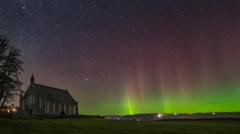
You can see the Milky Way with your naked eye in parts of the Scottish Highlands that most tourists never reach. That view is disappearing.
Light pollution creeps north every single year. Badly angled security lights, unshielded street lamps, and endless commercial glow wash out the stars. Highland councils have finally taken notice. Officials drafted new dark skies guidance to protect one of the last true frontiers of stargazing in Europe.
Most people think light pollution is just an urban annoyance. It is an environmental crisis.
Dark skies matter. They matter for wildlife, they matter for human health, and they matter for the local economy. Rural Scotland pulls in millions of pounds from astrotourism every single year. If the night sky turns gray, those travelers go elsewhere.
The Cost of Bad Lighting
Streetlights that shoot light sideways and upwards waste cash. Municipal budgets bleed money on electricity bills that heat the atmosphere instead of illuminating the pavement. Proper lighting directs photons downward. It sounds simple, yet builders and developers ignore it constantly.
You have likely seen it yourself. A new housing development goes up on the edge of a Highland village. Suddenly, hyper-bright LED floodlights blaze all night long, turning the surrounding moorland into an artificial daytime zone. Nocturnal animals suffer. Red deer, bats, and migrating birds rely on natural dark cycles to hunt, mate, and navigate. When you flood their habitat with unnecessary illumination, their biological clocks break down.
The new drafting changes the rules for planning applications. Planners want developers to justify every lumen they install. They want warm-toned bulbs instead of harsh blue-white LEDs that scatter easily through the atmosphere.
Escaping the Glow
Scotland already hosts remarkable dark sky locations. The Cairngorms National Park and the Moffat Dark Sky Community prove that preserving the night sky brings massive economic returns. People book cabins, hire local guides, and stay in rural hotels during the off-season just to see the aurora borealis or a pristine winter sky.
Communities across Ross-shire, Sutherland, and the North West Highlands face a choice. They can regulate outdoor lighting now, or they can watch their starry heritage fade behind an orange haze.
The draft guidance proposes clear standards.
- All new exterior lighting must be fully shielded.
- Brightness limits will apply to commercial signs and car parks.
- Curfews may be introduced for non-essential business illumination.
These rules sound strict to property developers. They are common sense to anyone who values the natural world.
What You Can Do
You don't need to wait for local authorities to pass a vote before you fix your own property. Look outside your back door tonight. Is your porch light blinding your neighbors? Does it cast glare up into the trees?
Fixing it takes ten minutes. Point the fixture straight down. Put in a lower wattage bulb. Better yet, install a motion sensor so the light only switches on when something actually moves.
Small changes add up. If every household in a Highland village swaps blinding floodlights for thoughtful, downward-facing fixtures, the local night sky recovers instantly. Stargazing becomes accessible from your own kitchen window.
Protecting the dark isn't about turning back the clock to the Middle Ages. It is about using modern technology intelligently so we keep the stars visible for the next generation. Check your local council website to read the draft guidelines, submit your backing during the consultation window, and help keep the Highland nights dark.