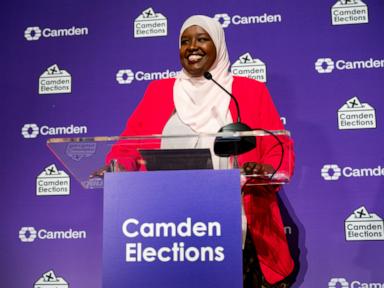
Labour's victory in the October 2026 Holborn and St Pancras by-election exposes the structural ceiling of left-wing populist insurgency under Britain's first-past-the-post voting system. By securing 45.2% of the vote for candidate Sagal Abdi-Wali against Green Party leader Zack Polanski's 32.8%, Prime Minister Andy Burnham's administration neutralized an existential threat on its left flank while trapping the Green leadership inside a severe strategic contradiction.
Standard political coverage frames this contest as a simple narrative of a rising challenger falling short in a safe seat. That framing misses the underlying operational mechanics. When a party leader personally contests a high-profile parliamentary vacancy, the campaign ceases to be a local election and becomes a balance-sheet audit of their entire strategic doctrine. Polanski's defeat in north London was not merely a missed opportunity to enter the House of Commons; it was a stress test of whether rapid membership growth and anti-establishment mobilization can overcome institutional incumbency, ideological self-sabotage, and turnout compression.
The Structural Anatomy of the Contest
To understand why Labour held a seat vacated by former Prime Minister Keir Starmer despite a significant erosion in its headline vote share, analysts must separate raw vote movement from conversion efficiency. In the 2024 general election, Starmer won Holborn and St Pancras with 48.9% of the vote and an 11,572-vote majority, while the Greens finished third with 10.4%. Two years later, in the October 8, 2026 special election, the competitive geometry shifted dramatically:
- Labour (Sagal Abdi-Wali): 45.2% vote share, yielding a 3,364-vote majority.
- Green Party (Zack Polanski): 32.8% vote share, surging 22.4 percentage points from 2024.
- Reform UK: 7.1% vote share.
- Conservative Party: 5.9% vote share.
- Liberal Democrats: 3.4% vote share.
- Turnout: 38.7%, representing a drop of 15.4 percentage points from the 2024 general election.
These figures reveal two competing realities operating simultaneously. First, the Green Party executed a massive vote-consolidation maneuver, more than tripling its 2024 percentage share and collapsing the Liberal Democrat and Conservative vote bases into irrelevance. Second, Labour lost only 3.7 percentage points of its vote share compared to 2024, even as overall turnout plunged by more than 15 points.
In electoral mechanics, a 15.4-point drop in turnout usually punishes the incumbent party, because dissatisfied baseline voters stay home while motivated insurgents turn out. Labour prevented this asymmetric demobilization through two specific operational choices: leadership replacement and candidate localization. With Andy Burnham having replaced Keir Starmer as Prime Minister in September 2026, Labour shed the personal drag of its former leader before ballots were cast. Simultaneously, selecting Abdi-Wali—a local figure whose family arrived in the borough as refugees—anchored Labour's ground operation in community identity rather than national government defense.
The Three Failure Modes of the Green Insurgency
Zack Polanski entered the race with substantial momentum. Having won the Green Party leadership in September 2025 on an "eco-populist" platform linking wealth redistribution, public service funding, and the Gaza conflict to environmental justice, he oversaw an expansion of party membership to 220,000. The party had already demonstrated its capacity to unseat Labour in February 2026, when Green candidate Hannah Spencer captured the Gorton and Denton by-election with 40.7% of the vote. Yet when Polanski attempted to replicate that formula in north London, three distinct operational failure modes degraded his campaign's conversion rate.
1. Geographic Misallocation and the Carpetbagger Penalty
In single-member plurality districts, candidate selection imposes a strict trade-off between national name recognition and local authenticity. Polanski resides in east London, closer to Hackney, rather than in Holborn and St Pancras. While he argued during his campaign launch that he had lived and worked in the community over many years, critics within his own party questioned the decision to bypass a closer stronghold in favor of an opportunistic raid on a former prime minister's seat.
When an insurgent leader parachutes into a high-profile constituency, every local policy question becomes secondary to the candidate's national ambition. Labour exploited this vulnerability directly. By contrasting Abdi-Wali's deep roots in Camden with Polanski's status as a London-wide Assembly Member seeking a parliamentary platform, Labour framed the choice as local representation versus national grandstanding.
2. Internal Factionalism and Policy Contamination
The decisive blow to Polanski's late-campaign momentum came from inside his own party apparatus. Just days before the by-election, fewer than 2,000 Green Party members at the party's autumn conference passed a controversial motion labeling Zionism as racism. The timing created an immediate strategic crisis for Polanski, who is Jewish.
Rather than confronting the motion on the conference floor, Polanski skipped the vote entirely, arguing afterward that local campaigners in Holborn and St Pancras wanted him on the ground addressing constituency issues. That tactical evasion failed on two fronts:
- Alienation of Moderate Swing Voters: In a diverse central London constituency, the motion triggered immediate condemnation from Jewish organizations and several sitting Green lawmakers, dominating media coverage during the final week of the campaign and halting the Greens' polling surge. Independent projections by PollCheck prior to the controversy had placed the Greens at 35.6% against Labour's 40.4%—a 4.8-point gap. On election night, the actual gap widened to 12.4 percentage points.
- Exposure of Leadership Weakness: By refusing to take a stand during the conference vote, Polanski projected indecision. Voters and party insiders alike observed a leader unable to control his own conference floor at the exact moment he was asking the electorate to trust him with national legislative authority.
3. The Turnout Compression Paradox
Low-turnout special elections operate under different mathematical rules than general elections. At 38.7% turnout, the electorate shrinks to high-propensity voters who possess strong partisan attachments or immediate material stakes in local governance. Polanski's eco-populist strategy relies heavily on mobilizing irregular voters, younger demographics, and disillusioned progressives through digital media and protest politics.
In a general election, a 32.8% vote share in an urban seat often signals a competitive two-way marginal. In a 38.7%-turnout by-election, however, that 32.8% represents a much smaller absolute pool of votes—insufficient to overtake an entrenched urban machine that successfully turns out its core base. The widespread assumption that Labour would hold the seat further suppressed anti-government tactical voting, leaving Polanski stranded between a loyal Labour core and an unmobilized protest electorate.
The Cost Function of Leadership Candidacy
When a party leader stands in a by-election and loses, the political cost extends far beyond a single uncaptured seat. In parliamentary systems, party leadership rests on an implicit contract: the leader absorbs concentrated media scrutiny in exchange for delivering electoral expansion. Polanski's defeat alters the internal economics of the Green Party across three dimensions.
First, it strips the leader of parliamentary immunity and visibility. Without a seat in the House of Commons, Polanski cannot confront Prime Minister Andy Burnham directly at Prime Minister's Questions, leaving parliamentary representation to the party's existing MPs while he remains confined to the London Assembly and external media channels.
Second, it accelerates internal factional warfare. Within days of the defeat, former Green leaders and sitting MPs publicly warned against the party being captured by the hard left, while Polanski signaled an impending overhaul of party structures following the conference motion fallout. The internal friction exposed a structural flaw in the Greens' hyper-democratic governance model: a small fraction of active conference attendees—under 2,000 members out of a claimed 220,000—can pass binding policy motions that inflict immediate electoral damage on frontline candidates.
Third, it hands Labour a weaponized wedge for local government. Following the Holborn and St Pancras result and the conference vote, Labour moved to terminate local council cooperation agreements with Green groups across 11 councils unless they repudiated the anti-Zionism policy. By losing the by-election, Polanski failed to establish the parliamentary leverage needed to deter Labour from isolating the Greens at the municipal level.
Why Burnham's Labour Stabilized Its Left Flank
For Prime Minister Andy Burnham, the Holborn and St Pancras result serves as proof of concept for his post-Starmer stabilization strategy. Earlier in 2026, Labour's vulnerability to left-wing defections had been exposed in Gorton and Denton, where Labour collapsed to third place with 25.4% behind both the Greens (40.7%) and Reform UK (28.7%). Had Polanski replicated that result in central London, Burnham's fledgling premiership would have faced an immediate narrative of terminal decline in its urban heartlands.
Instead, Labour demonstrated that an incumbent government can hold its progressive urban base without capitulating to insurgent demands, provided it executes three conditions:
- Leadership Reset: Removing an unpopular incumbent prime minister disrupts the protest-vote dynamic before opposition parties can nationalize a local ballot.
- Hyper-Local Candidate Selection: Fielding a candidate with verifiable community ties neutralizes outsider insurgents regardless of their social media reach.
- Disciplined Wedge Exploitation: Amplifying an opponent's internal ideological excesses forces moderate progressives back into the Labour fold as a defensive measure.
The limitation of Labour's victory lies in its narrow absolute margin. A 3,364-vote majority in a seat that delivered an 11,572-vote cushion two years prior indicates that Labour's hold on metropolitan constituencies remains conditional rather than restored. If turnout rebounds in a general election without a corresponding recovery in Labour's core enthusiasm, a 32.8% Green baseline poses a severe threat in dozens of inner-city seats.
Strategic Imperatives for the Green Leadership
Polanski faces a scheduled leadership vote in 2027, and his survival depends on correcting the operational vulnerabilities exposed in north London. Defenders of his record rightly note that tripling the Green vote share in a historic Labour fortress—and building a 220,000-member organization—proves the party is no longer a peripheral protest vehicle. Allies also point out that Nigel Farage required eight attempts to win a parliamentary seat.
Yet historical analogies cannot substitute for structural reform. To convert mass membership into parliamentary seats, the Green leadership must execute three immediate operational adjustments:
- Centralize Policy Vetting: Reform the party's conference governance so that fewer than 1% of the membership cannot unilaterally bind the party to toxic foreign-policy motions during active election cycles.
- Enforce Geographic Discipline: Abandon high-profile opportunistic raids in favor of concentrating resources in seats where the party possesses entrenched municipal infrastructure, existing council majorities, and genuine candidate residency.
- Decouple Digital Reach from Ground Conversion: Build dedicated voter-identification and get-out-the-vote machinery capable of turning online eco-populist enthusiasm into physical ballots during low-turnout contests.
Without governance reform to curb fringe conference motions and strict geographic targeting, Polanski's eco-populist movement will remain trapped in a permanent runner-up equilibrium—capable of threatening Labour's majorities across urban Britain, yet structurally incapable of taking the seats themselves.