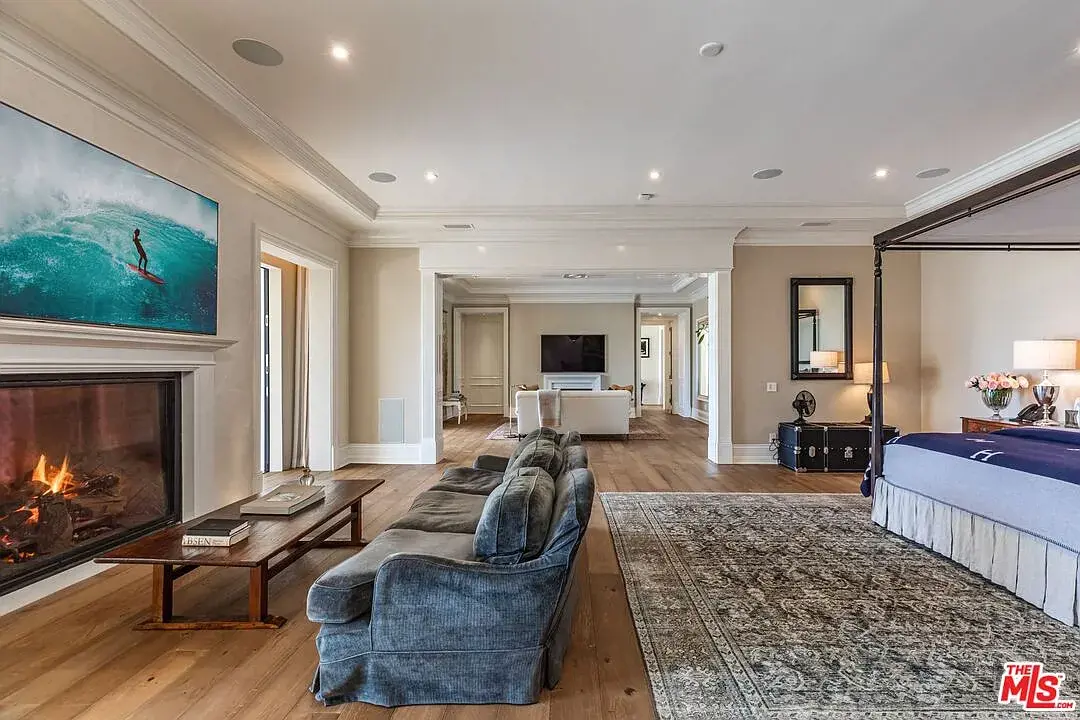
The driveway is a mile-long ribbon of heated travertine that snakes through the hills of Bel Air, leading to a structure that looks less like a home and more like a captured cloud. It is a masterpiece of steel, glass, and ego. Inside, the air is filtered to a degree of purity that makes the outside world feel like a coal mine. Every surface is honed marble or reclaimed oak. There are infinity pools that bleed into the horizon and cinema rooms with acoustics so precise you can hear a pin drop in a film recorded forty years ago.
But if you walk through the primary suite of this eighty-million-dollar fortress, past the automated wardrobe and the spa that mimics a Japanese forest, you will find a void. It isn’t a lack of furniture. It isn’t a lack of art.
It is a lack of history.
There is a specific trend blooming among the ultra-elite, a design philosophy that has moved beyond minimalism and into something far more clinical. They call it "curated living," but it feels more like an erasure. In this particular A-lister's home—a name you would recognize from every billboard in Times Square—the one thing missing is a soul. There are no dog-eared books. No mismatched mugs. No photographs of a life lived before the fame became a centrifugal force.
We have reached a point where the ultimate luxury is the total absence of a mess. But what happens to a person when they remove the friction of reality from their living space?
The Architecture of Isolation
Imagine a woman named Elena. She isn’t real, but she represents a dozen women I’ve interviewed who live behind these gates. Elena wakes up in a bed that is made by silent hands the moment she leaves it. Her kitchen is a "Boffi" masterpiece, yet the burners have never felt the heat of a flame because her meals arrive in porcelain containers from a private chef three miles away.
She walks through her home and sees nothing that reminds her of her grandmother’s kitchen or her first apartment in Brooklyn. Every object has been vetted by a designer to ensure it matches a "tonal palette." This isn't just about aesthetics. It is a psychological barricade.
When you remove the clutter of the past, you also remove the anchors of the self. This A-lister’s home is a gallery where they are the primary exhibit, but the gallery is empty of any actual artifacts. The "absence" mentioned in the whispers of the design world isn't a missing piece of furniture. It is the absence of a "third place" within the home—a spot where one is allowed to be uncurated.
The High Cost of Perfect Surfaces
Psychologists often talk about the "extended self," the idea that our possessions and our environments are not just external tools but reflections of our internal identity. When we look at a shelf of books we’ve read, we aren't just seeing paper; we are seeing the intellectual journey we took in 2014. When we see a scar on a wooden table, we remember the dinner party where the wine spilled and the laughter didn't stop until 3:00 AM.
In the modern celebrity mansion, these "scars" are treated like infections. They are sanded down, buffed out, or replaced entirely.
Consider the logistical nightmare of maintaining a void. To keep a home looking like a render, a staff of dozens must move like ghosts. They must anticipate the human element and neutralize it. If a child leaves a toy on the floor, it is whisked away. If a guest leaves a ring on a coaster, the coaster is replaced.
This creates a tension that is the opposite of what a home should provide. Instead of a sanctuary, the house becomes a stage. The A-lister isn't relaxing; they are performing "The Person Who Lives Here." The stakes are invisible but heavy. The moment you break the perfection of the room, you fail the brand.
Why the Absence is a Warning
There is a reason we are seeing more celebrities pivot toward "rustic" or "farmhouse" styles lately, but even those are often just another layer of artifice. They buy pre-distressed wood and antique-looking jars that have never held a single pickle.
The real problem lies in our collective obsession with these spaces. We scroll through architectural digests and feel a pang of envy for the stillness. We think, If my life looked like that, my mind would be quiet. But silence and stillness are not the same thing. A tomb is silent.
The absence in this home is a symptom of a broader cultural drift. We are all, to some extent, trying to edit our lives. We crop the messy edges of our photos. We hide the laundry pile before the Zoom call. The A-lister has simply taken this to its logical, terrifying conclusion. They have the resources to fully realize the lie.
But the human brain isn't wired for perfection. We are creatures of dirt and chaos. We need the tactile feedback of a world that pushes back. When you live in a house of glass and white linen, you stop moving. You stop creating. You become a curator of your own stagnation.
The Gravity of the Mundane
The most successful people I’ve ever known—the ones who seem genuinely grounded despite the height of their success—all have one thing in common: they have a "messy room."
It’s the room where the printer doesn't work quite right. It’s the room where the old trophies are gathered in a box and the walls are covered in photos that don't match the "palette." It’s the room that would never be photographed for a magazine.
In this famous actor’s home, there is no such room. Every square inch is optimized for the gaze of an outsider.
Think about the physical sensation of walking barefoot on a floor that is too clean. There is a squeak, a resistance. Compare that to the feeling of an old rug that has been softened by a decade of footsteps. One invites you to stay; the other asks you to move along.
We are watching a generation of icons build beautiful cages. They are spending millions to remove the very things that make life worth living: the evidence of growth, the marks of failure, and the warmth of a space that is truly used.
The absence isn't an architectural choice. It’s a tragedy.
If you look closely at the photos of that Bel Air mansion, you won't see a single shadow that isn't intentional. The lighting is designed to eliminate the dark corners. But it’s in the dark corners that we find our secrets. It’s in the messy drawers that we find our history.
A house without a mess is a house without a story. And a story is the only thing that survives after the travertine has cracked and the glass has gone dull.
The A-lister sits in their cinema room, surrounded by eighty million dollars of silence, waiting for the feeling of "home" to arrive. It never does. Home isn't something you buy from a designer. It’s the grime under the fingernails of a life well-lived.
It is the one thing they cannot afford.