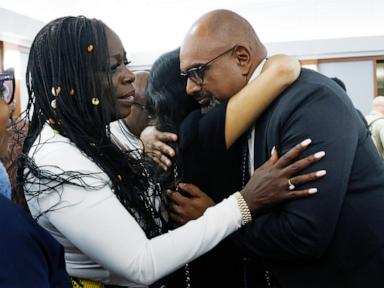
The gavel fell. The wooden crack echoed through a courtroom that had held its collective breath for nearly three decades, a heavy, suffocating silence finally breaking under the weight of an official conclusion. Duane Davis sat at the defense table, his frame heavy, his breathing measured. A jury of his peers had spoken. Guilty. First-degree murder with the use of a deadly weapon with a gang enhancement. For twenty-seven years, the autumn air in Las Vegas carried a phantom question, an open wound left untended beneath the neon glare of the Strip. Now, a court of law had attached a name, a charge, and a conviction to the drive-by shooting that cut down Tupac Shakur on a warm September night in 1996.
Justice, we are told, has an exact weight. It is measured in prison sentences, in guilty verdicts, in the methodical turning of judicial pages.
Yet, as the reporters scrambled for the doors to broadcast the flash bulletins, and as the cable news anchors smoothed their ties to deliver the breaking headlines, the room felt hollow. Because a verdict in a late-stage murder trial is not a resurrection. It does not pull a twenty-five-year-old artist out of a silver BMW. It does not restore the voice that defined an era, a voice that spoke with raw urgency about poverty, systemic failure, and the fierce, protective love of a mother who once picked cotton in the American South.
Closure is a comforting fiction. We invent it because we cannot bear the alternative: the messy, unresolved ache of history.
Think back to September 7, 1996. The world moved at a different speed then, yet the violence felt entirely familiar. A Mike Tyson fight at the MGM Grand. A casual altercation in the casino lobby. A convoy of black cars rolling down Flamingo Road, the bass vibrating against the desert asphalt. Then, white fire cutting through the passenger window of a white Cadillac. Four bullets finding their mark. Six days of sterile hospital rooms, machines beeping in rhythmic indifference, and then the quiet flatline.
For a generation that grew up reading The Rose That Grew From Concrete in bedroom notebooks, Tupac wasn't merely a rapper. He was a mirror. He held up a reflection of a fractured America that wanted to celebrate Black brilliance while simultaneously tightening the administrative noose around its neck. When he died, the investigation sputtered. Detectives chased ghosts in Compton and Las Vegas. Theories metastasized into urban legends. Was it East Coast versus West Coast? Was it a localized street grudge? The Las Vegas Metropolitan Police Department filed reports, collected shell casings, and watched the trail go cold.
Years bled into decades. The witnesses grew older, scarcer, more afraid, or more eager to sell a paperback memoir on late-night television.
Then came Duane Davis. Or, as he was known in the streets, Keffe D. For years, Davis operated in the strange, dangerous gray area between anonymity and notoriety. He talked. In police interviews, in documentary footage, and eventually in his own published confessions, he placed himself in the front seat of that white Cadillac on the night Tupac was killed. He claimed he handed the weapon to the back seat, where his nephew, Orlando Anderson, sat. Anderson died in a separate gang shooting two years after Tupac's murder, taking his direct secrets to the grave. But Keffe D lived. He lived long enough to watch the statute of limitations on murder dissolve, long enough to write a book, long enough to treat his role in an American tragedy as a conversational talking point.
When the grand finalmente of an arrest arrived in late 2023, it felt less like a triumph of investigative genius and more like a bureaucratic inevitability catching up to a man who simply could not stop talking.
During the trial, the prosecution presented a narrative built on the architecture of street politics and long-festering retaliation. They reminded the jury of the casino scuffle earlier that night, where Orlando Anderson had been beaten down by Shakur's entourage. They tracked the movements, the guns, the sudden pivot toward vengeance. It was a sordid, ordinary display of human pettiness that happened to claim an extraordinary life.
The defense argued that Davis was a desperate, aging man spinning tall tales for podcast hosts and documentary crews, inflating his own importance to make a quick dollar. They argued his police confessions were the posturing of a storyteller, not the factual admissions of a killer.
The jury looked past the bluster. They looked at the cumulative weight of decades of admissions, corroborated by the immutable physics of ballistic evidence and historical timelines. They found him guilty.
And yet, walking out of the courthouse, the air tasted just as dry.
This is the strange burden of historical justice. When a crime becomes a myth, the legal system struggles to hold the weight of the legend. Tupac Shakur was not merely a homicide victim; he was a cultural anchor. By the time the legal machinery ground its way to a guilty verdict, the culture had already transformed. The kids wearing oversized jerseys in 1996 are now grandparents. The streets of Compton and Las Vegas have shifted their borders, scarred by gentrification, shifting demographics, and entirely new cycles of institutional neglect.
A prison cell for an elderly man does not rewrite the trajectory of 1990s hip-hop. It does not heal the grief of Afeni Shakur, who passed away in 2016 without ever seeing a courtroom hammer fall for her son. It does not answer the deeper, more uncomfortable questions about why the investigation stalled for a quarter-century while rumors circulated freely in plain sight.
Law enforcement agencies often treat high-profile cold cases as trophies waiting to be polished. They point to the eventual conviction as proof that time does not defeat the law. But for those of us who watched the cassette tapes wear out in our car stereo decks, who memorized the liner notes of All Eyez On Me like sacred texts, the verdict feels distant. It is an administrative footnote to an immense cultural tragedy.
We wanted a villain to unmask. We wanted a clean narrative arc where the bad guy faces retribution and the credits roll. Instead, we got a courtroom of aging participants arguing over decades-old memories, illuminated by fluorescent lights that revealed every wrinkle, every failure of imagination, every systemic blind spot that allowed the murder to happen in the first place.
The trial ended. The gavel came down. The news alerts flashed across millions of glowing screens around the globe, digested for thirty seconds, and then scrolled past in favor of the next algorithmically generated outrage.
Down on Flamingo Road, traffic flows past the intersection of East Koval Lane. The desert heat shimmers against the asphalt. There is no grand monument there, no towering bronze statue marking where a black BMW idled under the desert stars while history fractured. There is only the relentless pulse of Las Vegas, moving forward with the indifferent speed of time itself, carrying the ghost of a poet who asked us to listen to the rose growing from concrete, long after the noise had finally stopped.