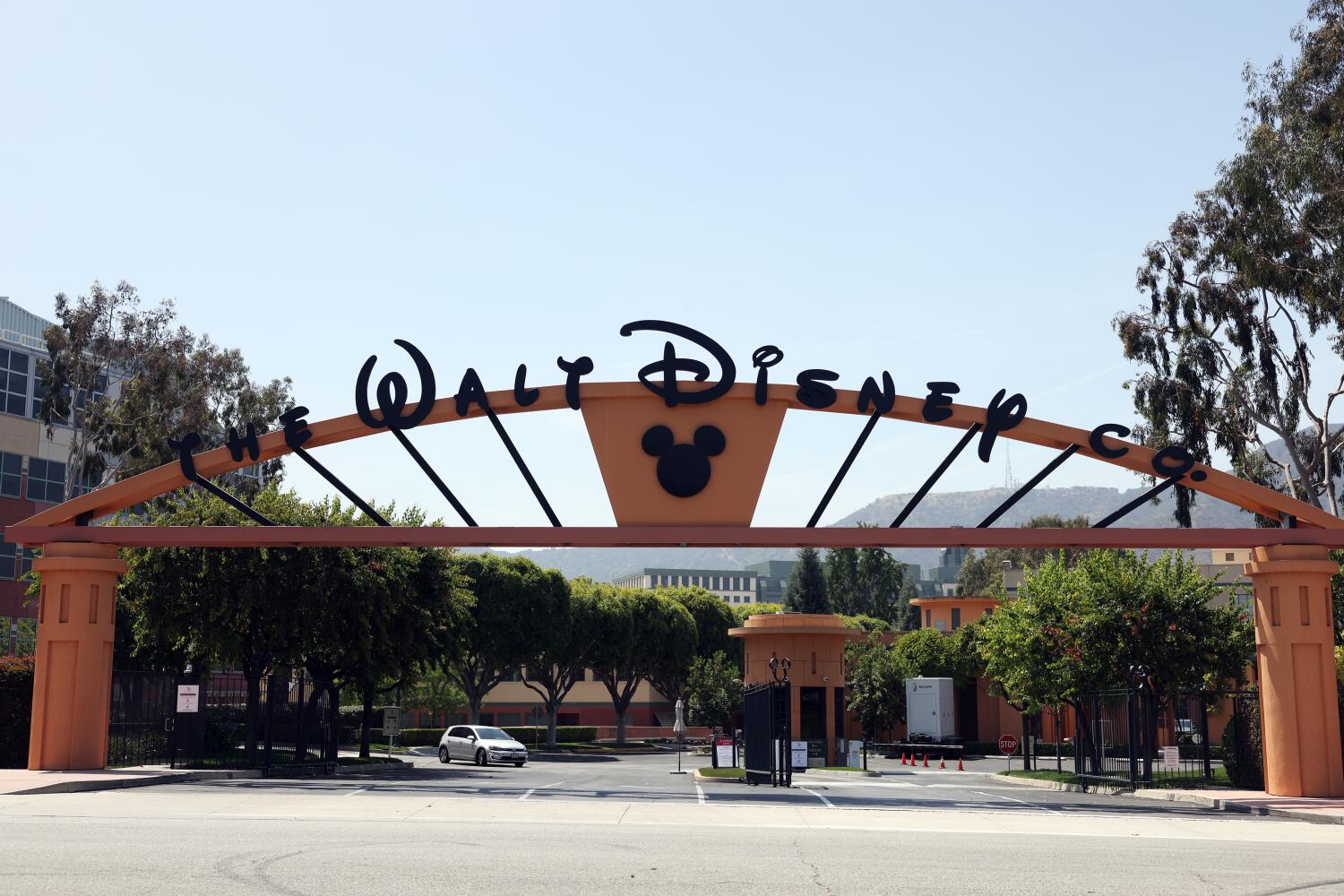
The House of Mouse is cleaning house again. Behind the closed doors of Burbank and the glass partitions of the Disney+ tech hubs, a familiar, cold wind is blowing. This week, reports surfaced that Disney is preparing to eliminate roughly 1,000 positions, a move that marks the first major bloodletting under the newly minted CEO, Josh D’Amaro. While the raw number—less than 1% of a 231,000-person global workforce—might seem like a rounding error on a balance sheet, the precision of these cuts tells a far more aggressive story about the future of human creativity in a data-driven empire.
This isn’t just about trimming fat. It is a fundamental rewiring of how a legacy media giant justifies its existence in an era where "content" is increasingly treated as a commodity rather than art.
The primary target is the marketing division, recently consolidated under the banner of Project Imagine. Led by Chief Marketing Officer Asad Ayaz, this initiative was designed to break down the historic silos between the film studio, the television networks, and the streaming platforms. For decades, Disney functioned as a collection of warring fiefdoms; Pixar marketed one way, Marvel another, and ESPN operated in a different galaxy entirely. Project Imagine was supposed to create a unified voice. Instead, it has become a mechanism for efficient subtraction.
The Algorithm Over the Artist
The "why" behind these layoffs is often buried under corporate jargon like "operational efficiencies" and "streamlining." Dig deeper, and you find a company pivoting away from human-led persuasion toward algorithmic certainty.
Disney is currently navigating a brutal transition. The reliable, high-margin cash flow from linear television—the kind that built the theme parks and bought Lucasfilm—is evaporating. In its place is a streaming business that, while finally profitable as of early 2026, operates on razor-thin margins. To keep the stock price buoyant, Disney must prove it can grow revenue without growing its headcount.
Marketing is the first to go because it is the easiest to automate. The company is increasingly leaning on "performance marketing"—data-heavy, automated ad buying and social media targeting—over the grand, human-led brand campaigns of the past. Why pay a team of creative directors to labor over a theatrical trailer when an AI can A/B test ten thousand different iterations of a Disney+ banner in real-time?
The D’Amaro Paradox
Josh D’Amaro, the man now holding the scissors, rose to power through the "Experiences" division. He is the guy who built the $60 billion expansion plan for the parks and oversaw the launch of the World of Frozen in Paris. He understands the value of the "human touch" in a physical space—you can’t automate a hug from Mickey Mouse or the feeling of a high-speed coaster.
However, the D’Amaro era is beginning with a paradox. To fund the massive $24 billion content spend required to stay competitive with Netflix and YouTube, and to keep those $60 billion park expansions on track, he is forced to cannibalize the corporate and entertainment staff.
The strategy is clear: Double down on the physical, automate the digital.
The Hidden Cost of Consolidation
There is a significant risk in this centralization. When you consolidate marketing and creative oversight, you lose the "flavor" of individual brands. Critics argue that Disney’s recent box office struggles (with the notable exception of the Avatar franchise) stem from a lack of distinct identity. If everything is marketed by the same central hub using the same "Project Imagine" playbook, the unique soul of a Pixar film or a National Geographic documentary gets sanded down into a generic "Disney Product."
Furthermore, the integration of Disney+ and Hulu into a single app experience—internally referred to as the "one-app" strategy—has rendered hundreds of back-end roles redundant. This isn't just about saving on salaries; it’s about reducing the friction of choice for the consumer. But in doing so, Disney is also reducing the friction of its own internal debates. Fewer people means fewer dissenting voices, and in a creative industry, dissent is often the only thing that prevents a $200 million disaster.
The Broader Industry Contagion
Disney is not acting in a vacuum. The entire industry is in a state of managed decline. Paramount and Warner Bros. Discovery are currently hacking away at their own foundations as they eye a potential merger that would likely trigger thousands more layoffs. Sony Pictures is reportedly planning its own "growth strategy" that involves hundreds of job cuts this month.
The entertainment industry is currently undergoing a "great correction." The era of overproducing original content—where companies spent $33 billion a year just to see what would stick—is dead. Chief Financial Officer Hugh Johnston has been blunt: Disney will not return to those levels of "overproduction."
The Survival Strategy
For those remaining within the Disney gates, the mandate is simple: adapt or exit. The company is looking for "multi-hyphenate" employees who can navigate both the creative and technical sides of the business.
The reality is that Disney is becoming a technology company that happens to own a movie studio and a few cruise ships. The 1,000 people being shown the door this week are the latest casualties of a world where the spreadsheet has finally, decisively, won the war against the storyboard.
If Disney wants to maintain its cultural dominance, it has to find a way to make sure the machine doesn't eat the magic. But as the marketing desks sit empty in Burbank, it’s becoming harder to see where the magic is supposed to come from.
Stop looking for the "return to normal." This is the new baseline.


