The coffee was still hot when the first notification arrived. It sat in a ceramic mug, steam rising in a lazy curl against the kitchen light, a mundane monument to a morning that was supposed to be like any other. We measure our lives in these small, quiet increments—the sound of a backpack zipper, the frantic search for a missing sneaker, the rhythmic thud of a yellow bus pulling away from the curb.
Then the rhythm broke.
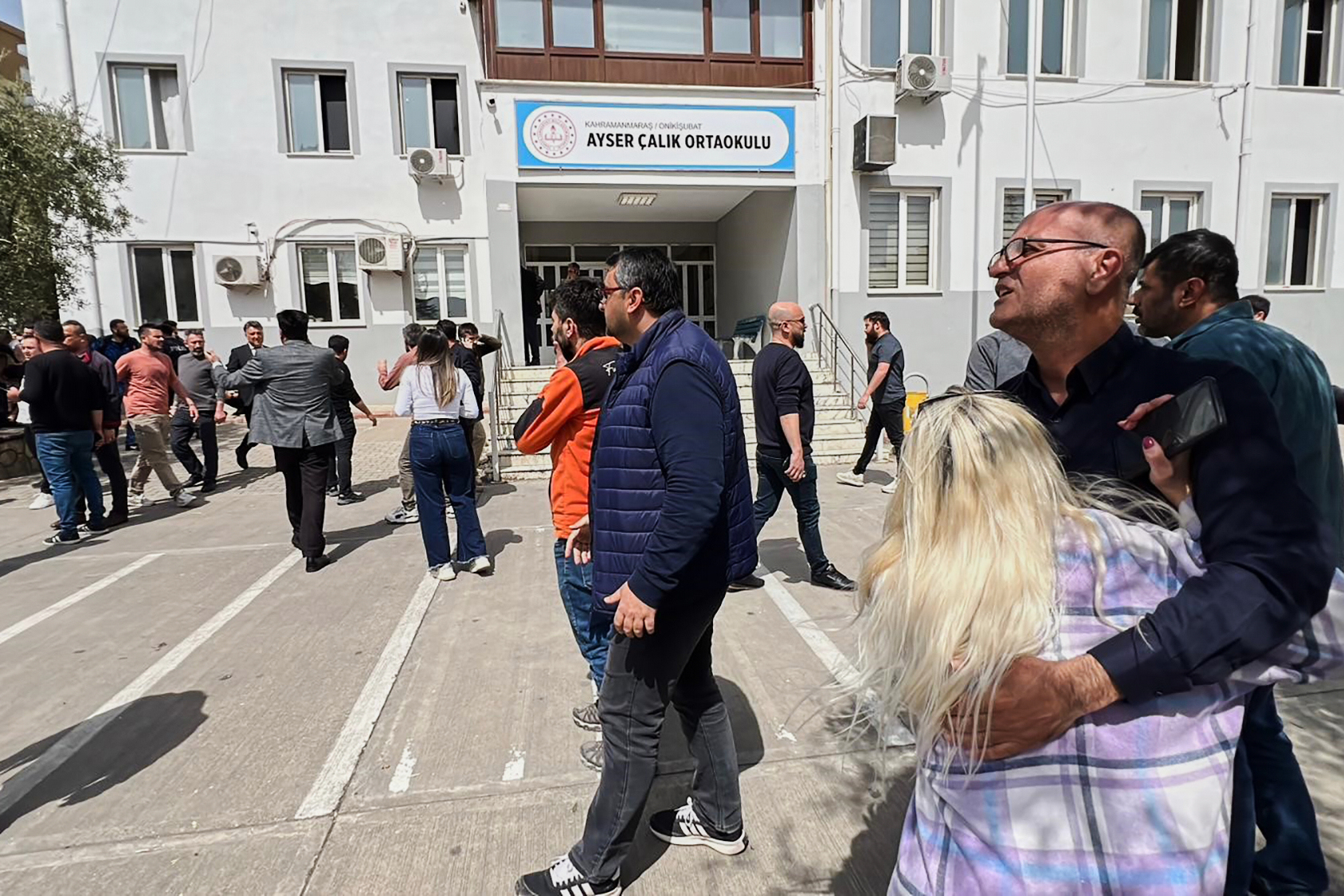
For the second time in forty-eight hours, the air in an American hallway didn't carry the scent of floor wax and cafeteria tater tots. It carried the sharp, metallic tang of gunpowder and the ozone of sudden, violent electricity. Four lives ended. They didn't fade away or succumb to the slow erosion of time. They were deleted.
The statistics will tell you this was the second school shooting in two days. They will give you the zip code. They will provide the caliber of the weapon. But statistics are a cold comfort when you are staring at an empty chair at a dinner table. To understand what happened, you have to look past the scrolling ticker on the news and into the quiet rooms where the silence is now permanent.
The Geography of Grief
Imagine a hallway. It is long, lined with lockers that have been dented by generations of teenagers. On Monday, this was a thoroughfare of gossip and pre-algebra anxiety. By Wednesday, it became a crime scene. When we talk about school shootings, we often focus on the "where" as if the building itself is the protagonist. We map out the entry points and the security cameras. We debate the locks on the doors.
But the "where" isn't the brick and mortar. The "where" is the internal map of a community that has just been rewritten.
There is a specific kind of gravity that settles over a town after the sirens stop. It’s a heavy, suffocating pressure. It’s the sound of a phone ringing in a pocket inside a locker, a call from a mother that will never be answered because the person on the other end is no longer there to swipe the screen. We are seeing a terrifying compression of tragedy. Two days. Two schools. Two sets of vigils.
The repetition does something treacherous to the human psyche. It creates a callus. When the first event happened, the shock was a jagged glass edge. When the second occurred barely forty-eight hours later, the mind began to retreat into a defensive crouch. We start to look for patterns not to solve the problem, but to distance ourselves from it. We ask about the shooter’s motives because if we can categorize the "why," we can convince ourselves it won't happen in our own backyard.
It is a lie we tell to keep breathing.
The Invisible Stakes of the Second Day
There is a psychological phenomenon where the second occurrence of a tragedy feels more inevitable than the first. The first is a fluke, a glitch in the Matrix, a horrific anomaly. The second is a trend. It suggests a breakdown in the social contract that is so profound, we lack the vocabulary to describe it.
Consider the teachers who showed up to work that Tuesday morning. They had spent their Monday evening watching the news from the other school. They had hugged their own children a little tighter, perhaps felt a flicker of guilt for the relief that it wasn't their hallway, their students, their lives. They walked into their classrooms with a heavy heart, but they walked in.
Then the sound started.
The stakes aren't just the lives lost, though those are the ultimate, irreversible price. The stakes are the slow poisoning of the idea of "sanctuary." A school is supposed to be a place where the biggest threat is a failing grade or a social snub. When that sanctuary is violated twice in two days, the foundation of the community doesn't just crack; it liquefies.
We talk about "hardening" schools. We speak of metal detectors and armed guards as if we can turn an educational institution into a fortress. But you cannot bolt down the human spirit. You cannot shield a child from the psychic weight of knowing that their classroom is a target. The cost of this violence is paid in the anxiety of every student who now eyes the exit sign during a lecture on the Great Gatsby.
The Arithmetic of Loss
Four people. It’s a small number in the grand, sweeping narrative of a nation. It’s a rounding error in a federal budget. It’s the number of people who can fit comfortably in a sedan.
But loss doesn't work by the rules of standard math. Loss is exponential.
Each of those four individuals was the center of a solar system. They had parents who remembered the exact weight of them as newborns. They had friends who shared inside jokes that are now orphaned, half-finished sentences with no one to complete them. They had dreams that were as mundane and magnificent as becoming a vet or finally learning how to play the guitar.
When you kill four people, you don't just subtract four from the population. You fracture hundreds of lives. You create a ripple effect of trauma that will manifest years from now in the form of panic attacks, broken marriages, and a persistent, underlying fear of the dark.
The second shooting in two days isn't just a news cycle. It is a compounding interest of misery. It tells the survivors of the first shooting that their pain isn't enough to stop the next one. It tells the rest of us that we are living in a loop.
The Language of the Unspeakable
We have become experts at the wrong things. We know the difference between an AR-15 and a handgun. We know the protocol for "Run, Hide, Fight." We have developed a shorthand for tragedy that allows us to process the information without truly feeling it.
We use words like "active shooter" because "person murdering children" is too visceral to handle over breakfast. We discuss "mental health resources" as a catch-all solution, a linguistic band-aid for a gaping chest wound. But these words are hollow. They are the white noise we use to drown out the screaming.
The reality is much simpler and much more devastating. We are failing to protect the one thing we claim to value above all else: our future.
The human element of these shootings is often buried under a mountain of political posturing. One side shouts about rights; the other shouts about regulations. They stand on opposite sides of a chasm, yelling into the wind while the bodies are still being identified. In this clamor, the actual humans—the four people who woke up, put on their clothes, and expected to come home—are lost.
They become pawns in a debate they never asked to be part of.
The Empty Desk
There is a specific image that haunts every educator and every parent. It’s the empty desk.
In the days following these twin tragedies, there will be empty desks in two different schools. These desks will be decorated with flowers and notes. People will gather around them and weep. But eventually, the flowers will wilt. The notes will be tucked into a box in the back of a closet. The school will need that space. A new student will be assigned to that desk.
They will sit where someone else sat. They will rest their books where someone else rested theirs. They may never know the name of the person who was there before them.
But the ghost of that Tuesday morning remains. It is in the way the teacher's voice wavers when they take attendance. It is in the way the students flinch when a locker slams too hard in the hallway. It is a permanent alteration of the local atmosphere.
We are not just losing people; we are losing the "normal." We are trading our peace of mind for a recurring nightmare. The fact that it happened twice in forty-eight hours is a neon sign flashing a warning that we are reaching a tipping point.
The first shooting was a tragedy. The second was an indictment.
As the sun sets on this second day, the families of the fallen are beginning the long, agonizing process of planning funerals. They are picking out clothes for their loved ones to be buried in. They are deciding which photos to display at the service—the one from the graduation? The one from the family vacation where everyone was laughing?
They are living in the "after." The rest of us are still in the "before," waiting for the next notification to light up our screens, wondering if the third day will bring another headline, another zip code, and another four lives reduced to a statistic.
The coffee is cold now. The mug sits on the counter, a silent witness to a world that shifted on its axis while we weren't looking. We want to believe we can fix this with a policy change or a new law, but the wound is deeper than that. It is a hole in the heart of the country, and every forty-eight hours, it gets a little wider.
The silence in those hallways isn't just the absence of noise. It is a presence. It is a heavy, weighted thing that asks a question we are all too afraid to answer: How much more of this can we carry before we break?
Somewhere, a bell is ringing for the end of the period. But for four people, the bell has already stopped.