The internal machinery of the Islamic Republic of Iran is currently operating in a state of hyper-vigilant suspended animation. When the helicopter carrying President Ebrahim Raisi and Foreign Minister Hossein Amir-Abdollahian slammed into a fog-shrouded mountainside in May 2024, it did more than just kill two high-ranking officials. It decapitated the carefully curated succession plan of the aging Supreme Leader, Ayatollah Ali Khamenei. While the world watched the funerals, the real story began in the windowless rooms of Tehran, where the "Deep State" — a coalition of hardline clerics and paramilitary commanders — scrambled to ensure that the vacuum didn't swallow the regime whole.
The immediate transition was deceptively smooth. Within hours, Mohammad Mokhber, a low-profile bureaucratic loyalist with deep ties to the Supreme Leader’s massive economic conglomerates, stepped in as acting president. This wasn't a moment of political evolution; it was a desperate act of preservation. The Iranian Constitution’s Article 131 mandates a 50-day window to hold new elections, but the true power doesn't reside in the ballot box. It sits with the Guardian Council and, more crucially, the Islamic Revolutionary Guard Corps (IRGC).
The Architect of the Empty Chair
To understand who holds the reins now, you have to look at the man who has held them for 35 years. Ayatollah Ali Khamenei is 85. For the last decade, his primary mission has been "purification"—purging the government of any "moderate" or "reformist" voices that might waver in their commitment to the revolutionary ideology. Raisi was the crown jewel of this project. He was a protege, a "hanging judge" with the requisite blood on his hands to prove his loyalty, and the man widely expected to become the third Supreme Leader.
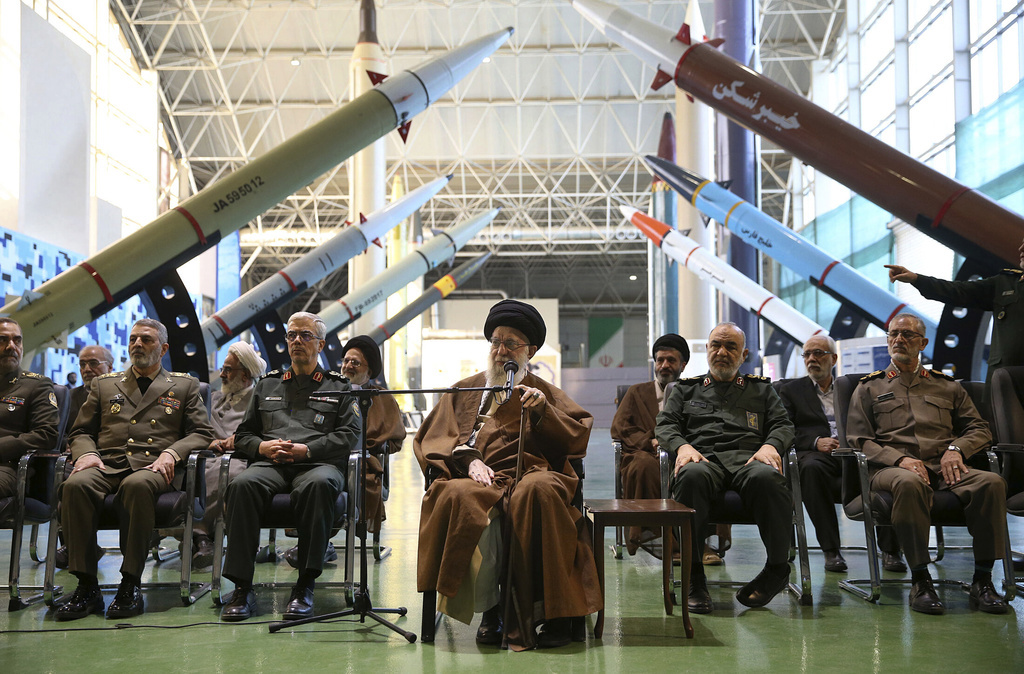
With Raisi gone, Khamenei is facing a crisis of redundancy. He no longer has a clear heir who satisfies both the religious requirements of the clergy in Qom and the security requirements of the IRGC in Tehran. This has forced the Supreme Leader into a corner where he must rely more heavily on the one institution that can guarantee his survival through brute force: the Guard.
The IRGC’s Quiet Coup
The IRGC is no longer just a military wing; it is a sprawling corporate and political empire. It controls roughly a third of Iran's economy, from construction and telecommunications to oil and gas. In the aftermath of the crash, the Guard didn't need to roll tanks into the streets to take power. They already had it.
- Security Dominance: The IRGC’s intelligence wing now rivals the formal Ministry of Intelligence, giving them veto power over every political appointment.
- Economic Leverage: By controlling the "resistance economy," they ensure that despite international sanctions, the regime's inner circle remains well-funded while the public suffers 40% inflation.
- Proxy Control: The Quds Force, the IRGC’s external arm, continues to manage the "Axis of Resistance" from Yemen to Lebanon, often operating with a level of autonomy that bypasses the Foreign Ministry entirely.
The death of Hossein Amir-Abdollahian, the Foreign Minister, was particularly stinging for this apparatus. Unlike his predecessor Javad Zarif, who often clashed with the hardliners, Amir-Abdollahian was a "field-diplomat." He was the bridge between the IRGC’s military operations and Iran’s diplomatic posturing. His replacement, Abbas Araghchi, is a seasoned negotiator, but he operates on a much shorter leash. In the current climate, the Foreign Ministry has been relegated to a public relations firm for the IRGC's regional strategy.
The Assembly of Experts and the Mojtaba Factor
While the Presidency is the visible face of the government, the real battle is being fought over the Assembly of Experts. This body of 88 clerics is tasked with choosing the next Supreme Leader. Before the crash, the Assembly was being "cleaned" to ensure a smooth path for Raisi. Now, the spotlight has shifted to a figure who has spent decades in the shadows: Mojtaba Khamenei, the Supreme Leader’s second son.
Mojtaba is the ultimate wildcard. He has no formal government role, yet he is believed to manage his father's office and maintains a symbiotic relationship with the IRGC’s top brass. However, promoting him presents a massive ideological risk. The 1979 Revolution was fought to end hereditary monarchy. If the Islamic Republic installs the son of the current leader, it effectively admits that the "Republic" is a fiction. This would hand a massive propaganda victory to the simmering protest movements that have rocked the country since the 2022 "Woman, Life, Freedom" uprising.
Managing a Restless Population
The regime's greatest fear isn't a foreign invasion; it is a domestic implosion. The 2024 elections, even before the crash, saw record-low turnout. In Tehran, the number of "blank" or spoiled ballots often outpaced the votes for the winning candidates. This is a legitimacy crisis that cannot be solved by a helicopter crash or a change in personnel.
The current leadership is betting on a "managed stability" model. This involves keeping the presidency in the hands of a colorless technocrat who won't challenge the Supreme Leader, while the IRGC doubles down on domestic surveillance and the execution of dissidents. It is a strategy of survival by attrition. They are not trying to win the hearts of the Iranian people; they are trying to break their will.
The "reins of power" are currently held by a shaky triumvirate:
- The Supreme Leader, who provides the religious "legal" cover.
- The IRGC, which provides the muscle and the money.
- The Guardian Council, which acts as the gatekeeper, ensuring no one outside this circle ever makes it onto a ballot.
This system is remarkably resilient in the short term, but it is also brittle. It relies on the health of one 85-year-old man and the continued loyalty of a military elite that is increasingly eyeing a post-clerical future. The death of Raisi didn't just remove a president; it removed the buffer. Now, the IRGC and the protesters are standing face-to-face, with only an aging Ayatollah between them.
The transition from a clerical theocracy to a military-security state is not a future possibility. It is the current reality. Tehran is no longer a city ruled by ayatollahs in robes; it is a city ruled by generals who happen to let the ayatollahs speak. If you want to know where the power lies, don't look at the President’s office. Look at the headquarters of the IRGC and the private chambers of the Khamenei household. That is where the fate of the Middle East is being negotiated, one execution and one missile shipment at a time.
Would you like me to analyze the specific economic holdings of the IRGC to show how they maintain this grip?