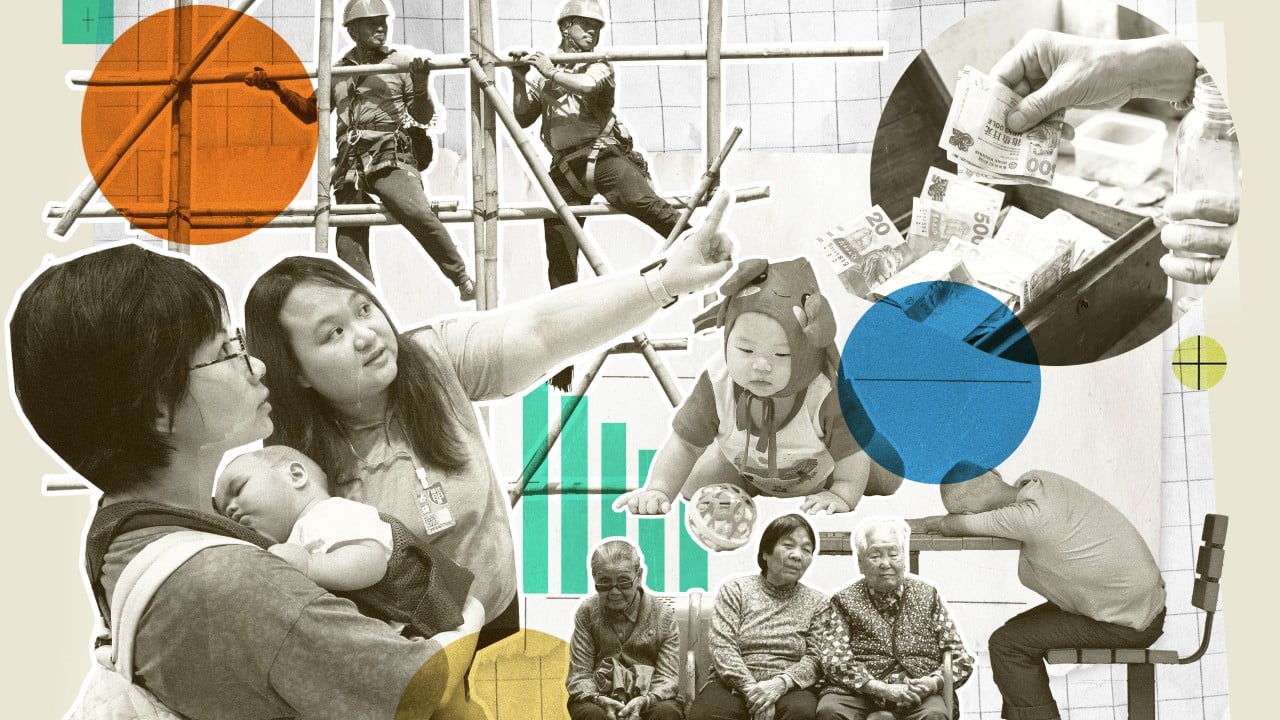
Hong Kong stands at a severe economic and demographic crossroads as a convergence of acute pressures threatens its long-term viability as a global financial hub. The territory is currently grappling with a compounding crisis characterized by an ageing population, a historically low birth rate, and widespread job losses across traditional pillars of employment. This triple squeeze is not merely a collection of cyclical downturns; it represents a fundamental restructuring of society that challenges the very foundation of the Special Administrative Region.
For decades, the territory relied on a predictable formula: low taxes, a steady influx of international capital, an ambitious local workforce, and a reliable pipeline of talent from mainland China. Today, that engine is stuttering. Understanding how these three vulnerabilities interact reveals an economic reality that simple policy tweaks cannot easily resolve.
The Demographic Deficit
The demographic mathematics in the territory are unforgiving. Official statistics show that the proportion of residents aged 65 and above has surged, placing an unprecedented burden on public healthcare and social welfare systems. A smaller proportion of working-age adults must now support a rapidly expanding retiree demographic, creating an unsustainable fiscal dependency ratio.
Simultaneously, the fertility rate has hovered near historic lows, dropping well below the replacement level of 2.1 children per woman. High housing costs, intense academic pressure on children, and long working hours have created a cultural environment where family expansion is deferred or abandoned entirely.
This birth dearth ensures that the demographic pyramid will remain inverted for the foreseeable future. Without a major demographic reversal, the local talent pool will continue to shrink, threatening the domestic consumption base and leaving fewer taxpayers to fund the infrastructure required by an older citizenry.
Labor Market Realignment and Job Losses
Compounding these demographic strains is a turbulent employment landscape. Traditional employment sectors—such as retail, logistics, tourism, and mid-tier financial services—have undergone painful contractions. High commercial rents, shifting consumer habits, and structural changes in global trade have forced many businesses to downsize or relocate operations.
At the same time, a mismatch has emerged between the skills possessed by the local workforce and the demands of emerging economic sectors like artificial intelligence, biotechnology, and green finance. While high-level managerial and specialized technical positions exist, mid-level professionals displaced by corporate restructuring often find themselves stranded. The era of comfortable career progression within traditional corporate hierarchies has given way to contract volatility and wage stagnation for large segments of the population.
This employment instability directly feeds into the demographic crisis. Young adults facing job insecurity and astronomical property prices postpone marriage and childbearing, solidifying the downward spiral of the birth rate.
The Policy Dilemma and Economic Adaptation
Addressing this multi-layered crisis requires moving beyond short-term subsidies and piecemeal talent attraction schemes. While government initiatives aimed at importing professionals from abroad have brought in thousands of applicants, integrating them into a strained housing market and a shifting economy presents its own friction.
Economic survival demands a decisive pivot toward industries that offer high value-added growth rather than reliance on retail and real estate speculation. However, transitioning the economy while managing a shrinking domestic labor force creates a severe implementation bottleneck. Public expenditure on healthcare and elderly care continues to escalate, crowding out capital investments that could otherwise stimulate modern enterprise.
The path forward involves hard choices regarding land use, labor importation, taxation frameworks, and social safety nets. If the territory fails to harmonize its demographic policies with a modernized economic strategy, the current pressures will harden into permanent decline. The squeeze is real, and the margin for error has vanished.