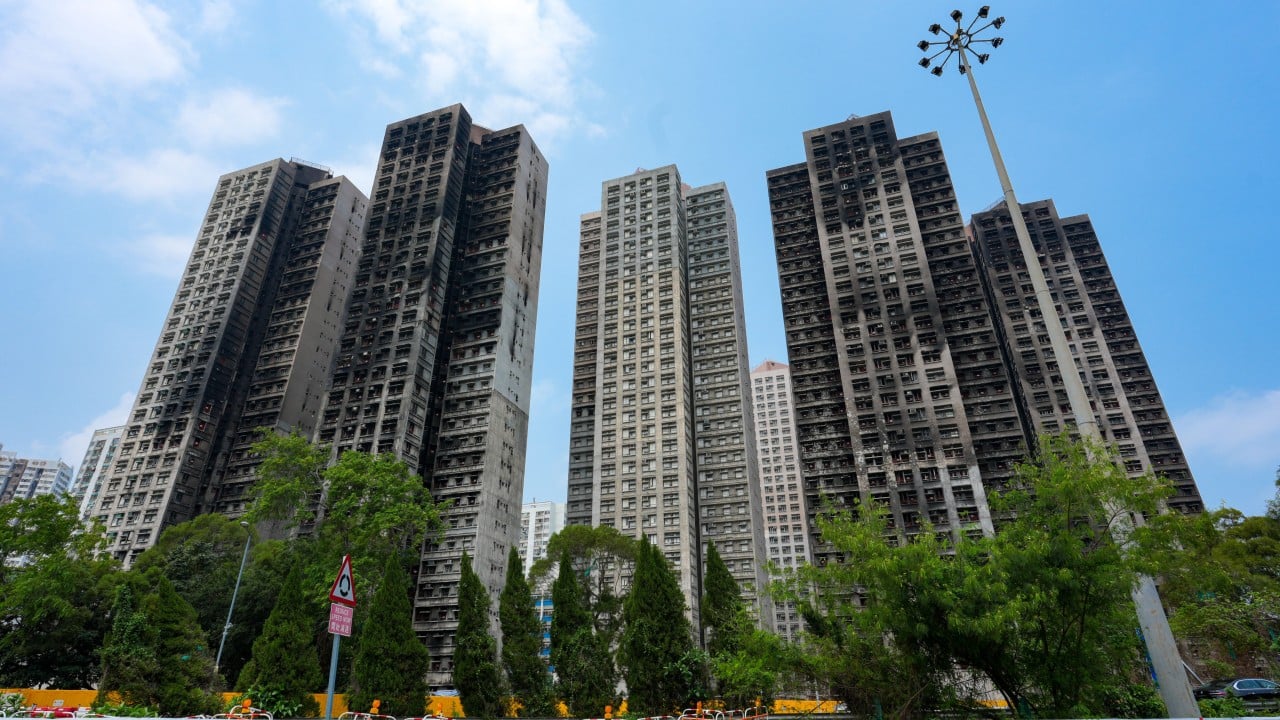
The aftermath of the Tai Po blaze was supposed to mark a turning point for Hong Kong building management. Instead, it has exposed a bureaucratic bottleneck that leaves thousands of residents in limbo. Despite a government mandate requiring fire safety system repairs to be completed within a strict two-month window, nearly 45% of these projects are currently blowing past the deadline. The math is simple and terrifying. For every building that successfully upgrades its sprinklers and alarms, another sits in a state of indefinite disrepair while the paperwork piles up. This is not a simple case of lazy contractors or negligent landlords. It is a systemic breakdown where rigid regulation meets the messy reality of aging infrastructure.
The two-month cap was introduced with good intentions. Following the tragedy in Tai Po, public outcry demanded faster action on fire safety directions. The Fire Services Department (FSD) and the Buildings Department (BD) tightened the leash, hoping that shorter deadlines would spark urgency. It did the opposite. By setting an unrealistic timeline for complex mechanical overhauls, the authorities created a backlog that the industry cannot clear. You cannot fix forty years of neglect in sixty days.
The Engineering Reality Behind the Delays
The general public often assumes a fire safety upgrade involves a few new extinguishers and a fresh coat of red paint. That is a myth. In many of the older "tong lau" buildings or industrial blocks, these upgrades require a complete gutting of existing water systems.
To comply with modern standards, a building often needs to install a massive rooftop water tank. This sounds straightforward until you realize the structural integrity of a 1970s building was never designed to hold an extra ten tons of water. This necessitates a structural engineer's report, followed by a submission to the Buildings Department, followed by a potential reinforcement of the entire vertical column of the property.
The structural vetting process alone frequently takes longer than the two-month window allowed for the entire project. When the law demands a result in eight weeks, but the government's own approval department takes twelve weeks to respond to a drawing, the system is fundamentally broken. Contractors are forced to choose between starting work without a permit or missing the fire safety deadline. Most choose to wait for the permit, leading to the 45% failure rate we see today.
The Scarcity of Qualified Labor
There is a chronic shortage of licensed fire service installers in Hong Kong. This is a specialized trade. You cannot simply hire a general plumber to install a high-pressure fire pump or a smoke extraction system that integrates with the building's central alarm matrix.
The surge in enforcement actions after the Tai Po fire created a sudden, massive spike in demand. This led to a "bidding war" for the few reputable firms capable of doing the work. Smaller residential buildings, often managed by aging owners' corporations with limited budgets, find themselves at the back of the queue. Large commercial developers can afford to pay a premium to jump the line, leaving the most vulnerable high-risk buildings waiting for months just to get a quote.
The Financial Gridlock of Owners Corporations
Money is the silent killer of fire safety. In many of the buildings currently overrunning the two-month cap, the delay isn't technical—it’s financial.
Hong Kong law requires a quorum of owners to approve significant expenditures. In buildings with high vacancy rates or units owned by offshore investors, simply getting enough people in a room to vote on a multi-million dollar fire safety contract is an uphill battle. If the owners' corporation cannot agree on a tender within the first thirty days, they have already lost the race against the FSD clock.
The government offers the Fire Safety Improvement Levy and various subsidy schemes, but the application process for these funds is notoriously cumbersome. An owner might apply for a subsidy to cover 60% of the cost, but the approval might not arrive for six months. Meanwhile, the two-month deadline for the repair work continues to tick away. The owners are caught in a pincer movement. They are told they must fix the building immediately, but they are also told they must wait for the bureaucracy to approve the funds they need to pay for the fix.
Supply Chain Friction and Component Standards
We live in a world of globalized logistics, but fire safety equipment is subject to hyper-local certifications. A pump that is perfectly legal in London or Singapore might not meet the specific "Code of Practice" requirements in Hong Kong without a specific set of tests and certifications.
In the wake of recent global supply chain disruptions, the lead time for specialized fire pumps and fire-rated cables has stretched significantly. If a contractor identifies a failed pump in a Tai Po industrial building today, that pump might have a twelve-week lead time from the manufacturer. Even if the contractor installs it the day it arrives, they have already exceeded the sixty-day government cap.
The FSD has historically been reluctant to grant extensions based on supply chain issues, fearing that "exceptional circumstances" would become the default excuse for every lazy landlord in the city. However, this lack of flexibility is punishing the proactive owners alongside the negligent ones.
The Problem with One Size Fits All Regulation
A major flaw in the current strategy is the lack of distinction between a minor violation and a critical system failure. Currently, a building with a slightly outdated door-closer on a fire escape is often treated with the same bureaucratic urgency as a building with a completely non-functional sprinkler system.
By clogging the enforcement pipeline with minor infractions, the departments are diluting their ability to oversee the high-risk overhauls. A smarter approach would be a tiered deadline system. Give a building thirty days to replace a fire extinguisher, but give them six months to engineer a new rooftop tank system. By forcing everything into a two-month box, the government has ensured that nothing fits.
The Hidden Cost of Non-Compliance
When 45% of buildings fail to meet a deadline, the deadline loses its power as a deterrent. Fines are issued, but for many buildings, paying a recurring fine is cheaper than the upfront cost of a $5 million fire safety upgrade.
This creates a "compliance trap." Once a building has missed the deadline and entered the legal system, the owners often stop rushing. They figure the damage is already done, the summons has been issued, and they might as well take their time to find the cheapest possible contractor. This is exactly the opposite of what the Tai Po post-mortem suggested. We have traded genuine safety for a series of missed administrative milestones.
Furthermore, insurance companies are watching these statistics closely. A building that is officially "out of compliance" with FSD directions is a massive liability. We are seeing a trend where premiums for older buildings are skyrocketing, or in some cases, coverage is being denied entirely. This doesn't just hurt the landlords; it endangers the tenants who are living in buildings that are technically uninsurable and physically unsafe.
Rethinking the Enforcement Loop
To fix the 45% failure rate, the city needs to move beyond the "punish and pray" model.
First, there must be a synchronization of departments. If the FSD issues a fire safety direction, the Buildings Department should be required to fast-track any structural applications related to that specific direction. You cannot have one arm of the government demanding speed while the other arm moves at a glacial pace.
Second, the government should consider a pre-approved list of modular fire safety solutions. If an engineering firm can prove that a specific type of standardized water tank or pump system works for a specific class of "tong lau" building, the structural vetting should be bypassed or significantly shortened. We are trying to solve the same engineering problems thousands of times over across the city. It is an immense waste of intellectual and temporal resources.
Third, the role of the "Authorized Person" (AP) needs more oversight and support. Currently, the AP is the middleman between the owners and the government. They are often blamed for delays that are outside of their control. Creating a digital tracking system where the FSD, BD, and the AP can see the status of a project in real-time would eliminate the "he-said, she-said" nature of these delays.
The Human Element
We must not forget why these regulations exist. The Tai Po fire was a tragedy fueled by a lack of working safety systems. The goal is to save lives, not to tick a box on a spreadsheet. When nearly half of the buildings are failing to meet the timeline, the spreadsheet is winning and the people are losing.
The current 45% failure rate is a loud, clear signal that the two-month cap is a fantasy. It is a political number, not an engineering one. Until the government acknowledges that fire safety is a complex infrastructure challenge rather than a simple maintenance task, the residents of Hong Kong's older districts will continue to live in buildings that are compliant on paper but dangerous in reality.
The path forward requires a brutal admission of failure. The departments involved must stop defending the two-month policy as a success of "tough enforcement" and start looking at it as a barrier to actual progress. Safety is not measured by how many summonses you issue; it is measured by how many pumps are actually running and how many sprinklers are actually ready to fire.
The focus must shift toward a collaborative model. The government should provide "compliance coordinators" for buildings that hit the 30-day mark without a signed contract. These coordinators could help navigate the structural permits and subsidy applications before the deadline is missed. Proactive intervention is always more effective than reactive prosecution.
Every day a building stays on the "overdue" list is a day that a potential tragedy remains a possibility. The urgency felt after the Tai Po blaze was real, but that urgency has been suffocated by a regulatory framework that values deadlines over deeds. It is time to stop counting the days and start counting the completed repairs.