The ink on the ceasefire isn't even dry, and we're already seeing why "peace" in the Strait of Hormuz is a relative term. On April 9, 2026, the Islamic Revolutionary Guard Corps (IRGC) dropped a bombshell—or rather, a mine—into the fragile truce between Tehran and Washington. Just as the world expected oil to start flowing again, Iran issued a "Danger Zone" warning for the primary shipping lanes, effectively rerouting every vessel toward its own coastline.
If you're wondering why this matters, look at the geography. Roughly 20% of the world's oil passes through this 21-mile-wide chokepoint. Iran’s claim that the main traffic lanes are littered with sea mines isn't just a safety advisory; it’s a tactical masterstroke that keeps the global economy on a leash even while the guns are supposedly silent. In similar news, read about: Stop Mourning the Forest and Start Valuing the Carbon.
Why the Safety Warning is a Power Play
Tehran didn't just say "watch out for mines." They published a nautical chart that crosses out the standard Traffic Separation Scheme (TSS)—the international "highway" for ships—and replaces it with a path that hugs Iranian islands.
Under this new mandate, ships entering the Persian Gulf must pass north of Larak Island, while those exiting must swing south of it. In plain English? You’re now forced to sail much closer to Iranian mainland batteries and naval bases. By citing "maritime safety," the IRGC has legally shielded themselves while ensuring every tanker is within easy reach of their shore-based missiles. TIME has provided coverage on this fascinating topic in great detail.
It's a clever move. If a ship hits a mine in the old lanes, Iran says, "We warned you." If a ship takes the new route, they're effectively operating under Iranian police supervision. It’s "coordination" disguised as "caution."
The Logistics of a Mine Infested Chokepoint
I've seen this play out before, but never with stakes this high. During the "Tanker War" of the 1980s, mines were a constant threat, but modern naval mines are a different beast. We aren't just talking about the old-school spiked balls from cartoons. Today's "influence mines" can be programmed to ignore small fishing boats and only detonate when they detect the specific acoustic signature of a massive VLCC (Very Large Crude Carrier).
Here is what the IRGC is actually asking captains to do right now:
- Abandon International Lanes: Forget the standard deep-water channels. You’re now navigating shallower, tighter waters between Larak and Qeshm islands.
- Seek Active Permission: Despite the ceasefire, the IRGC Navy is broadcasting radio messages demanding that ships "seek permission or face destruction." This flies in the face of the "safe and immediate" reopening Donald Trump demanded.
- Constant Lookouts: Crews are being told to maintain 24-hour visual watches for floating objects, as many of these mines are likely "drifters" meant to cause chaos rather than guard a specific spot.
The Trump Deadline vs Iranian Reality
The truce itself is a miracle of timing. It was signed less than an hour before a U.S. deadline that threatened "obliteration" if the strait wasn't reopened. But the "reopening" we're seeing is far from the "complete and safe" passage the White House expected.
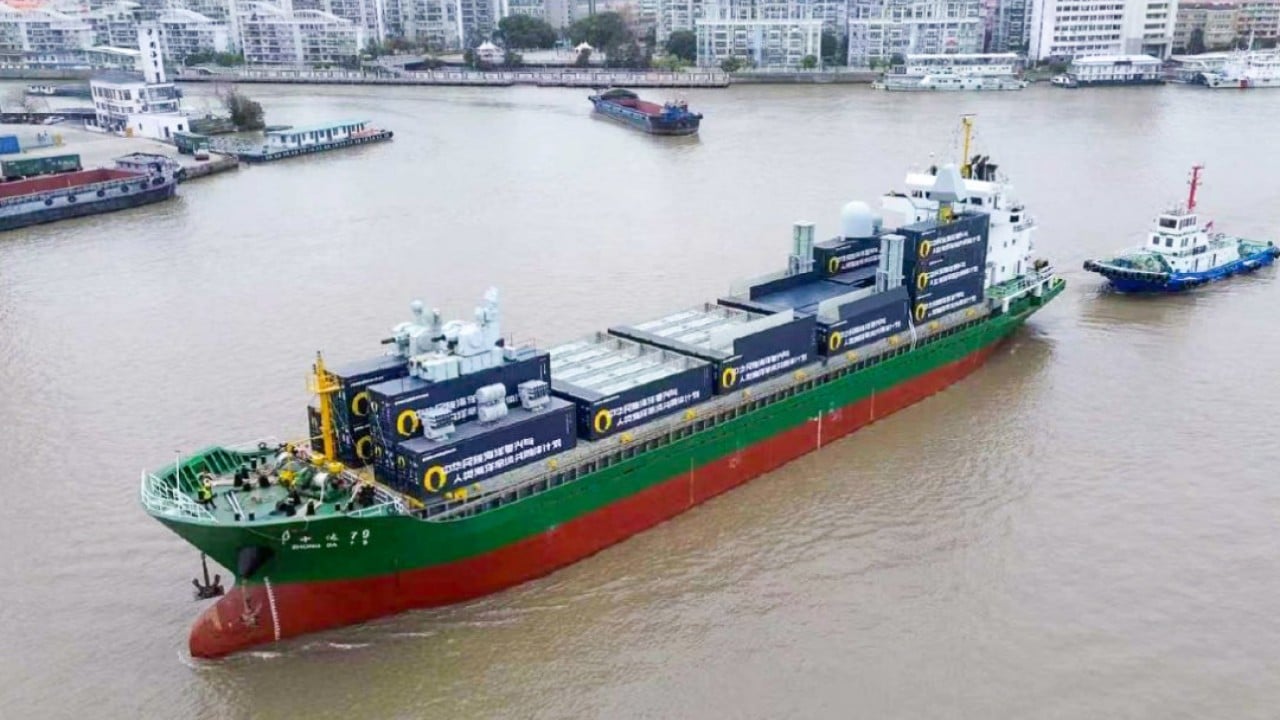
Honestly, it’s a mess. There are over 800 ships currently stranded or anchored near Fujairah and Khor Fakkan. Shipowners are stuck in a nightmare. Do you risk a $150 million vessel in a "Danger Zone" to appease your shareholders, or do you wait out the two weeks and hope the truce holds? Most are choosing to wait. The AIS tracking data shows only a handful of brave (or desperate) crews moving through the northern route.
The Hidden Cost of the New Route
It isn't just about the risk of an explosion. This rerouting is a logistical headache that drives up costs across the board.
- War Risk Insurance: Premiums haven't dropped because of the truce. If anything, the "mine risk" warning has kept them at record highs.
- Fuel Surcharges: Navigating these tighter, Iranian-mandated routes takes more time and precision, leading to higher fuel consumption.
- The "Toll" Rumors: There are unconfirmed reports that Iran is eyeing a transit fee for ships using the "safe" northern corridor. If that happens, the cost of a gallon of gas in the U.S. and Europe won't be coming down anytime soon.
What You Should Watch Next
Don't expect the "mine threat" to vanish when the two-week truce ends. This is a leverage game. Iran knows that as long as the lanes are "unsafe," they have a reason to keep their naval forces at high alert and their fingers on the pulse of global energy.
If you're monitoring this situation, keep your eyes on the Joint Maritime Information Center (JMIC) updates. They’re the ones who will confirm if a mine is actually spotted or if this is all just a psychological operation. Until then, the "Danger Zone" remains the most important patch of water on the planet.
For those in the shipping or energy sectors, the next step is clear. You need to verify your "War Risk" coverage specifically for the Larak Island corridor. Don't assume the ceasefire covers "negligent" navigation through a declared danger zone. Most insurers won't be that generous. Get your transit permissions in writing from both your flag state and, as much as it stings, the coastal authorities in the region.