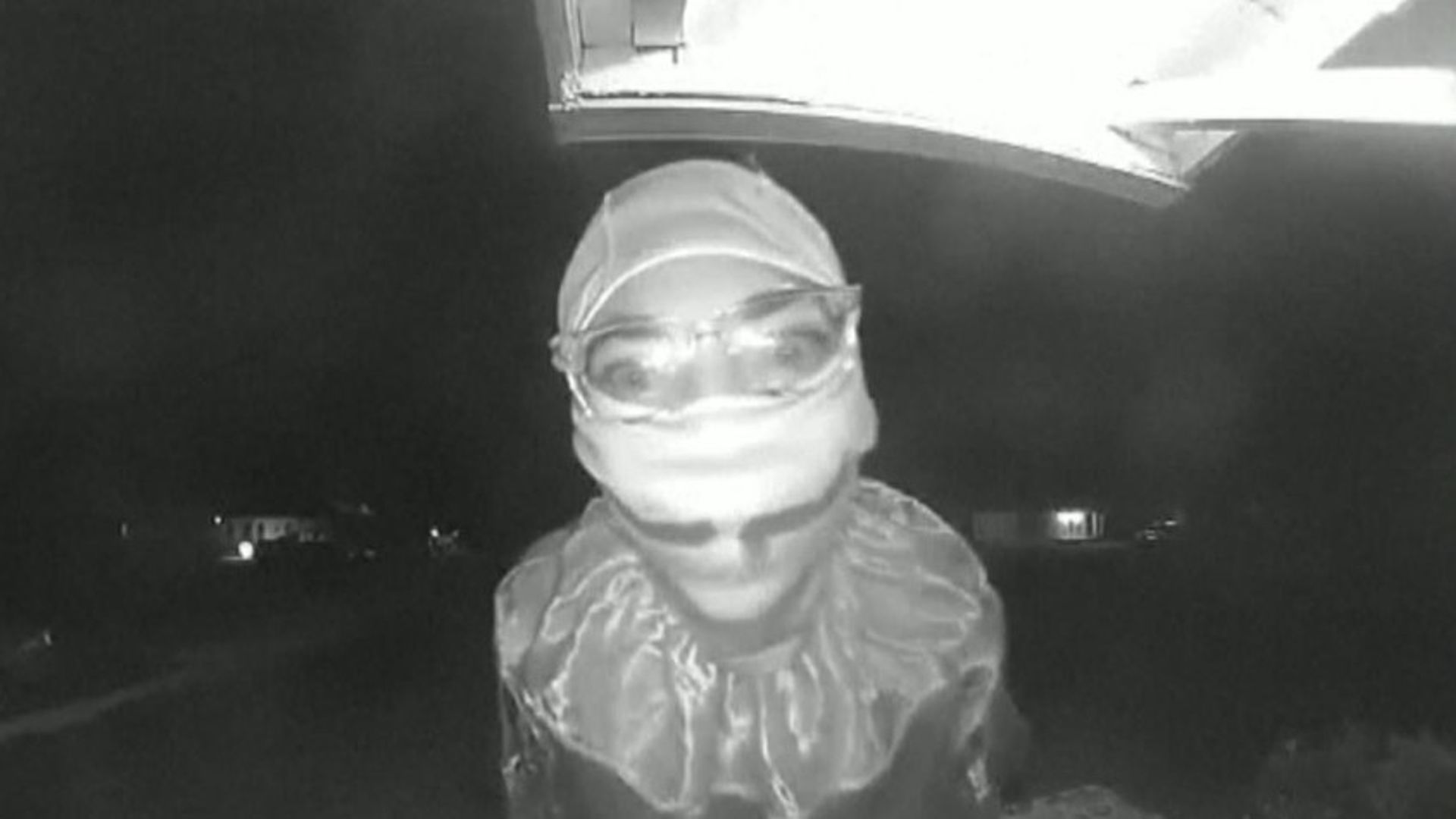
The modern urban night has a distinct texture. Neon bleeds through damp asphalt, sirens wail in a distant grid, and the ordinary citizen walks with a heightened, quiet dread. But a single violent incident in a suburban corridor upended the routine calculus of public safety when a man was stabbed to death by an assailant wearing a clown costume.
Crime reporting often relies on easy shock value. A bizarre costume transforms a standard homicide into a theatrical spectacle, triggering immediate media saturation. Beneath the lurid headlines and the predictable wave of internet gags lies a far darker and more systemic failure of public vigilance. We consume horror as entertainment, yet we remain entirely unequipped when the screen bleeds into reality.
This specific tragedy demands a rigorous examination of how modern urban spaces process anonymity, how public threat perception has fundamentally broken down, and why the traditional mechanics of local policing are failing to keep pace with decentralized violence.
The Anatomy of an Ambush
Violence rarely arrives with a trumpet blast. It relies on misdirection, camouflage, and the victim's natural hesitation.
When an attacker adopts a disguise, the psychological impact multiplies instantly. A clown costume is not merely clothing; it is a cultural artifact loaded with contradictory signals. It represents childhood joy, commercial marketing, and—increasingly through modern cinema and folklore—unpredictable menace.
When a human brain encounters an anomaly in a familiar environment, a critical delay occurs.
- The initial visual input registers as unusual rather than dangerous.
- The observer attempts to rationalize the oddity within a benign framework.
- By the time the threat is correctly classified as lethal, the window for defensive action has closed.
This cognitive lag is the hidden weapon of the masked assailant. In standard street crime, body language and posture telegraph intent. A hand moving toward a waistband or a purposeful stride gives seconds of warning. A costume short-circuits this internal radar. The target stops to process the absurdity of the visual stimulus, lowering their guard just enough for the fatal strike to land.
Investigators who have spent decades tracking violent crime note a disturbing evolution in offender psychology. Modern perpetrators do not merely seek to commit a crime; they seek to author an unforgettable scene. The costume serves as both physical protection—obscuring identity from rudimentary surveillance cameras—and a psychological terror multiplier.
The Breakdown of Public Trust
We live in a culture saturated with synthetic dread. Every October, retail chains flood the market with cheap latex masks, oversized shoes, and exaggerated greasepaint. This ubiquitous commercialization creates a dangerous form of visual noise. When the extraordinary becomes a seasonal commodity, true danger can walk down a residential sidewalk in broad view without triggering alarm bells.
Consider the baseline of urban awareness. In high-density neighborhoods, residents practice a deliberate, necessary form of tunnel vision. People walk with headphones, eyes glued to handheld screens, tuning out the unpredictable elements of the street to preserve their sanity.
- Urban insulation protects individuals from minor annoyances.
- At the same time, it blinds them to rapid environmental shifts.
- Emergency responders report a sharp rise in delayed reporting because bystanders assumed a violent confrontation was merely street theater or performance art.
The illusion of safety in well-lit, affluent areas exacerbates this vulnerability. When a lethal attack occurs in a quiet district, the shockwave shatters the community's core assumptions. People want to believe that geography provides immunity, that violence is a localized contagion restricted to specific coordinates. The reality is far more fluid.
The Failure of Institutional Response
Local law enforcement agencies face an impossible triage model. Municipal budgets are stretched, investigative units are understaffed, and the sheer volume of digital data generated daily threatens to overwhelm traditional detective work.
When a crime involves an anonymous disguise, the investigation hits immediate roadblocks.
- Standard security cameras capture low-resolution footage that renders masks and makeup indistinguishable.
- Eyewitness testimony becomes notoriously unreliable when filtered through extreme panic and theatrical elements.
- The lack of a clear motive or prior relationship between victim and attacker turns the initial hours into a blind search through a vast haystack.
Detectives must sift through thousands of hours of commercial video feeds, looking for a single anomalous figure moving against the grain of normal pedestrian traffic. The public demands immediate answers, quick arrests, and neat resolutions. The reality of forensics is grindingly slow. DNA extraction, fiber analysis, and digital footprint tracing take weeks or months, creating a vacuum where rumor and panic thrive.
Media outlets amplify this friction. By focusing relentlessly on the bizarre nature of the costume, coverage often obscures the gritty, mundane realities of violent crime investigation. The theatrical framing transforms a human tragedy into a true-crime commodity, distracting from the systemic failures that allowed an individual to move freely through a populated area with lethal intent.
Reassessing Urban Vulnerability
We must discard the comforting notion that bizarre crimes are isolated anomalies with no broader lessons. Every high-visibility incident exposes a crack in the foundation of community security.
The proliferation of masks in everyday public spaces—accelerated by changing social norms, public health crises, and the normalization of anonymity—has fundamentally altered the social contract. Trust requires visibility. When individuals can conceal their faces and intentions behind grotesque caricatures without social friction, the baseline of safety collapses.
Municipalities talk endlessly about smart infrastructure, predictive policing, and enhanced lighting grids. Yet hardware cannot compensate for human detachment. If citizens are unwilling or unable to read the subtle indicators of danger in their environment, no amount of surveillance will prevent tragedy.
The killer in the clown costume did not invent violence; he simply exploited the modern disconnect between perception and reality. He leveraged our cultural numbness, our tendency to look away, and our deep-seated reluctance to believe the worst until it is standing directly in front of us.
Until society confronts its own tolerance for anonymous chaos on the streets, the warning signs will continue to blend into the background, hiding in plain sight until the blade falls.