The coffee in the paper cup went cold ten minutes ago.
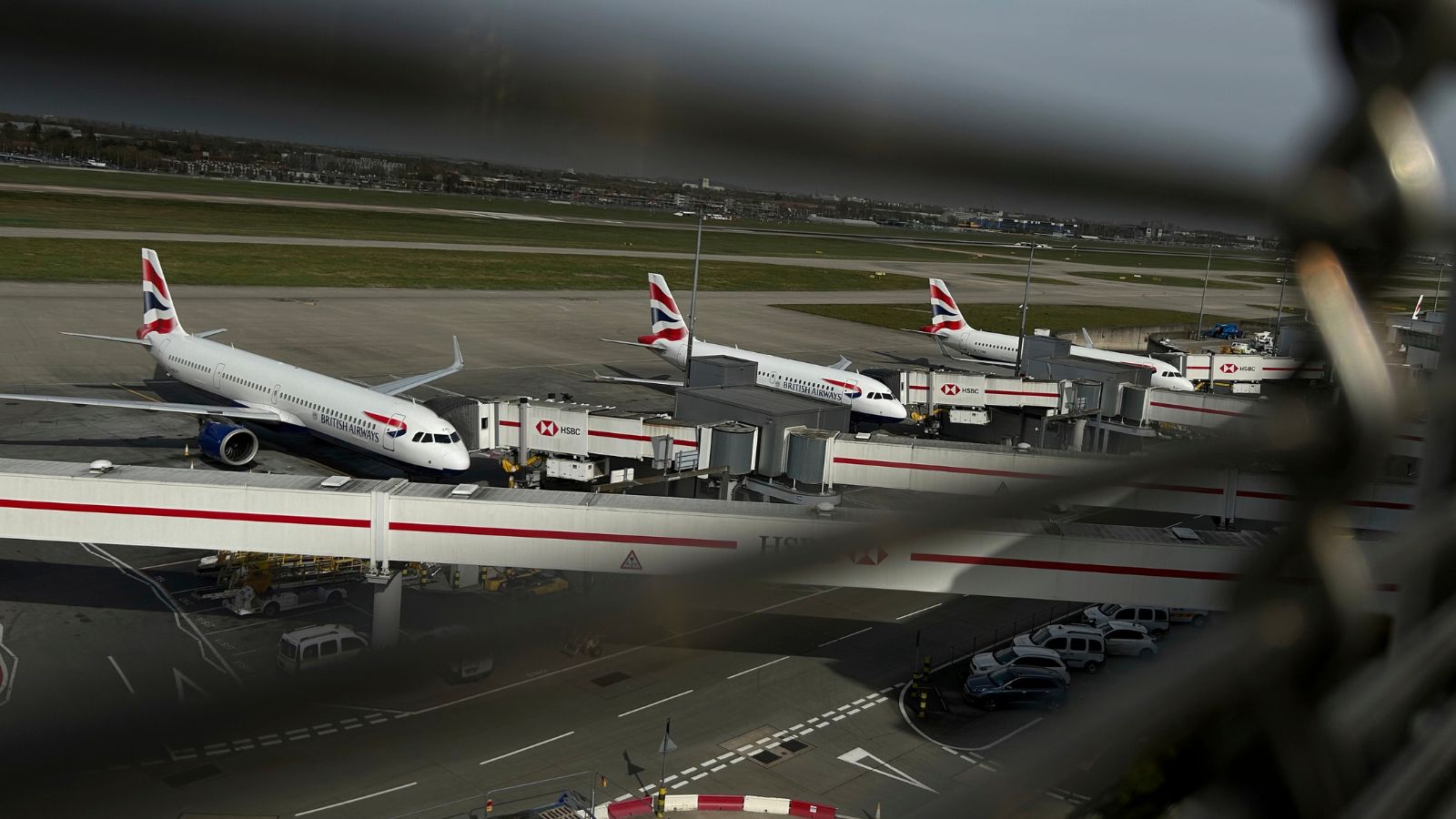
Mark didn’t care. His eyes were fixed on the departures board above gate 42 at Heathrow, watching the bright orange lettering flicker with a silent, mechanical cruelty. Delayed. Then, Delayed. Then, with a finality that made his stomach drop into his shoes, Cancelled.
Around him, a terminal of four thousand people collectively inhaled. Luggage wheels rattled against linoleum like distant thunder. Somewhere in the distance, a baby cried, cutting through the low, anxious hum of a Tuesday morning that had unraveled before the sun could even burn through the London fog.
This was not a weather delay. There was no gale-force wind shaking the tarmac, no blanket of snow grounding the fleet. The sky outside was a pale, innocent blue.
The invisible architecture holding it all together had simply blinked.
We treat aviation like magic. We arrive at a concrete box, hand over a slip of paper, step into a metal cylinder, and wake up three thousand miles away in a different time zone, eating a stale croissant. We forget the cathedral of coordination required to keep those metal tubes from kissing each other in the dark.
Air traffic control is a ghost profession. When it works, you never think about it. You don't know the names of the men and women sitting in darkened rooms miles away from the runways, staring at green phosphor screens, tracing vector lines with the calm detachment of chess grandmasters. They are the invisible pulse of the modern world.
Until the pulse stops.
A technical failure inside the National Air Traffic Services (NATS) systems didn't just break a computer code; it locked the front door of Britain. Restrictions cascaded outward like ripples in a pond. If planes couldn't land, planes couldn't take off. If planes couldn't take off from Gatwick, the aircraft scheduled to fly those routes tomorrow morning were sitting idle in Manchester, or Madrid, or New York.
Consider what happens next: a domino effect written in fuel burn and lost hours.
In aviation, efficiency is a razor’s edge. Crews have strict legal limits on how many hours they can work before they turn into safety liabilities. Gate turnaround times are measured in minutes, not hours. When a system outage freezes the board for even sixty minutes, the mathematical schedule for the next forty-eight hours is utterly vaporized.
Mark looked at his phone. A notification blinked: Your flight has been rescheduled for Thursday.
Thursday. Forty-eight hours from now.
His business meeting in Frankfurt—the one he had spent three months securing—was happening tomorrow morning. His hotel room was booked. His rental car was waiting. And the screen in front of him offered nothing but the cold comfort of a barcode and a customer service queue that stretched halfway down Terminal 5.
Let us be honest about the modern travel experience. We are herded, scanned, weighed, and delayed, all while being told it is for our own good. We accept the indignity because the reward is mobility. We can cross oceans for the price of a second-hand television.
But that mobility is fragile. It rests on legacy technology, patched-together software systems, and an airspace that is busier today than at any point in human history.
When NATS reported a network-wide technical issue, engineers scrambled to fix the fault. To the public, it sounded like a blown fuse. To the industry, it was a systemic cardiac arrest. Flight plans had to be processed manually—a painstaking, analog throwback to an era before digital automation. Imagine trying to direct thousands of high-speed commercial jets across European airspace using a clipboard and a telephone.
It is terrifyingly antique.
Hour after hour ticked by. Heathrow and Gatwick—two of the busiest international bottlenecks on the planet—became giant holding pens. Thousands of passengers sat on tarmac-bound aircraft for hours, trapped in a purgatory where the pilot’s voice over the intercom grew increasingly strained with false optimism.
"Ladies and gentlemen, we're just waiting for clearance from air traffic control..."
We've all heard that voice. It is the sound of institutional helplessness. The pilots didn't know. The gate agents didn't know. The algorithms didn't know.
By afternoon, the terminal floor had transformed into a refugee camp of weary travelers.
A college student slept against her backpack, headphones still clamped over her ears. A businessman in a wrinkled suit paced the length of the boarding bridge, muttering into a dead Bluetooth earpiece. Families with young children improvised picnic lunches out of overpriced airport pretzel bags.
Empathy wore thin as the queues grew long. Tempers flared briefly at the service desks, only to collapse back into sullen exhaustion. You cannot yell at a computer glitch. You cannot demand satisfaction from a severed data cable. There was no villain to boo, no manager who could wave a magic wand and clear the airspace.
There was only time. Lots of it, spent going nowhere.
When NATS finally announced that the technical restriction had been lifted, it did not mean the planes started flying immediately. That was the cruel misconception. Clearing a backlog of grounded aircraft is like trying to unclog a frozen pipe with a toothpick. Every slot had to be renegotiated. Every crew repositioned. Every safety check re-verified.
The system did not turn back on; it crawled back to life, wheezing and coughing.
Mark eventually left the queue. He walked out of Terminal 5 into the cool London evening, past the endless line of idling black cabs and the roar of the Heathrow Express. He didn't make his meeting. He didn't make it to Germany.
He sat on a bench outside the station, watching the orange glow of the airport perimeter lights bleed into the twilight.
Above him, a massive Boeing 777 finally climbed into the darkening sky, its engines roaring with a defiance that shook the glass windows behind him. It was heading west, carving a bright, white arc through the clouds.
The sky was open again. But for millions of people, the illusion had cracked. We live our lives tethered to an invisible, humming grid of digital trust, flying across continents on the assumption that the invisible hands guiding us will never tremble. Tonight, they did. And the world below simply stopped to watch them steady themselves.