The dirt road does not care about a nine-figure checkbook. It does not care that real estate brokers in glass-walled high-rises sketched out development grids over breakfast coffee, carving seventeen thousand acres of bunchgrass and jagged granite into half-million-dollar custom home lots with three-car garages and panoramic views of the continental divide. The dirt road only cares about the frost heave. It cares about the elk herds that have used the same saddleback pass since the Pleistocene retreated. It cares about the wind coming off the pass, sharp enough to scour paint off a truck door.
For years, the price tag hovered like a weather balloon over the horizon. One hundred million dollars. That was the figure assigned to the family ranch in Colorado—an astronomical sum that translated into suburban subdivisions, paved cul-de-sacs, and outdoor lighting fixtures that would have drowned out the Milky Way for fifty miles in every direction.
Money talks. Usually, it shouts.
Yet the loudest noise made on those eighteen thousand, four hundred and eighty-four acres recently was the quiet click of a fountain pen signing away an inheritance of concrete futures.
Property. We think of it as lines on a county surveyor’s plat map. We think of title deeds tucked away in safety deposit boxes, smelling faintly of old paper and bank vault air. But ground truth is far more stubborn. Soil remembers every hoofprint. It remembers the weight of cattle driven through winter blizzards. It remembers the grandfather who hammered the first cedar fence posts into the sage-choked flats, praying for an August rain that didn’t always come.
When a multi-generational ranch goes on the market for a king's ransom, the story is almost always told in shades of defeat. Taxes go up. Inheritance laws bite. The children scatter to cities where the air smells of exhaust and ambition, leaving the tractor rust to eat the implement sheds. Developers circle like turkey vultures, smelling blood and equity. They bring glossy brochures with renderings of championship golf courses hugging trout streams where native cutthroat still manage to spawn. They talk about highest and best use.
They define highest and best use as maximum financial extraction.
They forget that a mountain meadow catching the last slanted amber rays of an October sunset is already at maximum utility.
Consider the alternative. Picture a hypothetical subdivision called Whispering Pines Estates, because developers invariably name things after the very things they bulldoze. Imagine the septic tanks leaking slow nitrates into the headwaters of a blue-ribbon trout river. Imagine the night sky glowing with the orange haze of twenty-four-hour security lights on half-acre lawns where artificial irrigation keeps Kentucky bluegrass green in a high-altitude desert.
The woman at the center of this story looked at that hundred-million-dollar future and decided to buy the past instead.
Her name is part of the land's muscle and memory, tied to decades of sun-cracked hands and stubborn stewardship. When the choice materialized—take the generational wealth that could buy a fleet of yachts and a penthouse overlooking Central Park, or lock the gates against the bulldozer forever—the math changed.
Conservation easements are not romantic. They are cold, legal steel wrapped in parchment. They are voluntary legal agreements that permanently restrict future land use to protect conservation values. In plain English: it means tying your own hands, and the hands of your children, and the hands of every stranger who might ever hold the deed, preventing them from ever turning a jagged mountain valley into a strip mall.
It means choosing emptiness over excess.
That is a radical act in a culture obsessed with monetization. We are conditioned to believe that unbuilt land is wasted land. If a tree falls in a forest and nobody sells timber futures on it, did it even exist? Modern economics treats nature as an externality, a raw material waiting for an industrial upgrade.
To walk across eighteen thousand acres of protected Colorado ranchland is to realize how poor we are made by our own paving projects.
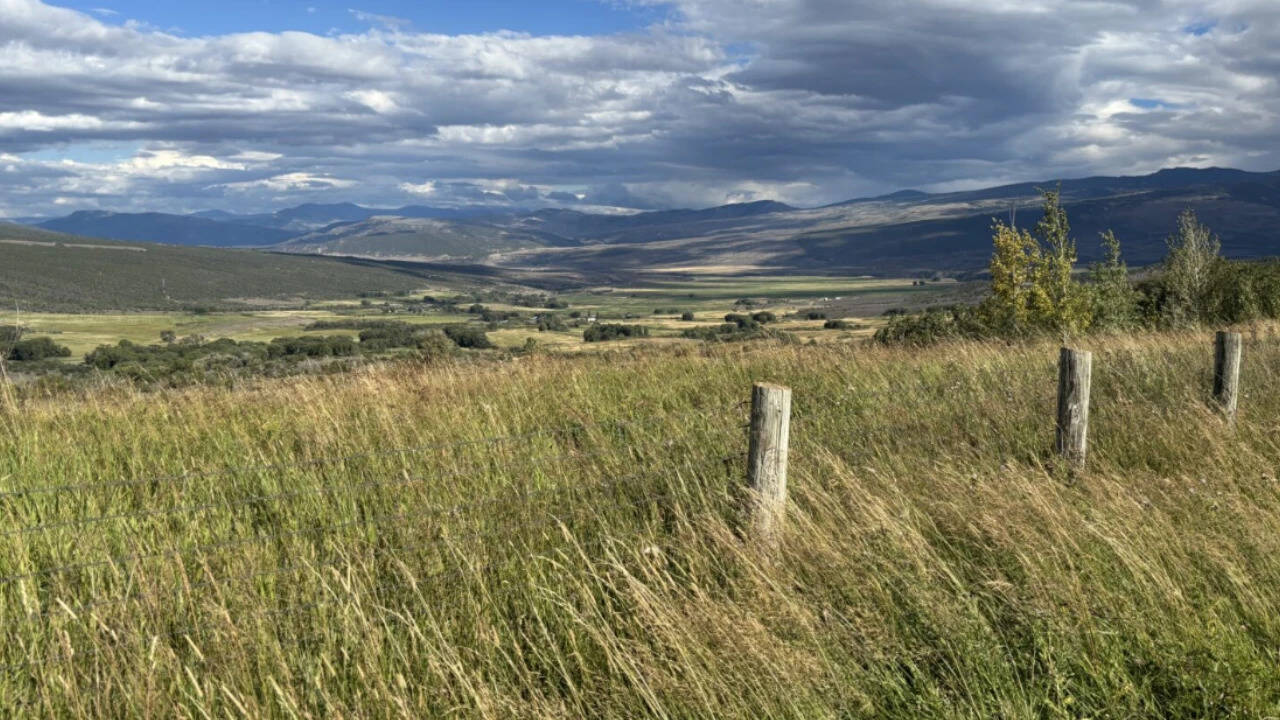
The air tastes different up there. It carries the dry, vanilla scent of ponderosa pine bark warmed by noon radiation, mixed with the alkaline tang of alkali flats and the sharp, clean ozone of an oncoming afternoon thunderstorm rolling off the peaks. There are no power lines bisecting the view. There are no sirens wailing off an interstate five miles away. There is only the low, rhythmic thrum of wind through needle and the deep, abiding silence of a landscape that was old when Rome was a collection of mud huts.
People ask why someone would walk away from nine figures. They look at the balance sheets of modern agriculture—the punishing margins, the unpredictable drought cycles, the sheer brutal labor of fixing broken fences when the wind chill is twenty below zero—and they assume the sale is inevitable. The rancher is always cast as the beleaguered victim, forced off the land by progress.
This time, the script flipped. The rancher didn't get pushed out by progress; she stopped progress dead in its tracks.
She used a conservation easement to place an invisible, unbreakable shield over the dirt she loved. By partnering with conservation groups and land trusts, she traded the speculative goldmine of future housing developments for the enduring survival of mule deer migration corridors, sage grouse nesting grounds, and uninterrupted wildlife habitats.
The mechanics of it require grit. You do not simply sign a paper and walk away. Appraisals must be run. Baselines must be documented. Every creek, every noxious weed infestation, every historic homestead cabin must be cataloged by biologists and conservation officers. It is a meticulous, bureaucratic dance designed to ensure that the sacrifice is permanent and airtight.
And it costs money. Protecting land requires endowments, legal defenses, and perpetual monitoring. It is not a passive gesture. It is an active, ongoing defense of a fragile ecosystem against the relentless gravity of suburban sprawl.
Yet look at what was saved.
Eighteen thousand, four hundred and eighty-four acres sounds like an abstract ledger entry until you try to walk it. It is an expanse so vast that a single afternoon thunderstorm can drench your right side while leaving your left side baking under a cloudless desert sun. It is a landscape where grizzly bears once roamed, where wolves are slowly finding their way back home, and where bald eagles patrol the riverbanks in the dead of winter.
If those acres had been subdivided, the fragmentation would have been absolute. Roads cut up habitats. Fences trap wildlife. Domestic dogs chase pronghorn. The ecosystem dies by a thousand small cuts, each one certified by a county zoning board looking to expand its tax base.
Instead, the elk will continue their ancient seasonal march from high alpine summer ranges down to winter feeding grounds without having to cross a single six-lane highway or navigate a subdivision security gate. The water will flow clean down the canyons, filtering naturally through miles of unpaved riparian zones before it reaches the municipal reservoirs downstream where thousands of urban residents drink it every morning without knowing whose stubbornness kept it pure.
We romanticize the American West as a place of infinite horizons, but those horizons are shrinking by the acre every single day. Every time a bulldozer clears a juniper grove to build another luxury ranchette, a little bit of the nation's soul is paved over and forgotten beneath a layer of asphalt and manicured lawns.
That is why a hundred million dollars lost is actually a victory won.
The check never cleared. The houses were never built. The lights never went on to spoil the dark majesty of the mountain night.
Standing on a high ridge overlooking that vast, unbroken sweep of green and gold, the wind strips away the noise of the modern world. Down in the valleys below, the cities are growing, pulsing, consuming fuel and space at an insatiable rate. But up here, time moves at the speed of geological erosion and seasonal migration.
The ranch remains. Unbroken. Unbuilt. Unbought.
The gate is closed. The road belongs to the wind again.