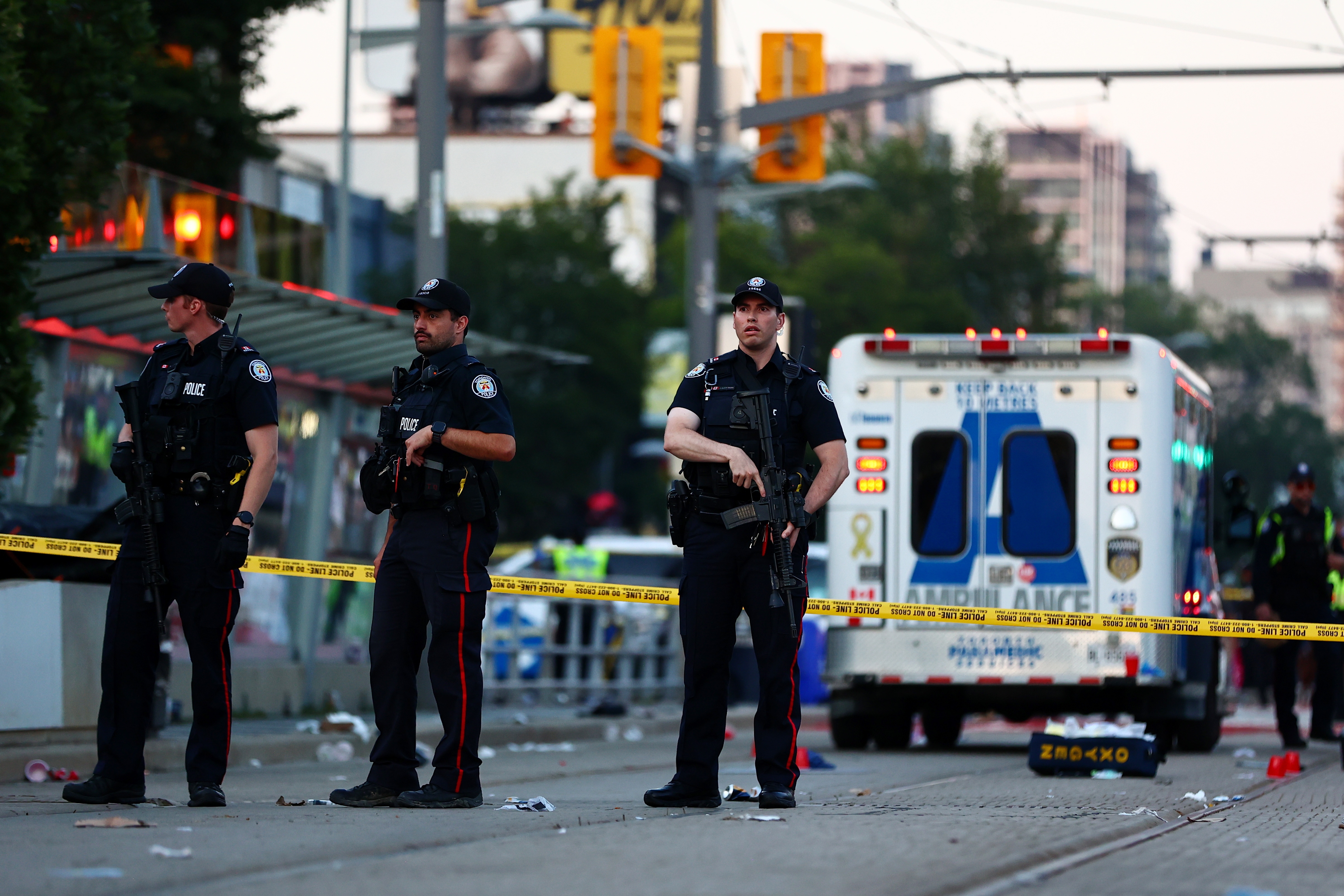
The standard script plays out every single summer. A high-profile festival kicks off, gunfire erupts, crowds stampede, and a community is left reeling. Within hours, the media broadcasts a familiar refrain: police are looking for suspects.
Everyone nods along. We focus entirely on the manhunt, tracking descriptions of young men in dark clothing, waiting for the inevitable press conference where a police chief promises swift justice.
It is a comforting routine. It is also completely useless.
Focusing exclusively on catching the bad guy after the bodies hit the ground is the ultimate form of civic laziness. It treats public violence like an unpreventable lightning strike—an act of God that no one could have foreseen. By focusing all energy on the post-incident manhunt, city officials, event organizers, and the public completely ignore the systemic, predictable operational failures that allowed the weapons inside the perimeter in the first place.
We do not have a suspect problem. We have an infrastructure and accountability problem.
The Illusion of the Perimeter
Every major urban festival operates under a massive lie: the perimeter protects you.
Event organizers throw up some chain-link fencing, hire a third-party security firm to glance inside tote bags, and declare the space secure. In reality, these perimeters are nothing more than security theater designed to make attendees feel safe while doing absolutely nothing to deter a determined individual with a firearm.
Consider the physical reality of a modern urban festival. You have tens of thousands of people jammed into a restricted geographic area—often a public park or a closed-off series of city streets. The entry points become massive bottlenecks.
When lines stretch down the block and paying customers start getting restless, what happens? Security guards, who are almost always underpaid, undertrained, and overworked, start rushing people through. The bag checks become cursory glances. The metal detector wands are waved with all the enthusiasm of a bored teenager.
- The Minimum Wage Shield: Most private security guards at these events are paid minimum wage. They receive a few hours of basic training. Expecting them to effectively interdict a motivated, armed individual or spot a concealed handgun in a chaotic crowd of thousands is delusional.
- The Externalization of Risk: Festival organizers maximize profits by packing venues to maximum capacity while externalizing the actual risk management to the public sector. When things go sideways, they do not blame their own logistics; they point to the police.
- The Post-Incident Pivot: The moment a shooting occurs, the narrative instantly shifts from "how did an armed person get into a ticketed event?" to "help us find the shooter." The organizer escapes scrutiny entirely, hiding behind the flashing lights of the emergency response.
I have spent years analyzing urban security protocols and crowd dynamics. I have watched event planners spend millions on talent bookings, marketing, and VIP lounges while treating safety as a compliance checkbox to be ticked as cheaply as possible. If a venue can be breached easily enough that a weapon makes it into the dense core of a crowd, the event layout itself has already failed.
Why More Policing is Not the Answer
The immediate knee-jerk reaction from politicians after any festival shooting is to demand a heavier police presence at the next event. It sounds decisive. It looks great on a campaign flyer. It is operationally illiterate.
Police officers are trained for law enforcement and tactical response, not proactive crowd architecture. When you flood an open-air festival with hundreds of uniformed officers, you do not necessarily deter a shooter; you simply change the location of the trigger point.
The Reactivity Trap
Uniformed police officers at large public gatherings are almost entirely reactive. They cannot see over the heads of ten thousand tightly packed festival-goers. They cannot hear a verbal altercation over the blare of a massive sound system.
When a firearm is discharged, the police do not stop the initial shots. They respond to the sound of the gunfire, navigate through a panicked, stampeding crowd running in the opposite direction, and attempt to secure a chaotic scene.
By the time an officer draws their weapon, the tragedy has already occurred. The police are not a shield; they are a cleanup crew.
The Breakdown of Deterrence
The criminal element willing to bring a firearm into a crowded festival is not deterred by the presence of police officers standing fifty yards away at an intersection. They know the geography of the crowd works in their favor. In a dense mass of human bodies, line of sight is obliterated. A weapon can be drawn, fired, and concealed again in a matter of seconds, leaving the surrounding crowd in chaos and the police completely blind to the point of origin.
To fix this, we have to look at the hard data surrounding crowd density and violence. Criminological research has consistently shown that environmental design—how spaces are shaped, lit, and managed—has a far greater impact on reducing violent crime than the sheer volume of police officers deployed on the periphery.
Dismantling the Deferral Narrative
Let us look at the questions that dominate the public conversation after an event like this, and tear down the flawed premises behind them.
Question: How can the community help police identify the suspects quicker?
The Real Answer: This is the wrong question. The real question is: Why did the event layout allow a bottleneck where an altercation could escalate into a shooting without immediate intervention? Focusing entirely on tips and video footage allows the city to ignore the fact that the venue’s capacity limits and exit routes were fundamentally unsafe for the volume of attendees present.
Question: Should we cancel cultural festivals if they pose a safety risk?
The Real Answer: Absolutely not. Canceling events is a coward’s approach to governance. The risk is not inherent to the culture or the music; it is inherent to poor crowd management and inadequate municipal oversight. Cities need to enforce strict structural standards on event permits, forcing organizers to invest in real security infrastructure instead of cheap optics.
The Economics of Event Safety
If we want to stop these tragedies, we must follow the money. Festivals are highly lucrative enterprises. Ticket sales, liquor sponsorships, and vendor fees generate massive revenue blocks. Yet, when you look at the line-item budgets for these events, security and crowd flow management are routinely treated as cost centers to be minimized.
| Expense Category | Priority Level | Operational Impact |
|---|---|---|
| Talent & Production | High | Drives ticket sales and corporate sponsorships. |
| Marketing & VIP Perks | High | Maximizes brand visibility and high-end revenue. |
| Crowd Architecture & Logistics | Low | Treated as a regulatory hurdle; minimized to save margin. |
| Private Security Personnel | Low | Outsourced to the lowest bidder; relies on untrained staff. |
This economic reality creates a dangerous environment. When a profit-driven entity is responsible for securing a public space, they will always lean on the cheapest available option that satisfies the bare minimum of local bylaws. They know that if the worst happens, the city's police department will shoulder the blame and the cost of the investigation.
The Blueprint for Real Accountability
Stop looking for the suspects for a moment and look at the system. If we want to secure our public spaces and preserve the life of our cities, we need a complete overhaul of how mass gatherings are permitted and designed.
1. Hard Liability for Organizers
If a shooting occurs inside a ticketed or controlled festival perimeter, the organizers should face immediate, severe financial and legal liability. If an organization can be sued into oblivion for serving too much alcohol to a patron, they should face the exact same existential risk for failing to secure their entry points. The moment liability shifts to the balance sheet, organizers will magically find the budget to hire professional, highly trained security personnel and implement rigorous screening protocols.
2. Mandatory Crowd Architecture Design
A city should not grant an event permit unless the organizer provides a verified crowd architecture plan designed by certified experts. This means no more massive, unmanaged chokepoints. It means wider arterial walkways within the festival footprint to prevent dense pockets where altercations can brew unnoticed. It means designing the space so that medical and security teams can reach any point in the venue within sixty seconds without fighting through a solid wall of human bodies.
3. Transition from Policing to Precision Interdiction
Instead of filling public spaces with visible police details that act as expensive targets, cities must mandate precision tech and intelligence-led security at entry points. This means utilizing advanced, high-throughput weapons detection systems that scan crowds at walking speed without creating massive bottlenecks. It means replacing low-wage guards with professional security operations teams trained in behavioral detection and de-escalation.
The pursuit of the suspects in the wake of a festival shooting is necessary for justice, but it does absolutely nothing for prevention. It is a rearview-mirror approach to public safety. Until we stop treating these incidents as isolated acts of unpredictable criminality and start treating them as catastrophic logistics failures, the cycle will repeat.
We will see the same headlines next month, the same press conferences next summer, and the same hollow promises from city leaders who lack the courage to force event organizers to secure the spaces they profit from. Turn off the news feeds tracking the manhunt and start looking at the permit approvals. That is where the real failure lives.