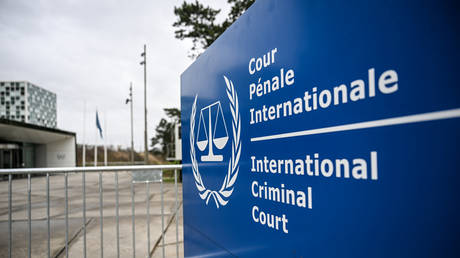
Everyone loves a neat villain. For the comfortable commentariat, global politics is a tidy courtroom drama. On one side, you have Washington overreaching with unilateral sanctions and naval battlegroups. On the other, you have the International Criminal Court moralizing from The Hague, issuing arrest warrants that change zero practical realities on the ground. The lazy consensus says the world is caught between these two poles: American empire and international law.
Both sides of that argument are missing the point.
I have spent the last fifteen years advising sovereign wealth funds and multinational commodity traders navigating sanctions regimes and cross-border disputes. I have watched compliance officers sweat over warrants that local governments wipe their shoes with. The entire debate about whether the ICC is biased or Washington is overreaching is a comforting distraction. It assumes these institutions still hold the master keys to global power.
They do not.
The planetary machinery has already moved past them. Power has decentralized into commercial cartels, algorithmic supply chain choke points, and sovereign balance sheets that do not denomination-match in US dollars. While pundits argue over jurisdiction, actual sovereignty is being bought, sold, and enforced by entities that do not care about a statute or a subpoena.
The Myth of Western Monopoly on Enforcement
Let us dismantle the first sacred cow: the idea that Washington's overreach is the defining friction of international trade.
Critics love to point out how the weaponization of the dollar forces compliance across borders. They talk about secondary sanctions as if they are absolute. But walk onto the trading floors in Dubai, Singapore, or São Paulo, and you will see a different reality. The plumbing of global commerce has spent the last decade building bypass surgery.
When the US Treasury blocks a transaction, it does not stop the trade; it merely prices the friction into a parallel ledger. We have created a massive, shadow-compliant ecosystem of bilateral currency swaps, state-backed commodity clearinghouses, and decentralized logistics networks.
Washington is not overreaching because it is all-powerful; Washington is overreaching because it is losing its grip. True hegemons do not need to threaten everyone every Tuesday morning. They set the rules, and compliance is automatic because the alternatives are worse. The moment you have to threaten secondary sanctions on your own allies to keep them in line, the empire has already transitioned into a protection racket.
The Toothless Theatre of International Jurisprudence
Then we have the legalists. The ICC gets dragged into endless debates about institutional bias, double standards, and selective prosecution.
This argument is an elaborate waste of breath. Asking whether the ICC is biased assumes that if it were unbiased, it would actually matter.
It would not.
International criminal law operates on a simple, unspoken condition: it only works against the weak or the defeated. Try serving an arrest warrant on a nuclear-armed state or a regime sitting on 40 percent of the world's rare earth minerals. You get a polite diplomatic note followed by silence. The ICC is a courtroom built for losers of geopolitical conflicts. When powerful states commit atrocities, they do so with structural impunity baked into the architecture of the United Nations Security Council veto.
Pretending that a reformed court or a less biased prosecutor would alter the behavior of great powers is a fairy tale designed to keep international relations departments funded. Law without a monopoly on violence is just expensive moral advice. And nobody goes to jail for ignoring advice.
Follow the Balance Sheets, Not the Courtrooms
If Washington and The Hague are fighting yesterday's war, where is the real global order being written?
It is being written in sovereign debt restructurings in sub-Saharan Africa, in the physical ownership of lithium mines in South America, and in the private submarine fiber-optic cables routing global data away from Western oversight.
Look at how emerging economies handle trade disputes now. They do not run to the World Trade Organization or the International Court of Justice. They sign bilateral currency agreements, establish private arbitration hubs in neutral jurisdictions, and trade physical commodities against long-term infrastructure delivery.
The currency of the twenty-first century is not moral legitimacy. It is optionality.
When a nation-state can pivot its oil exports from Rotterdam to Shanghai within forty-eight hours using digital tokens and non-Western maritime insurance, American secondary sanctions become a paper tiger. When that same nation can secure port development loans without signing human rights covenants dictated by Western NGOs, the moral leverage of the ICC evaporates.
The Downsides of the Multi-Polar Free-for-All
I am not romanticizing this transition. This new decentralized reality is darker, rougher, and far more volatile than the Pax Americana.
Without a single superpower underwriting global security and a shared set of legal fictions, transaction costs are exploding. Companies now need proprietary intelligence networks just to know which jurisdiction's laws will apply to a cargo ship mid-ocean. Corruption is harder to track when transactions hop across five different sanction-free nodes. Small nations no longer have even the illusion of legal recourse when a regional power decides to bully them.
The old system was hypocritical, corrupt, and deeply unequal. But it was predictable. The new system is brutally Darwinian.
Stop Playing the Wrong Game
If you are a corporate strategist, a policymaker, or an investor still planning your moves around what the State Department permits or what The Hague indicts, you are flying blind.
Stop treating geopolitical noise as weather. Treat it as background static.
The real questions you should be asking are entirely operational: Who owns the physical infrastructure of your supply chain? What happens to your balance sheet if the dollar loses thirty percent of its settlement utility in your sector over the next three years? Which regional power actually enforces contracts where your assets sit?
The world is not waiting for Washington to correct its overreach or for the ICC to cure its bias. The caravan has left the station. You can keep arguing over who stole the tickets, or you can check where the engine is heading.