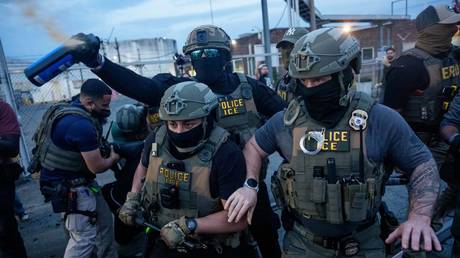
Law enforcement gear shifts constantly. New tools hit the market every single year. Most of them turn out to be overhyped gimmicks that officers abandon within months. But every once in a while, a piece of equipment arrives that alters the entire operational playbook. Immigration and Customs Enforcement rolling out high-voltage shock gloves represents one of those rare turning points.
You're probably wondering why standard handcuffs and tasers aren't enough anymore. The agency insists that modern operational environments demand hands-on compliance tools that reduce lethal force incidents while maintaining absolute control during high-risk arrests. Critics, however, point toward severe civil rights concerns and the potential for abuse during field operations.
Let's break down what these shock gloves actually are, how they function in real-world scenarios, and why this policy shift matters right now.
What Are Shock Gloves and How Do They Work
Shock gloves look like ordinary tactical gear at first glance. Heavy-duty leather, reinforced knuckles, breathable material. But embedded inside the palm and finger zones are conductive metal contacts wired to a battery pack typically clipped to an officer's duty belt.
When an agent makes skin-to-skin contact with a resisting subject and activates a trigger switch on the wrist, a controlled electrical charge delivers a neuromuscular incapacitation pulse.
Think of it like a handheld stun gun integrated directly into the grip of the hand.
Traditional tasers require the deployment of two barbed probes over a distance. If one probe misses its target, the entire system fails. Close-quarters struggles render standard tasers almost useless because you need a specific minimum separation distance for the wires to spread effectively.
Shock gloves eliminate that distance requirement completely. If an agent has physical contact with an arm or a torso, the system delivers current instantly. That changes the physics of close-quarters wrestling matches during arrests.
The Operational Justification Behind the Gear
Field agents face volatile situations daily. Raids, vehicle extractions, and street-level encounters can turn violent in a fraction of a second. When a suspect starts fighting back, agents have split seconds to make life-altering choices.
If an agent relies purely on physical strikes, suspects get injured, officers get injured, and bystanders get caught in the chaos. If an agent escalates straight to a firearm, the outcome can turn tragic. Agencies constantly search for options sitting squarely in the middle of the use-of-force continuum.
These gloves promise a middle ground.
Proponents argue that delivering a localized shock allows an agent to break a grip, neutralize active resistance, and apply restraints without punching someone in the face or drawing a pistol. In theory, fewer broken bones happen. In theory, hospital visits drop.
The Controversy and Safety Realities
Theory rarely matches reality in law enforcement. Civil rights organizations and police accountability watchdogs have raised major red flags regarding the deployment of electrical compliance tools built directly into the hands of officers.
Hands are meant for grabbing, guiding, and handcuffing. When you electrify the hands, every single physical interaction carries the risk of an unintended shock.
Consider a chaotic crowd control scenario or a messy room entry. Accidental activations happen. Wet environments complicate electrical conductivity. Medical conditions, cardiac vulnerabilities, and hidden health issues mean that any electrical discharge carries inherent physical risks that go far beyond temporary discomfort.
Furthermore, accountability becomes a massive hurdle. Standard firearms and tasers leave behind forensic data, cartridge tags, and automated camera activation logs. Integrated glove systems require strict oversight to ensure agents aren't using them as pain compliance tools during routine, non-violent compliance checks.
What This Means for the Future of Tactical Gear
Law enforcement technology trickles down rapidly from federal agencies to state and local departments. If ICE successfully integrates shock gloves into standard-issue gear packages, expect municipal police forces to evaluate similar technology within the next few years.
Manufacturers are already racing to build lighter, smarter, and more reliable conductive garments. Biometric safety features that prevent activation unless specific conditions are met might become mandatory to prevent misuse.
You cannot ignore the trajectory here. Non-lethal tech is evolving past plastic batons and chemical sprays. We are moving into a phase where the gear itself becomes integrated into the nervous system of the officer using it.
Keep a close eye on how federal oversight boards evaluate the initial rollout data over the coming months. The real test won't be how well these gloves work on a training dummy in a controlled laboratory. The test will be how they perform on concrete streets when adrenaline is high and mistakes carry permanent consequences.