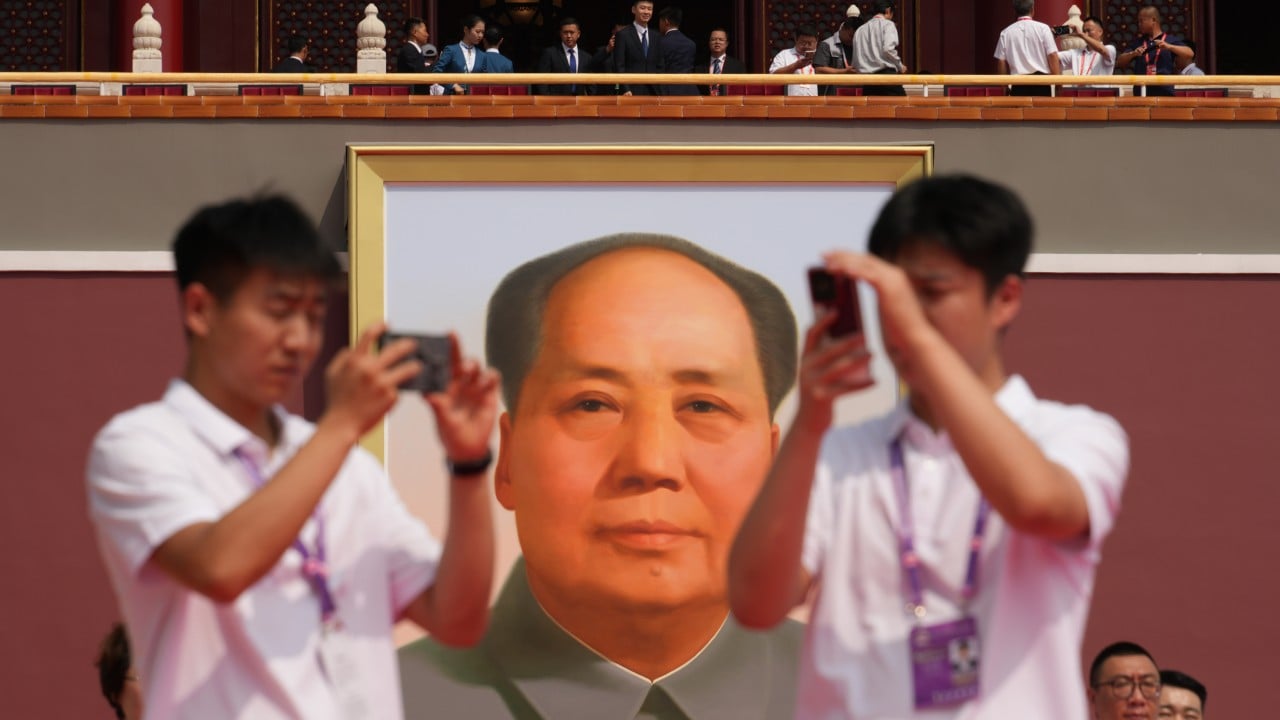
Economic stagnation combined with hyper-competitive labor markets triggers predictable shifts in psychological safety valves. When the structural return on individual effort approaches zero, rational actors abandon meritocratic frameworks and seek alternative heuristics for resource allocation and risk mitigation. In contemporary China, this manifests as a cultural and psychological reallocation of assets toward a historical figure: Mao Zedong. Fifty years after his death, young professionals and university graduates are not merely reminiscing about a bygone era; they are engaging in a sophisticated form of ideological arbitrage, extracting operational advice from historical texts to navigate structural unemployment, the ninety-nine-six work schedule, and a collapsing real estate wealth effect.
To understand this phenomenon, one must discard sentimental interpretations. The resurgence of Maoist thought among youth living in tier-one cities is not a sudden outbreak of orthodox political radicalism. It is a calculated response to systemic failure. When market capitalism ceases to deliver upward social mobility, populations look backward for alternative distribution models.
The Mechanics of Structural Displacement
The primary driver behind this ideological pivot is the severe contraction of the white-collar labor market. For two decades, the social contract for China's urban youth was straightforward: endure intense academic competition, secure a degree from a top-tier institution, enter the technology or financial sector, and capture middle-class security through wage growth and property appreciation.
That transmission mechanism is broken. Youth unemployment metrics reached critical thresholds, forcing graduates into a saturated gig economy or driving them toward the involution phenomenon known as neijuan, where intense competition yields zero marginal gain. Under these conditions, standard career planning frameworks fail.
When conventional paths to accumulation are blocked, actors re-examine historical doctrines that critique elite accumulation and market concentration. The invocation of Maoist slogans is a strategic re-framing of personal grievance. Instead of internalizing failure as a personal lack of competitiveness, youth externalize the problem, utilizing historical critique to diagnose systemic overwork and wealth polarization.
The Three Operational Vectors of Historical Reinterpretation
Contemporary youth extract three distinct operational utilities from historical Maoist texts and iconography. Each vector addresses a specific friction point in modern Chinese economic life.
Anti-Fragility Against Corporate Exploitation
The first vector is ideological armor against workplace exploitation. The standard corporate environment in major metropolitan areas relies on absolute compliance and voluntary subordination of personal life to corporate output. When young employees adopt slogans originally deployed during mass mobilization campaigns, they are executing a linguistic counter-offensive.
This serves as a psychological defense mechanism. By viewing their daily labor through the lens of class struggle rather than individual career progression, workers detach their self-worth from corporate metrics. If a project fails or a contract is terminated, the fault is attributed to structural dynamics rather than personal inadequacy. It creates a psychological buffer against burnout, transforming acute anxiety into collective ideological resilience.
Rejection of Consumerist Hedging
The second vector targets consumption patterns. For generations flush with post-reform prosperity, consumption functioned as identity construction. Luxury goods, lifestyle branding, and property ownership served as visible markers of success.
As economic growth decelerates, maintaining these consumption baselines becomes mathematically impossible for a significant segment of the population. The pivot toward historical asceticism offers a moral and financial rationalization for downscaling lifestyle expectations. Rejecting hyper-consumerism under a banner of frugality and self-reliance converts a forced economic contraction into a voluntary lifestyle choice. It preserves dignity by redefining status symbols from material accumulation to ideological purity.
Re-allocating Trust Networks
The third vector involves trust and social cohesion. In an atomized digital economy where social mobility is choked, peer networks often fracture into hyper-competitive silos. Historical models that emphasize collective solidarity provide a blueprint for non-monetized mutual aid.
While formal collective organizations are strictly managed, informal communities of young people share survival strategies, living arrangements, and coping mechanisms under shared cultural markers. This mutualism acts as an informal social safety net in an environment where traditional family structures face severe financial and demographic strain.
The Cost Function of Ideological Nostalgia
While ideological arbitrage offers immediate psychological relief, it carries distinct systemic risks and opportunity costs. Historical frameworks optimized for mid-twentieth-century agrarian mobilization and anti-imperialist struggle do not map cleanly onto twenty-first-century globalized supply chains and digital service economies.
Relying on historical rhetoric as a primary coping mechanism creates a risk of operational misdirection. It addresses the symptoms of economic disenfranchisement—alienation, burnout, and powerlessness—without providing actionable leverage for structural reform or personal capital accumulation.
Furthermore, the state monitors ideological expressions with high sensitivity. While utilizing historical figures to critique corporate overreach is temporarily tolerated as an outlet for venting socioeconomic frustration, crossing the line from cultural irony into organized political action invites swift regulatory friction. The individuals deploying these strategies must calibrate their engagement carefully to avoid triggering state security apparatuses designed to suppress autonomous political mobilization.
Strategic Outlook
The presence of historical icons in modern economic discourse will persist as long as the structural mismatch between graduate output and high-quality job creation remains wide. This is not a temporary sentimental fashion; it is a permanent indicator of systemic friction.
Market participants, institutional employers, and policymakers analyzing this trend must look past the surface-level novelty of young people wearing vintage badges or quoting historical essays. These actions represent a quantitative vote of no confidence in the current distribution of economic rewards.
Resolution requires tangible structural adjustments: lowering the cost of living, curbing systemic labor violations, and restoring credible pathways for wealth generation outside the speculative property market. Until those structural adjustments occur, the ideological arbitrage will continue, with young professionals pricing historical resistance into their daily survival algorithms.
Shift capital allocation strategies away from reliance on consumer-driven growth models that assume perpetual upward mobility, and begin pricing structural labor resistance into operational risk assessments across all consumer-facing sectors in urban centers.