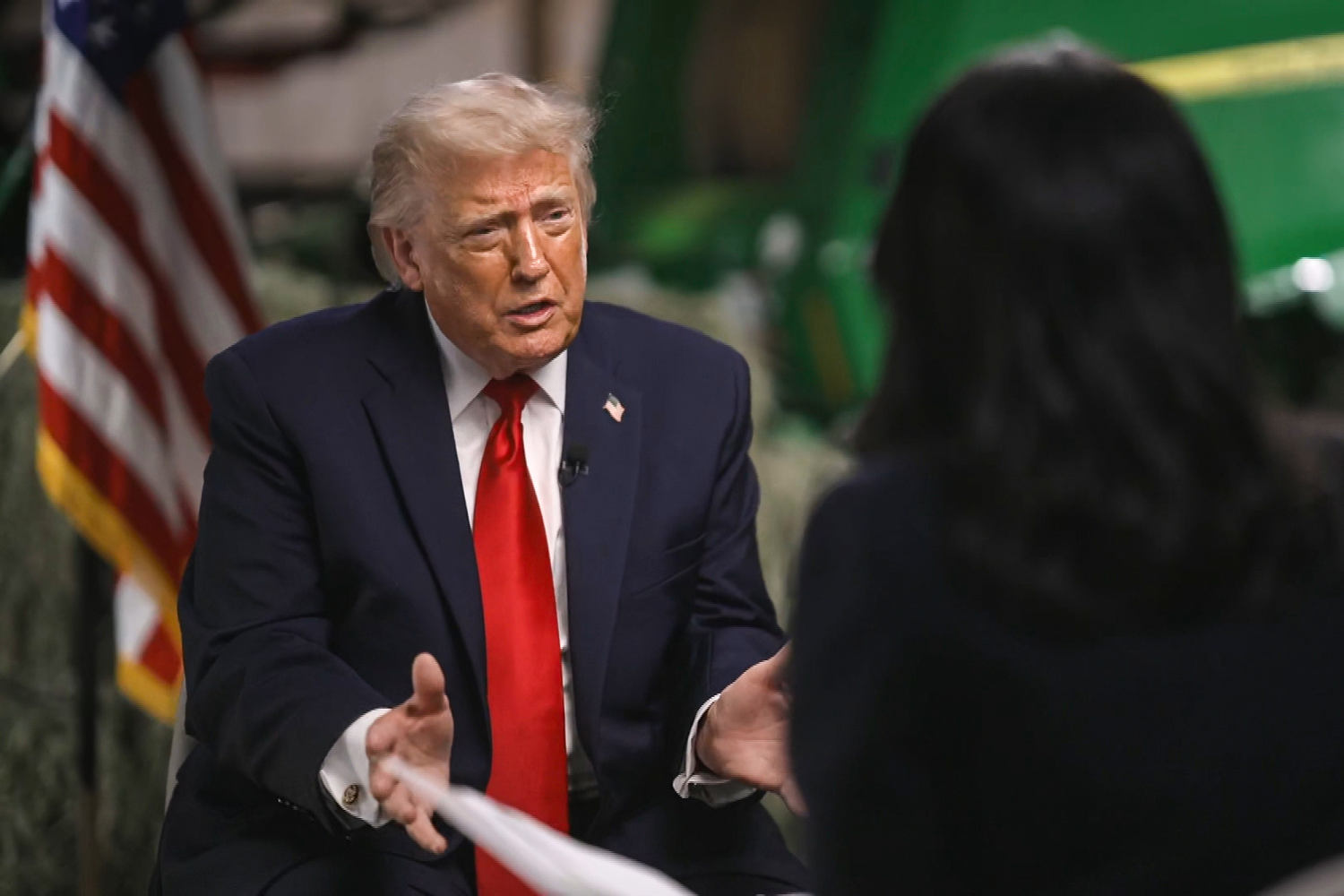
The United States and Iran are theoretically close to signing a historic peace agreement to end their brutal three-month war, but the entire diplomatic effort hinges on a volatile geopolitical gamble over 900 pounds of buried, near-weapons-grade enriched uranium. President Donald Trump publicly declared that Washington is very close to finalizing a pact with Tehran, offering a choice between cooperative extraction using American equipment or a harsh military seizure if negotiations collapse. The primary issue is no longer just preventing Iran from developing nuclear weapons, but rather tracing, verifying, and destroying a hazardous stockpile of uranium currently trapped in gaseous form beneath the rubble of facilities bombed during the conflict.
This diplomatic impasse reveals a stark divergence between Washington’s confidence and the reality on the ground in Tehran. While the White House treats the underground stockpile as an isolated asset that can be entombed, monitored, and safely extracted at will, Iranian leaders view their nuclear material as the ultimate sovereign insurance policy. Bridging this gap requires solving a logistical nightmare that standard diplomatic treaties are entirely unequipped to handle. If you found value in this article, you might want to look at: this related article.
The Fantasy of the Clean Up
The current American strategy rests on a dangerous technical assumption that destroying a nation's nuclear capability is as simple as driving heavy machinery into a defeated country. In his recent remarks, Trump suggested that American forces could easily retrieve or secure the uranium without a deal because the material is entombed and heavily monitored via space-based surveillance and remote cameras.
The physical reality of Iran’s nuclear infrastructure makes this a fantasy. The country's enriched uranium is not sitting neatly in barrels waiting for transport. Following intense U.S. and Israeli airstrikes during the war, much of the stockpile is trapped within collapsed underground networks, likely in the form of highly volatile uranium hexafluoride gas ($UF_6$). For another perspective on this development, refer to the recent update from NBC News.
[Underground Facility Bombardment]
               │
               ▼
[Structural Collapse of Bunkers]
               │
               ▼
[Breached Enrichment Infrastructure]
               │
               ▼
[Volatile UF6 Gas Trapped in Rubble]
               │
               ▼
[High Contamination & Verification Risk]
Extracting this material requires complex chemical processing and stable environmental controls. Doing so in a war zone, surrounded by unstable debris and structural damage, introduces unprecedented technical risks. If a single valve leaks or an extraction team miscalculates structural integrity, the resulting chemical contamination would render the site inaccessible for years, permanently blinding international inspectors.
The Semantic Trap of the Deal
Even if the engineering challenges are solved, the diplomatic language remains a battlefield. The White House recently demanded a last-minute expansion of the treaty’s core text, insisting that Iran must not only pledge never to develop nuclear weapons, but also agree to language explicitly banning them from buying, purchasing, or acquiring nuclear technology from foreign entities.
This semantic shift exposes a deep distrust of international black markets, but it has stalled negotiations in Islamabad. Iranian negotiators, led by a hardened political class shaped by decades of sanctions and the recent conflict, view these shifting demands as moving goalposts. Tehran has already rejected the idea of handing over its entire 400-kilogram stockpile to the United States, with advisors to Supreme Leader Mojtaba Khamenei labeling Trump’s absolute control over their domestic program as an impossible concession.
Furthermore, the financial mathematics of the proposed peace deal do not align. Iran expects the immediate unfreezing of roughly $24 billion in overseas assets as a condition for peace. Simultaneously, the U.S. Treasury Department under Scott Bessent is actively exploring plans to seize those exact frozen assets to pay for wartime reconstruction in Gulf state allies damaged by Iranian missile strikes. Washington cannot use the same pool of money to entice Tehran to surrender its uranium while simultaneously draining it to compensate America's regional partners.
Leverage in the Ruin
The White House continues to threaten that if diplomacy fails, the military will move in to extract or destroy the uranium through sheer force. This threat ignores the fact that the United States has already utilized its maximum conventional leverage during the brief war.
Airstrikes have leveled surface facilities, but they have failed to eradicate the subterranean fortresses housing the enrichment centrifuges. Bombing a collapsed facility a second time does not destroy gaseous uranium; it merely disperses it deeper into the earth, making future verification and monitoring impossible.
Iran understands that its survival through a direct military conflict with a superpower has altered the regional balance of power. Its leadership is no longer intimidated by the threat of renewed campaigns because they have already withstood the worst of the conventional American arsenal. For Tehran, maintaining domestic control over the remaining entombed uranium is the only way to guarantee that Washington does not resume hostilities once the ink on a treaty dries.
The Risk of the Broken Camera
The administration’s fallback plan relies on continuous remote surveillance to keep the stockpile locked down. The idea that space-based assets and ground cameras can permanently secure a hostile nuclear site is deeply flawed.
Ground-based monitoring infrastructure is fragile. Power grid failures, cyberattacks, or deliberate sabotage by rogue factions within the Iranian military could blind American intelligence at any moment. Once the cameras go dark, Washington will face an impossible dilemma: accept the intelligence blind spot or launch a preemptive ground invasion to secure a toxic, ruined bunker based on incomplete data.
The United States cannot safely extract this material without the active cooperation of the local engineers who built the facilities and understand the underground topography. Threatening a harsh military intervention if the talks collapse makes for potent political rhetoric, but it offers no viable path toward physical containment. If the administration fails to reconcile its financial demands and technical assumptions with the reality of Iran's survival, the entombed uranium will remain a permanent, unexploded ordnance beneath the Middle Eastern landscape, ready to ignite the next conflict.