The European Union cannot afford to mimic Serbia's open-door policy toward Beijing because doing so would fundamentally dismantle the bloc's economic sovereignty and domestic manufacturing base. Proponents of a frictionless Sino-European trade paradigm frequently point to Belgrade as a blueprint for pragmatic diplomacy, suggesting Brussels could unlock massive infrastructure windfalls by dropping its defensive posture. This perspective overlooks a brutal structural reality. Serbia can afford to play the role of Beijing's continental satellite because it possesses no domestic automotive crown jewels to protect, no globally systemic regulatory mandate, and a governance model that trades long-term strategic autonomy for immediate liquidity. For the European Union, mimicking this posture would not be an act of pragmatic engagement; it would be an act of industrial capitulation.
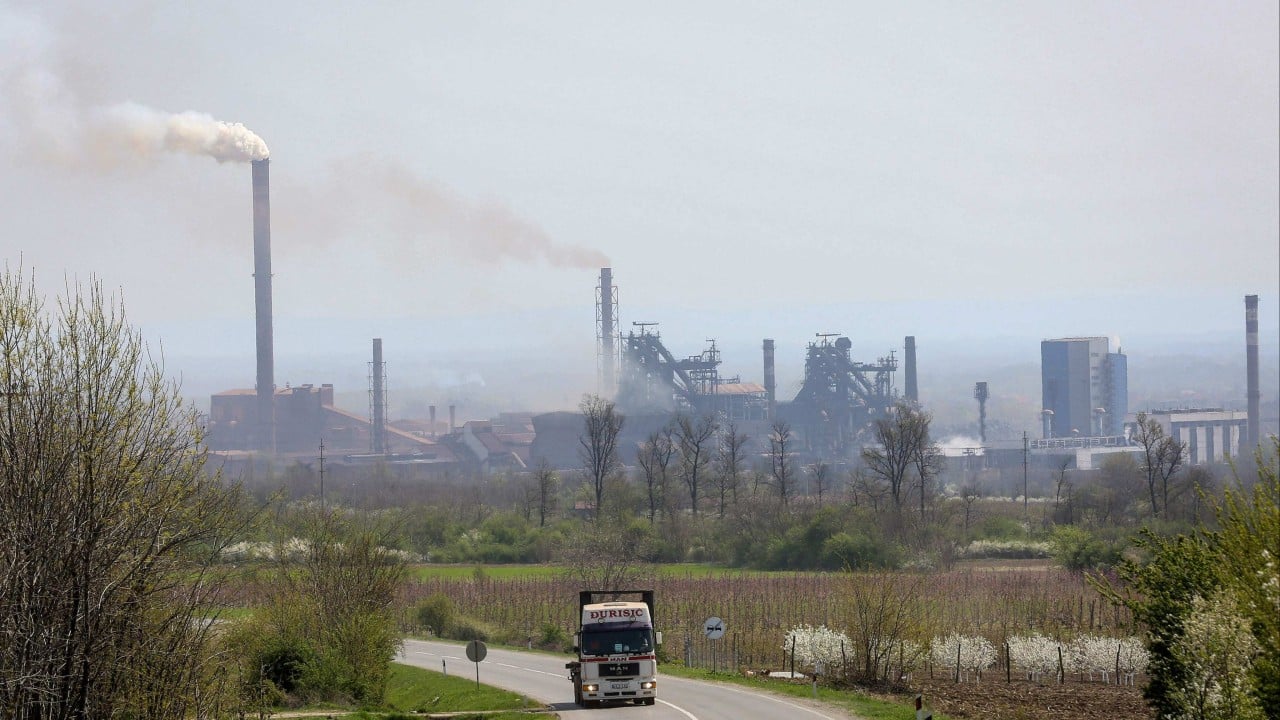
Over the past decade, Belgrade has systematically positioned itself as China’s premier European laboratory. From the $1.5 billion highway contracts signed with Shandong Hi-Speed Group to the deployment of Huawei facial-recognition infrastructure under the "Safe Cities" initiative, Serbia has embraced Chinese capital without the burdensome stipulations of rule-of-law reforms or environmental audits. The apex of this alignment arrived with a comprehensive Free Trade Agreement and the acquisition of advanced Chinese defense systems like the FK-3 and supersonic CM-400 AKG missiles.
This is not a template for a continental trading bloc; it is an asymmetric client-state architecture. The European Union operates on an entirely different economic plane, driven by a internal market that accounts for roughly one-sixth of global GDP. While Serbia uses Chinese loans to build localized transit networks, the EU is attempting to execute the largest regulatory and industrial transition in modern history via its Clean Industrial Deal and the proposed Industrial Accelerator Act.
The core divergence lies in the automotive and clean-technology ecosystems. The European single market is currently the primary battlefield for global electric vehicle dominance. For Brussels, the influx of heavily subsidized Chinese electric vehicles is an existential threat to an industry that directly or indirectly employs nearly 14 million Europeans. Serbia, lacking a domestic car manufacturer to protect, views Chinese EV inflows and battery plants merely as GDP-boosting investment data points. If the EU were to adopt Belgrade's laissez-faire approach, the result would be the immediate hollowing out of its remaining industrial core.
To understand why the Serbian model is an illusion for Brussels, one must look at the mechanics of Chinese industrial overcapacity. Domestic consumption within China has failed to keep pace with factory output, a structural imbalance exacerbated by massive state-directed capital flowing into the "New Three" industries: electric vehicles, lithium-ion batteries, and solar photovoltaics. The resulting export surge is not a standard market phenomenon; it is a state-backed deflationary wave designed to capture global market share by undercutting foreign competitors.
The European Commission’s implementation of countervailing duties on Chinese electric vehicles was a belated recognition of this threat. Had Brussels maintained a Serbian-style open border, European automakers would have been priced out of their own domestic market within a hardware generation.
Furthermore, the nature of Chinese investment in Europe has shifted dramatically from mergers and acquisitions to greenfield projects. Chinese battery giants like CATL and EVE Power are constructing massive facilities across Europe, including in Hungary and Serbia. While these projects bring short-term construction jobs and localized supply networks, they frequently arrive with strings attached. They ensure that the intellectual property, advanced chemistry, and core profit margins of the energy transition remain firmly anchored in Shenzhen and Ningbo, leaving Europe as the mere assembly floor.
The financial reality of the Serbian model is equally deceptive. Belgrade’s infrastructure boom is heavily reliant on bilateral loans from the Export-Import Bank of China. These loans often require the deployment of Chinese state-owned enterprises as primary contractors, utilizing Chinese materials and, occasionally, imported labor forces. This creates a closed capital loop. The money lent by Beijing is effectively paid back to Chinese corporations, while the host nation assumes the sovereign debt liability and the long-term maintenance costs.
The EU cannot operate under such a framework without violating its own public procurement laws and antitrust regulations. The European single market thrives on transparent, competitive tendering. Introducing an opaque system of state-to-state deals would distort internal competition, pitting member states against one another in a race to the bottom to attract subsidized Chinese capital. We are already seeing the early fractures of this dynamic, as member states like Hungary break ranks with Brussels to secure preferential investment deals, effectively acting as Trojan horses within the single market.
Strategic autonomy requires an uncomfortable admission. The EU cannot entirely decouple from Chinese supply chains without triggering an inflationary crisis that would derail its net-zero ambitions. European solar deployment, for instance, remains almost entirely dependent on Chinese wafers and polysilicon. The challenge is not to build a fortress of total isolation, but to establish a position of defensive reciprocity.
The proposed Industrial Accelerator Act highlights this delicate balance. Brussels is attempting to mandate that a significant portion of clean-technology support budgets be allocated to products manufactured within the Union. However, if these rules are written too rigidly, they risk choking off the very inputs European factories need to remain competitive. For example, shielding upstream European steel or aluminum sectors from imports could artificially inflate the production costs of domestic electric vehicles, rendering them uncompetitive on the global stage.
A mature European strategy must move past the binary choice of total confrontation or uncritical capitulation. It must focus on diversifying critical mineral supply chains, strengthening trade defense instruments, and penalizing non-market distortions without shutting down the avenues of legitimate corporate joint ventures. The goal should be to make foreign investment work on European terms, requiring genuine technology transfers and the integration of local research institutions.
The illusion of the Serbian model is that a nation can achieve economic prosperity by outsourcing its strategic infrastructure and industrial future to a single external superpower. For a small, non-EU nation navigating the geopolitical fault lines of the Balkans, that may be a calculated risk Belgrade is willing to take. For the European Union, it would be an admission of systemic obsolescence, transforming a regulatory superpower into an economic graveyard. Brussels must ignore the sirens of easy capital and double down on the arduous, expensive work of rebuilding its own industrial sovereignty.