India has ordered its remaining citizens in Iran to shelter in place and strictly avoid all movement as the Middle East teeters on the edge of a total regional collapse. The advisory, issued late Tuesday by the Ministry of External Affairs and the Indian Embassy in Tehran, is the most restrictive directive since the conflict escalated in February. For the roughly 7,000 Indians still trapped in the country, the message is blunt: do not move, stay away from windows, and avoid all military or infrastructure sites. The government has effectively admitted that the window for safe evacuation has closed.
This "stay wherever you are" order follows a terrifying ultimatum from the United States, where President Trump warned that "a whole civilization will die tonight" if Tehran does not reopen the Strait of Hormuz. While a fragile two-week ceasefire was reportedly brokered at the eleventh hour through Pakistani mediation, New Delhi isn't taking any chances. The Indian government’s shift from active evacuation to a "bunker down" strategy reveals a grim reality about the limits of Indian influence in a theater dominated by two nuclear-armed superpowers and a cornered regional power.
The Logistics of a Locked Door
New Delhi’s evacuation efforts have hit a wall. To date, only about 1,862 Indian nationals have been successfully extracted, primarily through land borders into Armenia and Azerbaijan. This leaves over 7,000 people—including students, petrochemical engineers, and the crucial community of Indian fishermen—scattered across a landscape where the infrastructure is being methodically dismantled.
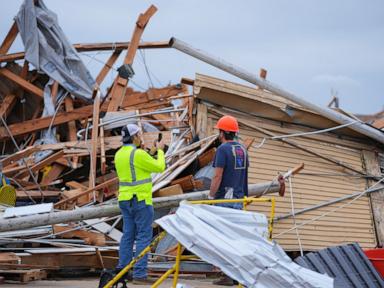
The recent Israeli strikes targeting eight major bridges across Iran, including key spans in Tehran and Qom, have paralyzed internal movement. When the Indian Embassy tells its citizens to "stay put," it is acknowledging that the roads are no longer roads; they are targets.
- Evacuation fatigue: Commercial flight corridors are non-existent. Air India has already grounded all services to Tel Aviv through May, and the Iranian airspace is a graveyard for civil aviation.
- Infrastructure risk: The latest advisory specifically warns against staying on the upper floors of multi-storey buildings. This is a direct response to the use of high-penetration munitions in urban centers.
- The Fishermen’s Dilemma: In the southern coastal regions, hundreds of Indian fishermen are caught in the crossfire of the naval blockade. With the Strait of Hormuz effectively a "kill zone," these workers are trapped in port cities that are now high-priority military targets.
The Death of Strategic Autonomy
For decades, India played a masterful game of balancing its interests between Washington, Tel Aviv, and Tehran. That era of "strategic autonomy" is currently being buried under the rubble of Iranian power plants.
New Delhi’s silence on the American-Israeli strikes is deafening but predictable. India depends on the U.S. for defense technology and on Israel for high-end surveillance and border security. Yet, it also needs a stable Iran to keep the International North-South Transport Corridor (INSTC) alive and to maintain a check on Pakistani influence in Afghanistan.
By telling citizens to shelter in place rather than organizing a massive "Operation Ganga" style airlift, India is signaling that it cannot—or will not—intervene in a way that complicates the U.S.-led mission. The priority has shifted from diplomatic balancing to raw survival and liability management.
The Economic Shrapnel
The crisis isn't just a humanitarian disaster; it is an economic heart attack for the Indian middle class. The closure of the Strait of Hormuz has sent global oil prices into a vertical climb. While the IEA has released 400 million barrels of oil to stem the tide, the relief is temporary.
India’s energy security is now at the mercy of a conflict it cannot control. Domestic fuel prices are expected to be hiked under the Essential Commodities Act, a move the government has been desperate to avoid. The "shelter in place" order for Indians in Iran is a metaphor for the Indian economy: braced for impact, with nowhere to run.
Beyond the 48 Hour Window
The current advisory covers a 48-hour period of "extreme caution," but the underlying instability suggests a much longer timeline. Even if the Pakistani-mediated ceasefire holds for its intended two weeks, the damage to the Iranian state is likely terminal.
Indian nationals who remain in the country are being instructed to maintain "regular contact" with embassy teams, but those teams are operating on a skeleton crew. For the families in Kerala, Punjab, and Gujarat waiting for news, the "stay put" order feels less like a safety measure and more like a surrender to geography.
The reality is that India’s vast diaspora, usually a source of "soft power," has become a strategic vulnerability. In a world of unrestricted kinetic warfare, your people are only as safe as the airspace you control. Right now, New Delhi controls none of it.
Stockpile water. Charge your power banks. Stay away from the windows. The next 48 hours will determine if there is a civilization left to return to.