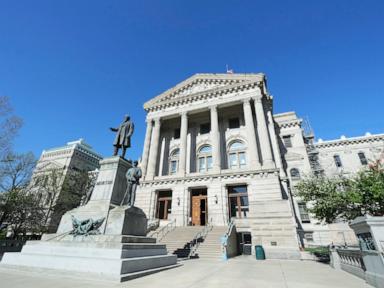
Donald Trump does not handle rejection well, and in Indiana, he has turned a legislative disagreement into a multi-million dollar scorched-earth campaign. At stake in Tuesday's primary is not just a handful of seats in the Indiana State Senate, but the very definition of what it means to be a Republican in a state that has long prided itself on a brand of quiet, pragmatic conservatism. This isn't a standard political contest. It is a high-stakes purge designed to signal that local institutional independence is a relic of the past.
The friction began in December 2025, when the Indiana State Senate did something few Republican-controlled bodies dare to do. They said no to the 47th President. Trump had demanded a mid-decade redistricting, a move intended to squeeze every possible drop of partisan advantage out of the state’s congressional map to bolster his thin margins in Washington. While states like Texas and Ohio fell in line, 21 Indiana Republicans joined Democrats to kill the plan. You might also find this related article insightful: Maritime Kinetic Risks and the Strait of Hormuz Crisis Architecture.
The Retribution Doctrine
Trump’s response was swift and surgical. He didn't just express disappointment; he branded the dissenters as "RINOs" and "losers" before hand-picking challengers to unseat them. Of the eight senators who voted against the map and are up for reelection, seven are now fighting for their political lives against Trump-endorsed opponents.
This is a level of presidential interference in state-level legislative primaries that is virtually without precedent. Historically, a president might weigh in on a governor’s race or a U.S. Senate seat, but the granular details of state senate districts in the Midwest are usually beneath the White House's notice. Not this time. This is about establishing a "No Quarter" policy for any Republican who places institutional tradition or constituent feedback above personal loyalty to the top of the ticket. As discussed in latest articles by BBC News, the implications are worth noting.
The Money and the Message
The financial scale of these races is staggering. In District 11, incumbent Linda Rogers is locked in a battle with Dr. Brian Schmutzler, a Trump-backed physician. Rogers has poured nearly a million dollars into her defense, a figure that would have been unthinkable for a state primary a decade ago. The airwaves are thick with ads, many funded by outside groups like Turning Point Action and the newly formed No Quarter PAC.
The rhetoric has shifted from policy to "the fight." Indiana Lieutenant Governor Micah Beckwith, a staunch Trump ally, has framed the primary as a choice between Republicans who want to "avoid the fight" and those ready to engage. This binary choice ignores the nuanced reality of Indiana politics, where figures like former Governor Mitch Daniels—who emerged from retirement to support the incumbents—represent a wing of the party that values stability and decorum over constant combat.
Why Indiana Matters
Indiana is a deep-red state, but it is not a monolithic one. The targeted senators represent districts Trump won handily in 2024, some by nearly 40 percentage points. If these incumbents fall, it will prove that a Trump endorsement is more powerful than years of local service, personal relationships, and a proven conservative voting record.
- District 1: A competitive enclave near Lake Michigan where the margin of loyalty is being tested against a more moderate electorate.
- District 19: A rural stronghold on the Ohio border where the "Trump effect" is expected to be at its most potent.
- The Redistricting Ghost: While the map can't legally be redrawn until 2030, the "9-0" map (a plan to ensure all nine Indiana congressional seats go Republican) remains the rallying cry for the challengers.
The incumbents argue they were simply listening to their constituents, many of whom expressed a distaste for the aggressive, top-down pressure from Washington. "We hate to be told what to do," noted former State Representative Mike Murphy. That independent streak is now the target of a national political machine.
The Institutional Cost
If the purge succeeds, the Indiana Statehouse will undergo a fundamental transformation. The internal check and balance that allowed Republicans to occasionally push back against their own leadership will vanish. In its place will be a legislative body that looks less like a deliberative chamber and more like a regional office of the national party.
The results will clarify whether the Republican Party remains a "big tent" or has become a "single-pole" structure. If long-serving conservatives like Rogers can be unseated simply for a single vote of conscience, the incentive for any future legislator to buck the trend will be zero. This isn't just about redistricting. It is about whether the "Indiana way" of governance survives the era of total political warfare.
View the analysis of Indiana's 2026 primary landscape
This video provides a detailed look at the unprecedented spending and the specific local dynamics of the District 11 race between Linda Rogers and Brian Schmutzler.