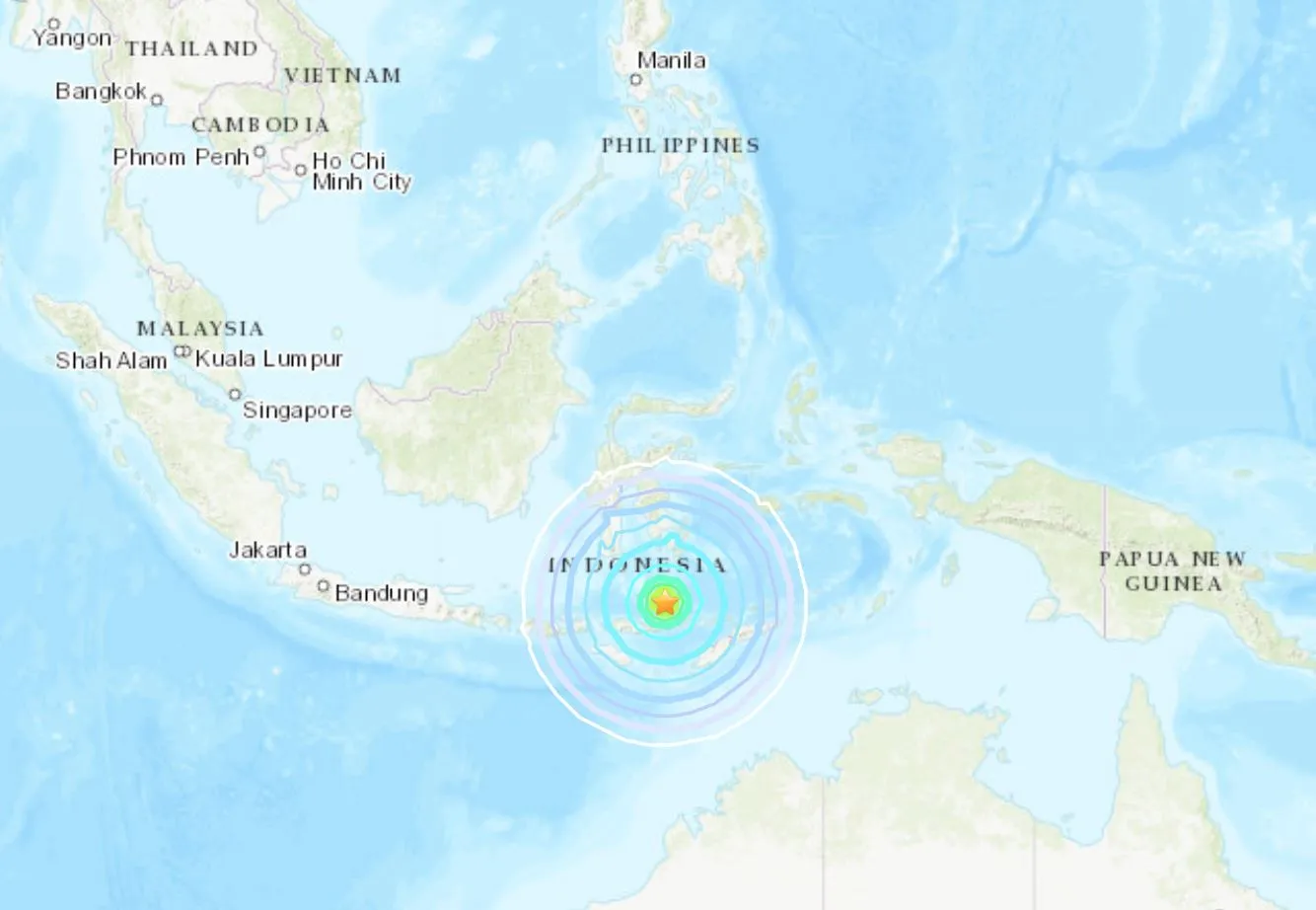
Ground shook violently across eastern Indonesia before dawn when a massive 7.7-magnitude earthquake struck off the coast of Flores Island. At least 48 people are confirmed dead, hundreds more sustained injuries, and over 5,000 residents abandoned their homes to sleep on exposed hilltops and makeshift evacuation camps.
The disaster laid bare the brutal vulnerability of communities living along the world's most active seismic belt. Shocks rippled through the region so fiercely that hospitals moved patients onto lawns, buildings collapsed into piles of gray dust, and terrified families fled toward higher ground as the sea briefly receded.
The Anatomy of a Shallow Disaster
The Indonesian National Disaster Management Agency, known as BNPB, reported that the tremor struck at a very shallow depth just off the northern coast of Flores. Shallow earthquakes are notoriously destructive because the seismic energy reaches the surface with minimal attenuation.
When the primary shock hit around 6 a.m. local time, residents in towns like Maumere and Ende experienced intense shaking that lasted up to a minute.
- Over 900 houses suffered severe structural damage.
- Dozens of schools, health clinics, and government offices cracked or completely caved in.
- Hundreds of aftershocks—exceeding 340 recorded tremors within the first 24 hours—kept survivors trapped in a state of constant panic.
People aren't just dealing with collapsed walls. They're dealing with psychological trauma. Survivors like 55-year-old Umri spent a full day huddled on a hillside near Nangahale village, stating they urgently needed basic provisions like clean water, medicine, and diapers for children. When your home is no longer safe, a patch of dirt under the open sky becomes your only option.
Living on the Ring of Fire
Indonesia sits directly atop the Pacific Ring of Fire. Tectonic plates constantly grind, lock, and slip past each other here, making high-magnitude earthquakes an inevitable reality rather than an unexpected anomaly.
Long-term residents of Flores carry generational scars from these tectonic shifts. Older generations vividly remember the devastating 1992 earthquake and tsunami on the same island that claimed roughly 2,500 lives. When the sea pulled back immediately following Saturday's 7.7 tremor, collective memory triggered an immediate stampede to higher ground.
Authorities did issue an initial tsunami warning, which was lifted three hours later after only minor waves of up to 1.6 meters were recorded. But the threat of water was quickly overshadowed by the reality of crippled infrastructure. Landslides severed critical access roads into regions like Nagekeo, isolating the zones closest to the epicenter and forcing emergency response teams to attempt deliveries by sea or air.
The Race to Deliver Aid
Logistical nightmares define the initial hours after any major island quake. Downed telecommunication lines and localized power outages left remote villages in the dark, unable to communicate their exact needs to regional headquarters.
The central government and international bodies mobilized quickly once daylight allowed a clearer assessment of the damage. Officials deployed military aircraft, naval vessels, and multiple helicopters to ferry 275 tonnes of emergency aid packages into the hardest-hit sectors. Meanwhile, humanitarian networks coordinated the setup of emergency shelters, field tents, and portable generators for thousands of displaced citizens.
Medical professionals faced extraordinary working conditions. In one local hospital, structural damage forced staff to evacuate patients outside, where doctors performed an emergency C-section on an expectant mother inside an intact storage room converted into a makeshift operating theatre.
What Recovery Looks Like Now
The immediate search and rescue phase is transitioning into a long stabilization process. Relief agencies are focusing heavily on three critical pillars:
- Shelter and Sanitation: Supplying waterproof tents, blankets, and clean drinking water to prevent disease outbreaks among the 5,000 evacuees crowded onto hilltops.
- Infrastructure Clearance: Heavy machinery crews are actively clearing tons of rock and soil from blocked mountain passes so land transport can reach isolated pockets of victims.
- Structural Audits: Engineers are inspecting public buildings, schools, and homes to determine which structures can be safely reoccupied and which must be demolished.
If you want to support relief efforts for communities affected by the Flores disaster, direct your contributions to established humanitarian organizations currently operating on the ground in East Nusa Tenggara, such as the Indonesian Red Cross or international disaster response networks coordinating local supply chains. Stay tuned to official updates from the BNPB for verified channels of assistance.